

Ready & Packaged Foods
All →Vegetables & Legumes
All →Desserts & Confectionery
All →Meat & Protein
All →Grains & Bakery
All →Beverages
All →Milk & Dairy
All →

Bean stew Calories
Rich in fiber and plant protein, low fat
In season: Spring · Summer · Autumn · Winter
CALORIES
GI
POTASSIUM
FIBER
Quick answer
1 cup (medium) of Bean stew (200 g) has 220 calories. That works out to 110 calories per 100 g. It contains 36 g of carbs, 13 g of protein, 2.4 g of fat and 13 g of fiber. Its 0.3 mg of Copper covers 33% of the Daily Value. Its glycemic index is 35 (low), so it raises blood sugar slowly.
What is Bean stew?
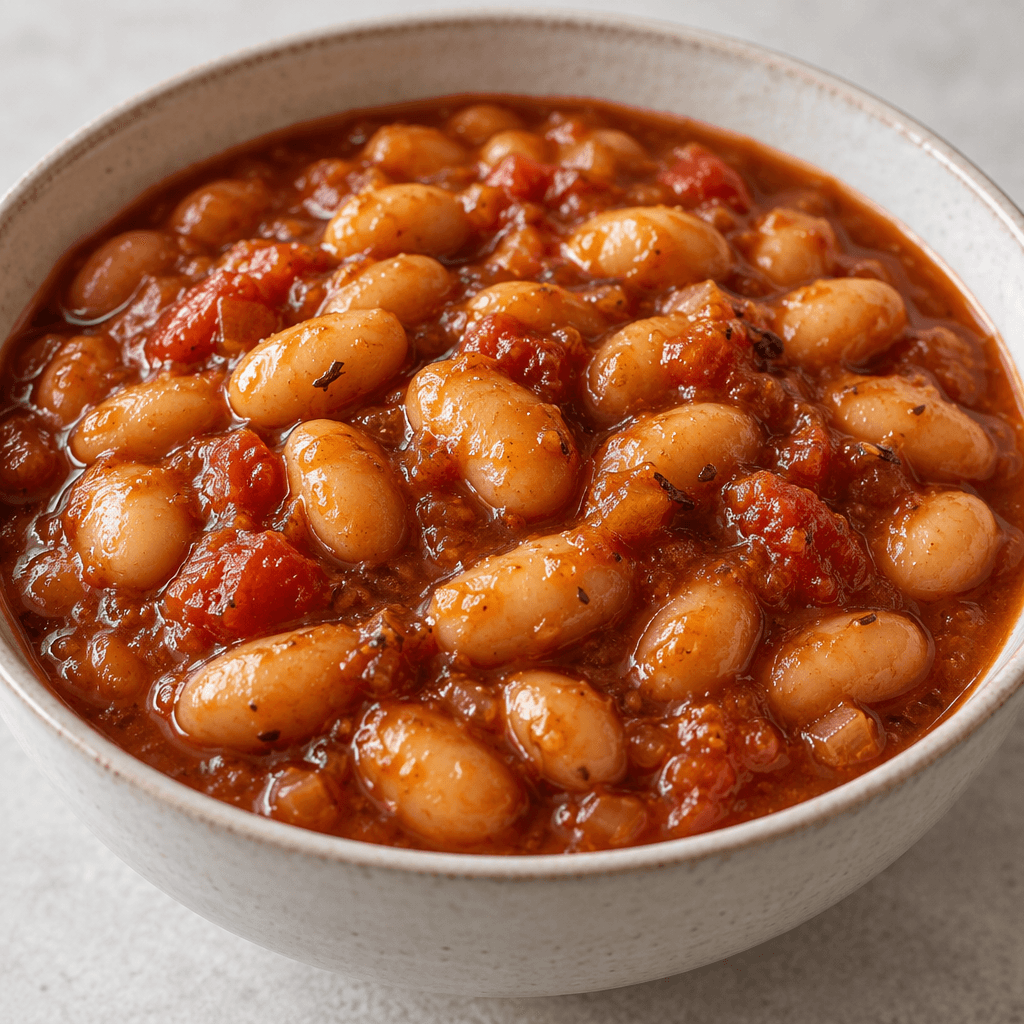
Bean stew is a home-style dish of beans simmered until tender in a thick, often tomato-based sauce. Recipes vary from kitchen to kitchen; the version pictured has plump pale beans and visible pieces of tomato. Bean stews are cooked in many regions, so the seasonings and accompaniments depend on their tradition.
The beans turn soft and substantial while keeping their shape, and the sauce brings a gentle tang. Serve it as a main with bread or rice, or alongside a crisp salad for a lighter plate. It offers both fibre and plant protein while remaining low in fat, making it a satisfying choice for a meat-free meal.
Bean stew Nutrition Facts
Selected: 100 g
110
KCAL / 100G
Carbs
18g
· 7% DV
Protein
6.5g
· 13% DV
Fat
1.2g
· 2% DV
Fiber
6.5g
· 23% DV
DV is the share of the daily value covered, on a 2,000 kcal reference diet.
Calories come from: Carbs 66% · Protein 24% · Fat 10%
Bean stew Vitamins & Minerals
Vitamins
B1
0.12mg · 10% DV
Folate
35µg · 9% DV
Biotin
1.5µg · 5% DV
B2
0.05mg · 4% DV
Minerals
Phosphorus
90mg · 13% DV
Iron
2mg · 11% DV
Sodium
220mg · 10% DV
Zinc
1mg · 9% DV
How Nutritious Is Bean stew?
Nutrient density
High
How many vitamins, minerals and how much fiber this food carries per calorie. A high score means a lot of nutrition for few calories.
Satiety score
High
An EatBetter score computed from fiber, protein and calorie density. A high score means staying full longer on the same calories.
Both scores are calculated per 100 g and do not change with the selected portion. The satiety score is EatBetter's own calculation, not a clinical measure.
Bean stew Glycemic Index
GLYCEMIC INDEX
GLYCEMIC LOAD
Accounts for portion size — a more realistic measure than GI alone.
How to Burn Off Bean stew
To burn the 110 calories in 100 g:
🚶
Walking (5 km/h)
🏃
Running (8 km/h)
🚴
Cycling
🏊
Swimming
Times are calculated with the MET equation for a 70 kg adult. Actual burn varies with your weight, age and pace.
Is Bean stew Processed?
NOVA 2
Minimally Processed
1. Unprocessed
2. Minimally Processed
3. Processed
4. Ultra-Processed
NOVA classifies foods into 4 groups by industrial processing. NOVA 1 (unprocessed) is the healthiest.
Does Bean stew Contain Allergens?
No known major allergens
Which Diets Is Bean stew Good For?
Vegan
✓ Suitable
Vegetarian
✓ Suitable
Gluten-Free
✓ Suitable
Dairy-Free
— Not suitable
Mediterranean
✓ Suitable
Paleo
— Not suitable
Whole30
— Not suitable
DASH
— Not suitable
Keto
— Not suitable
Low FODMAP
— Not suitable
Bean stew Fat Profile
SATURATED
0.2g
MONOUNSATURATED
0.1g
POLYUNSATURATED
0.3g
Omega 6:3 ratio 4.5:1
Above the ideal 4:1 (4.5:1).
Compare Bean stew
Foods Similar to Bean stew
Frequently Asked Questions About Bean stew
How do you make Bean stew from scratch?
Bean stew is made by simmering cooked or soaked beans in a seasoned sauce until tender and flavorful. For a tomato-based version, soften onion, add garlic and tomatoes, then stir in the beans and cooking liquid. Simmer gently so the beans stay whole.
What beans are best for Bean stew?
White beans, such as cannellini, navy, or great northern beans, work especially well in Bean stew because they hold their shape while absorbing the sauce. Recipes also use butter beans or kidney beans; choose a variety that stays pleasantly tender after simmering.
Do you need to soak beans for Bean stew?
Dried beans benefit from soaking before making Bean stew: they cook more evenly and usually take less time to become tender. Canned beans do not need soaking; drain and rinse them, then add them later in cooking so they do not break apart.
Why are the beans in my Bean stew still hard?
Beans in Bean stew can stay hard if they are old, insufficiently cooked, or simmered with acidic ingredients too early. Cook dried beans until nearly tender before adding tomatoes, wine, or vinegar. Hard water can also slow softening, so use fresh water if the problem persists.
How do you thicken Bean stew without flour?
Mash a few beans against the side of the pot and stir them back into Bean stew. Their starch thickens the liquid without flour or cornstarch. You can also simmer the stew uncovered to reduce excess liquid, stirring occasionally to prevent sticking.
Can you make Bean stew with canned beans?
Yes, canned beans are a convenient shortcut for Bean stew because they are already cooked. Drain and rinse them to remove some of the canning liquid, then add them once the sauce is nearly ready. Simmer gently; prolonged cooking can make canned beans mushy.
Can Bean stew be frozen?
Yes, Bean stew freezes well. Cool it promptly, divide it into airtight freezer-safe portions, and leave a little room for expansion. Thaw it in the refrigerator or reheat it from frozen over low heat, adding a splash of water if the sauce has thickened.
How long does Bean stew last in the fridge?
Bean stew generally keeps for three to four days in the refrigerator when promptly chilled in a covered container. Reheat only the portion you plan to eat, until it is steaming hot throughout. Discard it if it develops mold, an off smell, or an unusual texture.
What should you serve with Bean stew?
Crusty bread, rice, or polenta are classic partners for Bean stew because they soak up its sauce. A crisp green salad or roasted vegetables add freshness alongside a rich tomato-based version. For a lighter plate, pair a moderate serving with vegetables rather than extra starch.
Is Bean stew filling enough for a main meal?
Yes, Bean stew can make a satisfying main meal because beans provide both plant protein and fiber. Serve it with vegetables and, if desired, bread or grains. Adding extra vegetables or greens is an easy way to make the meal more varied.
Have another question about Bean stew?
Ask the AI nutrition coach — calories, portions, alternatives and more, answered in seconds in the app.

Scan calories with your camera
Instant AI nutrition analysis

Nutrition data compiled from USDA FoodData Central and scientific sources.