

Ready & Packaged Foods
All →Vegetables & Legumes
All →Desserts & Confectionery
All →Meat & Protein
All →Grains & Bakery
All →Beverages
All →Milk & Dairy
All →

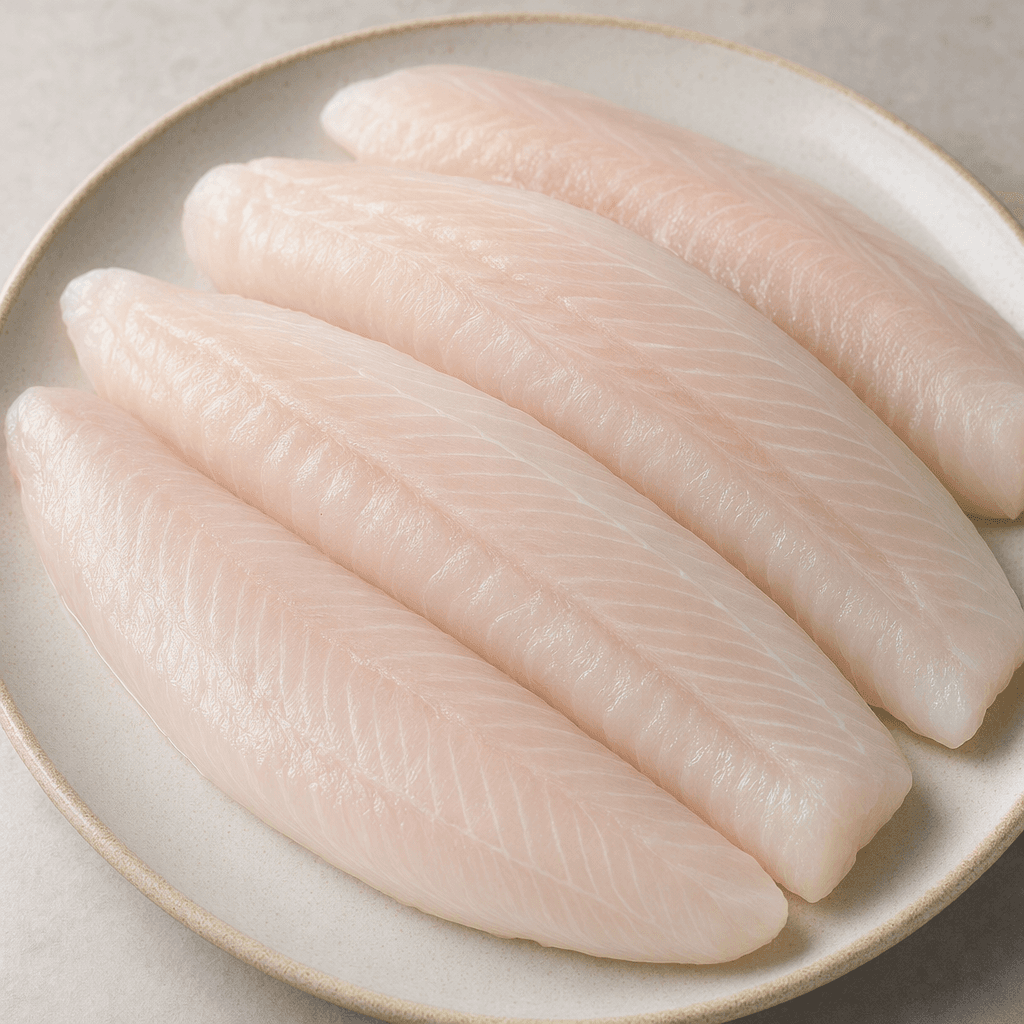
Basa Calories
Low-fat, high-protein white freshwater fish
In season: Spring · Summer · Autumn · Winter
CALORIES · 100 G
GI
POTASSIUM · 100 G
FIBER · 100 G
Quick answer
1 piece (medium) of Basa (120 g) has 106 calories. That works out to 88 calories per 100 g. It contains 0 g of carbs, 15.6 g of protein, 4.8 g of fat and 0 g of fiber. Its 1.4 µg of B12 covers 60% of the Daily Value. Its glycemic index is 0 (low), so it raises blood sugar slowly.
Basa Nutrition Facts
Selected: 1 piece (medium) · 120 g
106
KCAL / 120G
Carbs
0g
· 0% DV
Protein
15.6g
· 31% DV
Fat
4.8g
· 6% DV
Fiber
0g
· 0% DV
DV is the share of the daily value covered, on a 2,000 kcal reference diet.
Calories come from: Carbs 0% · Protein 59% · Fat 41%
Basa nutrition facts table · 1 piece (medium) (120 g)
| Nutrient | Amount | % DV |
|---|---|---|
| Calories | 106 kcal | |
| Total fat | 4.8 g | 6% |
| Saturated fat | 1.32 g | 7% |
| Trans fat | 0 g | |
| Sodium | 60 mg | 3% |
| Total carbohydrate | 0 g | 0% |
| Fiber | 0 g | 0% |
| Protein | 15.6 g | 31% |
Calories: Calories measure energy. Average daily need is 2,000 kcal. Excess calories are stored as fat, too few cause weight loss.
Carbs: Your body's primary energy source. The brain runs exclusively on carbs. Daily need: 275g.
Protein: Essential for muscle repair and cell growth. Daily need: 50g. Keeps you full and boosts metabolism.
Fat: Needed for hormone production and vitamin absorption. Daily need: 78g. Limit saturated fats, choose unsaturated.
Fiber: Critical for digestive health and satiety. Daily need: 28g. Stabilizes blood sugar, lowers cholesterol.

Log this food in EatBetter
100,000+ people use it
- Get your daily calorie target
- Snap your meal, log it in seconds
- See every vitamin and mineral

📸 Scan the code to get the app free.

How Many Calories in 1 Medium Basa?
| Serving | Amount | Calories |
|---|---|---|
| 1 piece (medium) | 120 g | 106 kcal |
| 1 piece (extra small) | 60 g | 53 kcal |
| 1 piece (small) | 80 g | 70 kcal |
| 100 g | 100 g | 88 kcal |
| 1 serving (medium) | 100 g | 88 kcal |
| 1 serving (large) | 150 g | 132 kcal |
| 1 piece (large) | 180 g | 158 kcal |
| 1 piece (jumbo) | 250 g | 220 kcal |
Calculated from 88 calories per 100 g.
Frequently Asked Questions About Basa
What is Basa fish?
Basa is a freshwater catfish native to Southeast Asia, commonly sold as boneless fillets. In some markets, the name is used loosely for related farmed pangasius fish, so the exact species can vary by product.
Is Basa fish healthy?
Yes, Basa is a lean source of protein and can fit into a balanced meal. Its mild flavor makes it easy to pair with vegetables and whole grains; frying or rich sauces can make the finished dish heavier.
What does Basa fish taste like?
Basa has a mild, slightly sweet flavor and a soft, moist texture. Its taste is less pronounced than many oily fish, which is why it works well with citrus, herbs, and seasoning.
Is Basa fish safe to eat?
Yes, properly handled and thoroughly cooked Basa is safe to eat. Choose fillets kept cold or frozen, thaw them in the refrigerator, and avoid fish with an unusually sour or ammonia-like smell.
Is Basa fish high in mercury?
No, Basa is generally considered a low-mercury fish. Mercury levels can vary among fish and sources, so people who are pregnant or follow specific fish-consumption advice should use current local guidance.
Is Basa the same as swai?
Not exactly: Basa and swai are related Southeast Asian pangasius catfish, but they usually refer to different species. Retail labels sometimes use the names inconsistently, so the scientific name is the clearest way to identify the fish.
Where does Basa fish come from?
Basa comes from Southeast Asia and is widely farmed in Vietnam, particularly in the Mekong region. Much of the Basa sold internationally is imported frozen; check the package for the country of origin.
Does Basa fish have bones?
Basa sold as a fillet is usually deboned, but a small pin bone can remain. Feel along the flesh before cooking, especially if serving it to a child.
How do you cook Basa without it falling apart?
Cook Basa gently and handle it as little as possible; its soft flesh can break apart when overcooked or flipped repeatedly. Pat the fillet dry, use a lightly oiled pan, and turn it once with a wide spatula.
Can you freeze Basa fish?
Yes, you can freeze fresh Basa in an airtight, freezer-safe package. Keep it cold while handling, label the package with the date, and thaw it in the refrigerator before cooking for the best texture.
Basa Vitamins & Minerals
Vitamins
B12
1.44µg · 60% DV
B5
0.84mg · 17% DV
B3
2.16mg · 14% DV
Vitamin D
2.4µg · 12% DV
Minerals
Selenium
19µg · 35% DV
Phosphorus
216mg · 31% DV
Iodine
22µg · 15% DV
Potassium ⭐
360mg · 11% DV
Sodium
60mg · 3% DV
Basa Glycemic Index
GLYCEMIC INDEX
GLYCEMIC LOAD
Accounts for portion size — a more realistic measure than GI alone.
How to Burn Off Basa
To burn the 106 calories in 1 piece (medium) (120 g):
🚶
Walking (5 km/h)
🏃
Running (8 km/h)
🚴
Cycling
🏊
Swimming
Times are calculated with the MET equation for a 70 kg adult. Actual burn varies with your weight, age and pace.
What is Basa?
Basa is a mild freshwater catfish native to the Mekong basin in Southeast Asia, especially associated with Vietnam. It is usually sold as a white fillet, with a soft, moist texture and a gentle flavour that takes well to seasoning. In Vietnam and elsewhere, it is cooked in a range of home-style dishes; for English-speaking cooks, it also works well pan-fried, baked or grilled. Serve it with rice or potatoes and vegetables, or add lemon and herbs for a lighter plate.
Basa is a low-fat, high-protein fish, with 13 g of protein per 100 g. Its mild taste makes it useful when you want a straightforward fish dinner without an overpowering flavour.
How Nutritious Is Basa?
Nutrient density
High
How many vitamins, minerals and how much fiber this food carries per calorie. A high score means a lot of nutrition for few calories.
Satiety score
Medium
An EatBetter score computed from fiber, protein and calorie density. A high score means staying full longer on the same calories.
Both scores are calculated per 100 g and do not change with the selected portion. The satiety score is EatBetter's own calculation, not a clinical measure.
Is Basa Processed?
NOVA 1
Unprocessed
1. Unprocessed
2. Minimally Processed
3. Processed
4. Ultra-Processed
NOVA classifies foods into 4 groups by industrial processing. NOVA 1 (unprocessed) is the healthiest.
Does Basa Contain Allergens?
Contains these allergens:
Which Diets Is Basa Good For?
Vegan
— Not suitable
Vegetarian
— Not suitable
Gluten-Free
✓ Suitable
Dairy-Free
— Not suitable
Mediterranean
✓ Suitable
Paleo
— Not suitable
Whole30
— Not suitable
DASH
— Not suitable
Keto
✓ Suitable
Low FODMAP
— Not suitable
Basa Fat Profile
SATURATED
1.32g
MONOUNSATURATED
1.8g
POLYUNSATURATED
1.44g
Omega 6:3 ratio 0.8:1
Below the ideal 4:1 — a good omega balance.
Compare Basa
Foods Similar to Basa
Have another question about Basa?
Ask the AI nutrition coach — calories, portions, alternatives and more, answered in seconds in the app.

Scan calories with your camera
Instant AI nutrition analysis

Nutrition data compiled from USDA FoodData Central and scientific sources.