

Ready & Packaged Foods
All →Vegetables & Legumes
All →Desserts & Confectionery
All →Meat & Protein
All →Grains & Bakery
All →Beverages
All →Milk & Dairy
All →

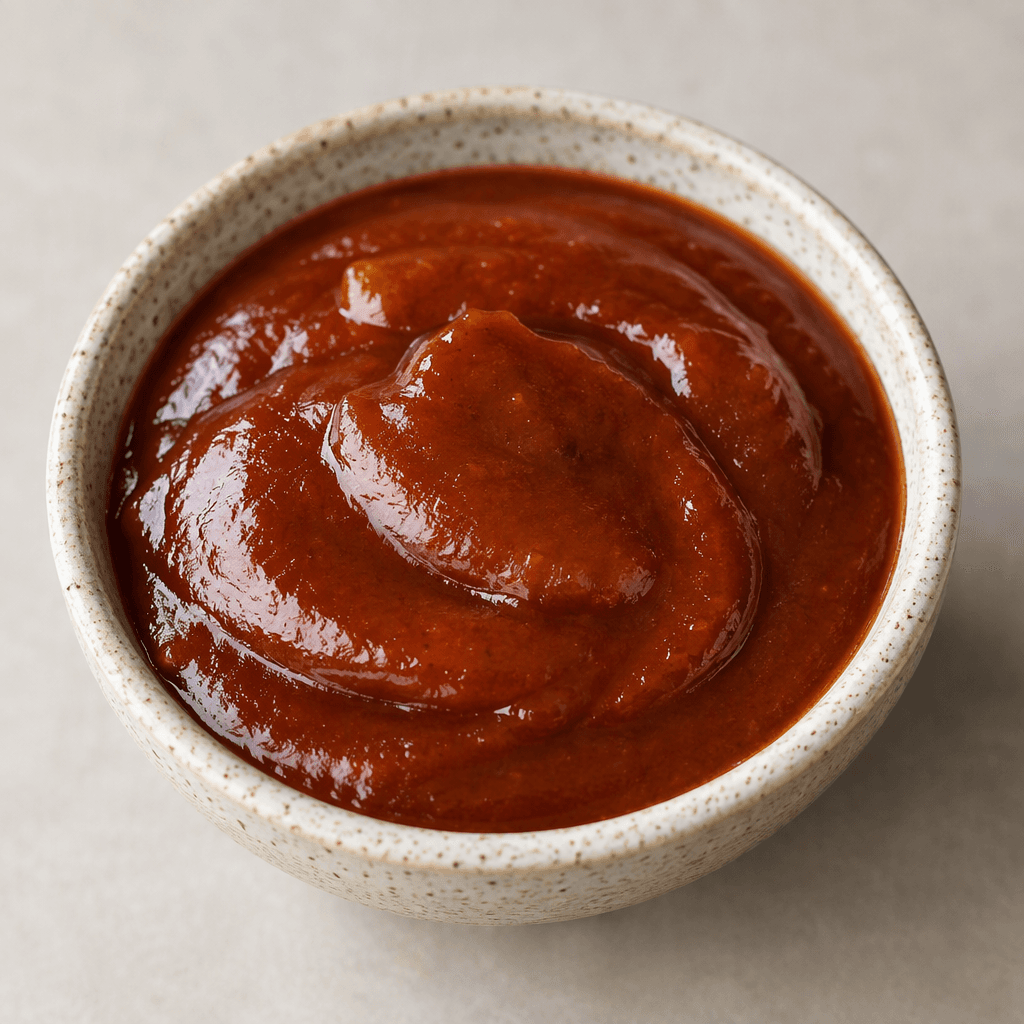
Barbecue Sauce Calories
Sweet, tangy, and spicy sauce, commonly served with grilled meats.
In season: Summer
CALORIES
GI
POTASSIUM
FIBER
Quick answer
2 tablespoon (medium) of Barbecue Sauce (35 g) has 42 calories. That works out to 120 calories per 100 g. It contains 9.8 g of carbs, 0.2 g of protein, 0.1 g of fat and 0.4 g of fiber. Its 315 mg of Sodium covers 14% of the Daily Value. Its glycemic index is 60 (medium), so it raises blood sugar at a moderate pace.
What is Barbecue Sauce?
Barbecue Sauce is a thick, boldly flavoured condiment associated especially with American barbecue. Recipes vary by region, but commonly combine tomato, vinegar, a sweetener and spices; some styles lean tangy, smoky, hot or sweet.
In the US, it is brushed onto meat as it cooks, served alongside ribs or chicken for dipping, and used in sandwiches. Elsewhere, it also makes an easy dip or glaze for grilled foods. Its glossy texture and sweet-tangy flavour can quickly dominate a dish. Nutritionally, carbohydrates make up most of its energy, while protein and fat are low. Use a modest amount with simply grilled meat or vegetables when you want the sauce to complement rather than cover their flavour.
Barbecue Sauce Nutrition Facts
Selected: 100 g
120
KCAL / 100G
Carbs
28g
· 10% DV
Protein
0.6g
· 1% DV
Fat
0.3g
· 0% DV
Fiber
1.2g
· 4% DV
DV is the share of the daily value covered, on a 2,000 kcal reference diet.
Calories come from: Carbs 96% · Protein 2% · Fat 2%
Barbecue Sauce Vitamins & Minerals
Vitamins
B1
0.02mg · 2% DV
B6
0.03mg · 2% DV
Biotin
0.6µg · 2% DV
Vitamin C
2mg · 2% DV
Minerals
Sodium
900mg · 39% DV
Iron
1mg · 6% DV
Potassium ⭐
120mg · 4% DV
Calcium
18mg · 2% DV
How Nutritious Is Barbecue Sauce?
Nutrient density
Low
How many vitamins, minerals and how much fiber this food carries per calorie. A high score means a lot of nutrition for few calories.
Satiety score
Medium
An EatBetter score computed from fiber, protein and calorie density. A high score means staying full longer on the same calories.
Both scores are calculated per 100 g and do not change with the selected portion. The satiety score is EatBetter's own calculation, not a clinical measure.
Barbecue Sauce Glycemic Index
GLYCEMIC INDEX
GLYCEMIC LOAD
Accounts for portion size — a more realistic measure than GI alone.
How to Burn Off Barbecue Sauce
To burn the 120 calories in 100 g:
🚶
Walking (5 km/h)
🏃
Running (8 km/h)
🚴
Cycling
🏊
Swimming
Times are calculated with the MET equation for a 70 kg adult. Actual burn varies with your weight, age and pace.
Is Barbecue Sauce Processed?
NOVA 3
Processed
1. Unprocessed
2. Minimally Processed
3. Processed
4. Ultra-Processed
NOVA classifies foods into 4 groups by industrial processing. NOVA 1 (unprocessed) is the healthiest.
Does Barbecue Sauce Contain Allergens?
Contains these allergens:
Which Diets Is Barbecue Sauce Good For?
Vegan
✓ Suitable
Vegetarian
✓ Suitable
Gluten-Free
— Not suitable
Dairy-Free
— Not suitable
Mediterranean
— Not suitable
Paleo
— Not suitable
Whole30
— Not suitable
DASH
— Not suitable
Keto
— Not suitable
Low FODMAP
— Not suitable
Barbecue Sauce Fat Profile
SATURATED
0.05g
MONOUNSATURATED
0.08g
POLYUNSATURATED
0.12g
Compare Barbecue Sauce
Foods Similar to Barbecue Sauce
Frequently Asked Questions About Barbecue Sauce
What is barbecue sauce made of?
Barbecue sauce is commonly made with a tomato base, vinegar, sweetener, and seasonings such as onion, garlic, and pepper. Some versions add smoke flavor or heat, so bottled sauces can taste quite different from one another.
Is barbecue sauce the same as ketchup?
No, barbecue sauce is not the same as ketchup. Both may use tomatoes, but barbecue sauce typically has a more pronounced sweet, tangy, smoky, or spicy flavor and is made to accompany grilled foods.
When should you put barbecue sauce on chicken on the grill?
Brush barbecue sauce onto chicken near the end of grilling, not at the start. Its sweet ingredients can scorch over direct heat; apply a thin coat once the chicken is nearly cooked, then let it set briefly.
Can you use barbecue sauce as a marinade?
Yes, barbecue sauce can be used as a marinade, especially for chicken or pork. Because it can burn on the grill, wipe off excess sauce before cooking and add a fresh coating near the end.
How do you make barbecue sauce at home?
To make barbecue sauce at home, simmer tomato paste or ketchup with vinegar, a sweetener, and spices such as garlic, pepper, and paprika. Taste as it cooks and adjust the tang, sweetness, or heat to suit the dish.
What is the difference between Kansas City and Carolina barbecue sauce?
Kansas City-style barbecue sauce is usually thick, tomato-based, and sweet, while Carolina styles are often thinner and more vinegar-forward. Some Carolina versions use mustard, so the regional name can refer to several distinct sauces.
How do you make barbecue sauce less sweet?
To make barbecue sauce less sweet, stir in vinegar or lemon juice a little at a time. A pinch of salt, mustard, or extra pepper can also balance the sweetness without adding another sweetener.
Does barbecue sauce need to be refrigerated after opening?
Most opened barbecue sauce should be refrigerated, with the cap tightly closed. Follow the storage directions on its container, since recipes and preservatives vary; discard it if its smell, appearance, or texture changes.
Can you freeze barbecue sauce?
Yes, barbecue sauce can be frozen in a sealed freezer-safe container, leaving room for expansion. Thaw it in the refrigerator and stir well before using, since its texture may separate slightly after freezing.
Why does barbecue sauce burn on the grill?
Barbecue sauce often burns because its sugars brown quickly over direct heat. Keep the grill temperature controlled, avoid thick layers, and brush the sauce on near the end of cooking rather than leaving it on the food throughout.
Have another question about Barbecue Sauce?
Ask the AI nutrition coach — calories, portions, alternatives and more, answered in seconds in the app.

Scan calories with your camera
Instant AI nutrition analysis

Nutrition data compiled from USDA FoodData Central and scientific sources.