

Ready & Packaged Foods
All →Vegetables & Legumes
All →Desserts & Confectionery
All →Meat & Protein
All →Grains & Bakery
All →Beverages
All →Milk & Dairy
All →

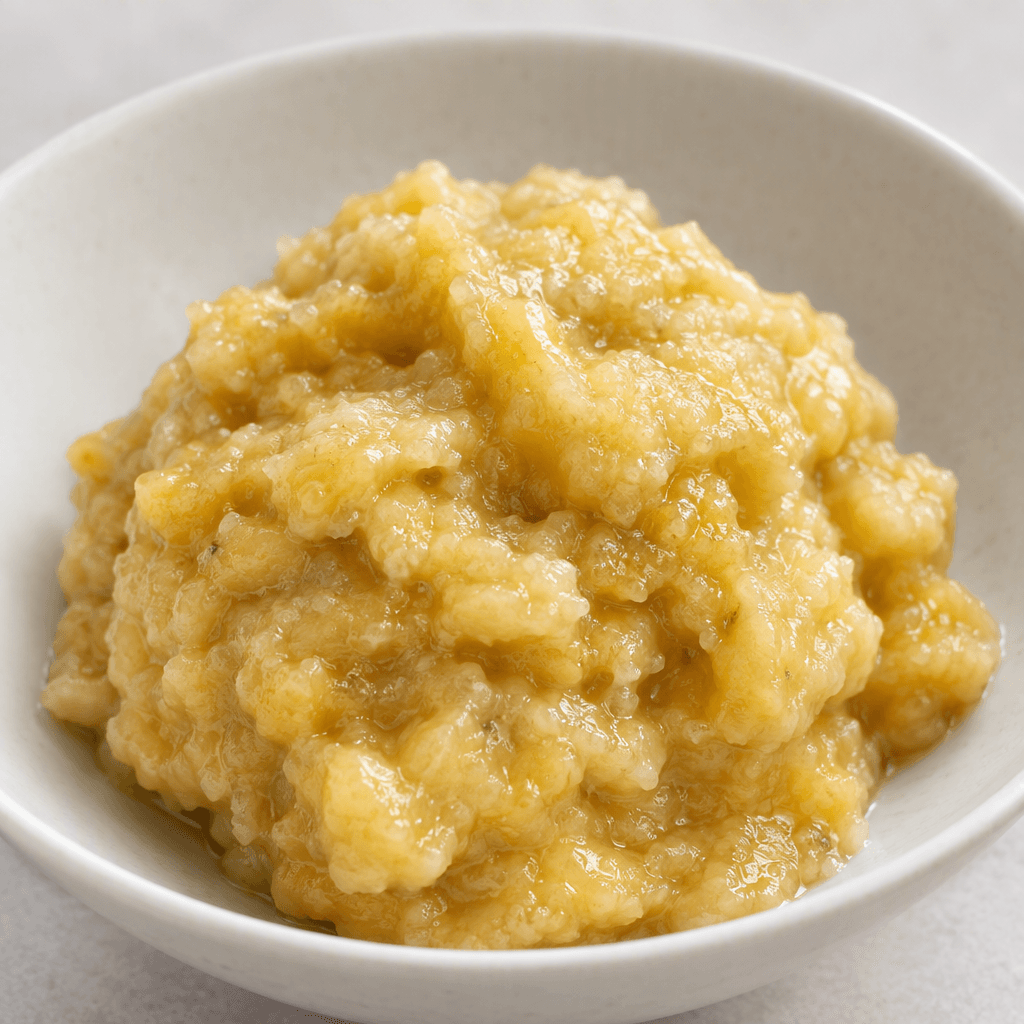
Banana Mash Calories
Source of potassium and fiber, naturally sweet
In season: Spring · Summer · Autumn · Winter
CALORIES
GI
POTASSIUM
FIBER
Quick answer
100 g of Banana Mash has 89 calories. It contains 22.8 g of carbs, 1.1 g of protein, 0.3 g of fat and 2.6 g of fiber. Its 0.4 mg of B6 covers 22% of the Daily Value. Its glycemic index is 51 (medium), so it raises blood sugar at a moderate pace.
What is Banana Mash?
Banana mash is made by crushing a ripe banana into a soft, moist puree, often with a few small lumps. As the fruit ripens, it becomes sweeter and easier to mash, so the result usually needs no added sweetener.
It is enjoyed around the world stirred into porridge or yoghurt, spread on toast, or used in baking to add moisture and fruit sweetness. For many English-speaking readers, it is also an easy breakfast or snack ingredient when a ripe banana needs using up. Banana mash is mostly carbohydrate, with some fibre; a 100 g portion provides 2.6 g of fibre. Pair it with yoghurt, oats or nut butter for a more filling bowl.
Banana Mash Nutrition Facts
Selected: 100 g
89
KCAL / 100G
Carbs
22.8g
· 8% DV
Protein
1.1g
· 2% DV
Fat
0.3g
· 0% DV
Fiber
2.6g
· 9% DV
DV is the share of the daily value covered, on a 2,000 kcal reference diet.
Calories come from: Carbs 93% · Protein 4% · Fat 3%
Banana Mash Vitamins & Minerals
Vitamins
B6
0.37mg · 22% DV
Vitamin C
8.7mg · 10% DV
B5
0.33mg · 7% DV
B2
0.07mg · 5% DV
Minerals
Potassium ⭐
358mg · 11% DV
Magnesium
27mg · 6% DV
Phosphorus
22mg · 3% DV
Selenium
1µg · 2% DV
How Nutritious Is Banana Mash?
Nutrient density
High
How many vitamins, minerals and how much fiber this food carries per calorie. A high score means a lot of nutrition for few calories.
Satiety score
Medium
An EatBetter score computed from fiber, protein and calorie density. A high score means staying full longer on the same calories.
Both scores are calculated per 100 g and do not change with the selected portion. The satiety score is EatBetter's own calculation, not a clinical measure.
Banana Mash Glycemic Index
GLYCEMIC INDEX
GLYCEMIC LOAD
Accounts for portion size — a more realistic measure than GI alone.
How to Burn Off Banana Mash
To burn the 89 calories in 100 g:
🚶
Walking (5 km/h)
🏃
Running (8 km/h)
🚴
Cycling
🏊
Swimming
Times are calculated with the MET equation for a 70 kg adult. Actual burn varies with your weight, age and pace.
Is Banana Mash Processed?
NOVA 2
Minimally Processed
1. Unprocessed
2. Minimally Processed
3. Processed
4. Ultra-Processed
NOVA classifies foods into 4 groups by industrial processing. NOVA 1 (unprocessed) is the healthiest.
Does Banana Mash Contain Allergens?
No known major allergens
Which Diets Is Banana Mash Good For?
Vegan
✓ Suitable
Vegetarian
✓ Suitable
Gluten-Free
✓ Suitable
Dairy-Free
— Not suitable
Mediterranean
✓ Suitable
Paleo
✓ Suitable
Whole30
— Not suitable
DASH
— Not suitable
Keto
— Not suitable
Low FODMAP
— Not suitable
Banana Mash Fat Profile
SATURATED
0.11g
MONOUNSATURATED
0.03g
POLYUNSATURATED
0.07g
Omega 6:3 ratio 2.3:1
Below the ideal 4:1 — a good omega balance.
Compare Banana Mash
Foods Similar to Banana Mash
Frequently Asked Questions About Banana Mash
How do you make banana mash?
Peel a ripe banana and press it with a fork until it reaches the texture you want. For smoother banana mash, use a blender; add a little yogurt or milk if you want a softer consistency.
What bananas are best for banana mash?
Use ripe yellow bananas, especially ones with brown speckles. They mash easily and taste sweeter than firm, greenish bananas, which can leave the mash starchy and lumpy.
How do you keep banana mash from turning brown?
Stir a little lemon juice into banana mash, then cover it tightly and refrigerate it promptly. Limiting its contact with air slows browning, though the colour may still darken over time.
How long does banana mash last in the fridge?
Keep banana mash in an airtight container in the refrigerator and use it within 1–2 days. Discard it if you notice mould, an off smell, or an unusual change in texture.
Can you freeze banana mash?
Yes, banana mash freezes well. Freeze it in small portions in an airtight container or freezer bag, then thaw it in the refrigerator before using; do not refreeze it after thawing.
Can banana mash be used in banana bread?
Yes, banana mash works well in banana bread and other moist quick breads. It blends into the batter easily; if it is unusually watery, the finished loaf may need a little longer to bake.
Can banana mash replace eggs in baking?
Yes, banana mash can replace eggs in some cakes, muffins, and similar bakes. It adds moisture and sweetness, but also gives the recipe a banana flavour and may make the result denser.
Is banana mash safe for babies?
Yes, smooth banana mash can be offered when a baby is ready for solid foods, usually around 6 months. Serve it while the baby is sitting upright and supervised, and do not add honey.
Does banana mash cause constipation?
Banana mash does not reliably cause or relieve constipation. Ripe banana provides some fibre, but it is not a treatment; overall fluid intake and a varied diet with fibre matter more.
Can dogs eat banana mash?
Dogs can have a small amount of plain banana mash as an occasional treat. Avoid added sugar, chocolate, or other mix-ins, and keep the portion modest because too much can upset a dog’s stomach.
Have another question about Banana Mash?
Ask the AI nutrition coach — calories, portions, alternatives and more, answered in seconds in the app.

Scan calories with your camera
Instant AI nutrition analysis

Nutrition data compiled from USDA FoodData Central and scientific sources.