

Ready & Packaged Foods
All →Vegetables & Legumes
All →Desserts & Confectionery
All →Meat & Protein
All →Grains & Bakery
All →Beverages
All →Milk & Dairy
All →

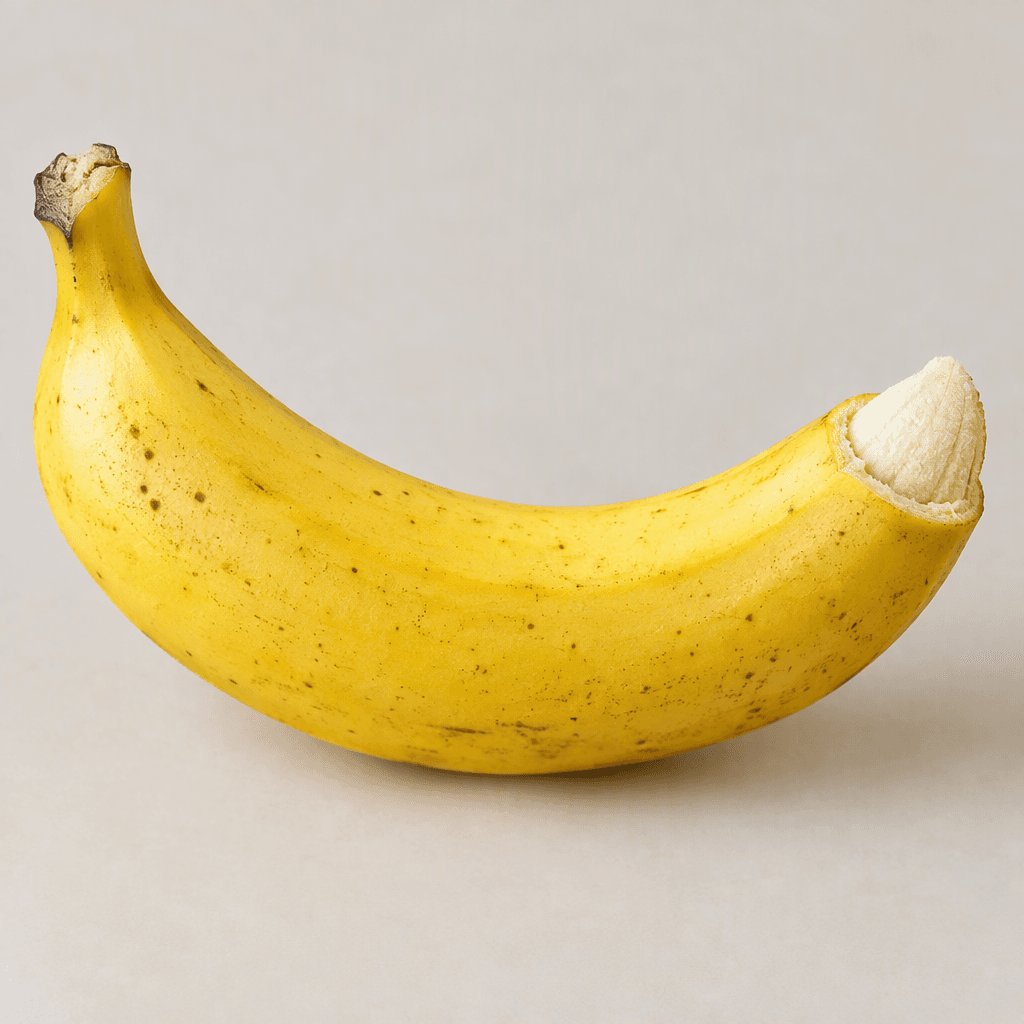
Banana (Large) Calories
High in potassium and fiber, natural energy
In season: Spring · Summer · Autumn · Winter
CALORIES
GI
POTASSIUM
FIBER
Quick answer
1 piece (large) of Banana (Large) (150 g) has 134 calories. That works out to 89 calories per 100 g. It contains 34.2 g of carbs, 1.7 g of protein, 0.5 g of fat and 3.9 g of fiber. Its 0.6 mg of B6 covers 32% of the Daily Value. Its glycemic index is 51 (medium), so it raises blood sugar at a moderate pace.
What is Banana (Large)?
A large banana is the elongated fruit of a tropical plant, with creamy flesh beneath a peel that turns yellow as it ripens. Bananas are cultivated across tropical regions and are thought to have originated in Southeast Asia. Their mild, sweet flavour and soft texture make them easy to eat on the go, or to mash into other foods.
Around the world, people eat them as a quick snack, slice them over cereal or porridge, blend them into smoothies, or use ripe bananas in baking. They provide carbohydrate for energy and contain fibre; one large banana makes a filling, convenient choice. Pair it with yoghurt or nuts for a more sustaining snack.
Banana (Large) Nutrition Facts
Selected: 100 g
89
KCAL / 100G
Carbs
22.8g
· 8% DV
Protein
1.1g
· 2% DV
Fat
0.3g
· 0% DV
Fiber
2.6g
· 9% DV
DV is the share of the daily value covered, on a 2,000 kcal reference diet.
Calories come from: Carbs 93% · Protein 4% · Fat 3%
Banana (Large) Vitamins & Minerals
Vitamins
B6
0.37mg · 22% DV
Vitamin C
8.7mg · 10% DV
B5
0.33mg · 7% DV
B2
0.07mg · 5% DV
Minerals
Potassium ⭐
358mg · 11% DV
Magnesium
27mg · 6% DV
Phosphorus
22mg · 3% DV
Selenium
1µg · 2% DV
How Nutritious Is Banana (Large)?
Nutrient density
High
How many vitamins, minerals and how much fiber this food carries per calorie. A high score means a lot of nutrition for few calories.
Satiety score
Medium
An EatBetter score computed from fiber, protein and calorie density. A high score means staying full longer on the same calories.
Both scores are calculated per 100 g and do not change with the selected portion. The satiety score is EatBetter's own calculation, not a clinical measure.
Banana (Large) Glycemic Index
GLYCEMIC INDEX
GLYCEMIC LOAD
Accounts for portion size — a more realistic measure than GI alone.
How to Burn Off Banana (Large)
To burn the 89 calories in 100 g:
🚶
Walking (5 km/h)
🏃
Running (8 km/h)
🚴
Cycling
🏊
Swimming
Times are calculated with the MET equation for a 70 kg adult. Actual burn varies with your weight, age and pace.
Is Banana (Large) Processed?
NOVA 1
Unprocessed
1. Unprocessed
2. Minimally Processed
3. Processed
4. Ultra-Processed
NOVA classifies foods into 4 groups by industrial processing. NOVA 1 (unprocessed) is the healthiest.
Does Banana (Large) Contain Allergens?
No known major allergens
Which Diets Is Banana (Large) Good For?
Vegan
✓ Suitable
Vegetarian
✓ Suitable
Gluten-Free
✓ Suitable
Dairy-Free
— Not suitable
Mediterranean
✓ Suitable
Paleo
✓ Suitable
Whole30
— Not suitable
DASH
— Not suitable
Keto
— Not suitable
Low FODMAP
— Not suitable
Banana (Large) Fat Profile
SATURATED
0.11g
MONOUNSATURATED
0.03g
POLYUNSATURATED
0.07g
Omega 6:3 ratio 2:1
Below the ideal 4:1 — a good omega balance.
Compare Banana (Large)
Foods Similar to Banana (Large)
Frequently Asked Questions About Banana (Large)
How do you ripen a banana quickly?
Put the banana in a paper bag at room temperature to speed up ripening. Adding an apple or pear can help because these fruits release ethylene, a gas that encourages ripening. Avoid the refrigerator while the banana is still green.
Should you refrigerate bananas?
Yes, you can refrigerate a ripe banana to slow further ripening. Its peel may turn dark in the cold, but the fruit inside can stay usable for longer. Leave green bananas at room temperature until they reach the ripeness you want.
Are bananas with brown spots safe to eat?
Yes, bananas with brown spots are usually safe to eat and are often sweeter and softer than spotless ones. Discard a banana if it has mold, leaking flesh, or an unpleasant fermented smell rather than ordinary ripeness spots.
Can you freeze bananas, and how should you do it?
Yes, bananas freeze well. Peel and slice them, then freeze the pieces in an airtight container; they work especially well in smoothies and baking. Thawed banana becomes soft, so it is less suitable for eating as a firm whole fruit.
Is a banana a berry?
Yes, botanically, a banana is a berry. It develops from a flower with a single ovary and has seeds inside, although cultivated bananas have tiny, undeveloped seeds and do not look like the berries people commonly picture.
Are green bananas different from ripe bananas?
Yes, green bananas are firmer and contain more resistant starch, while ripe bananas are softer and sweeter as starch changes into sugars. That difference can affect texture and digestion, so choose the ripeness that suits your recipe and preference.
Can people with diabetes eat bananas?
Yes, people with diabetes can include bananas, but ripeness and portion size can affect their blood-glucose response. A riper banana is sweeter, and pairing it with a protein- or fat-containing food may help make a snack more filling. Ask your clinician or dietitian for personal guidance.
Is a banana a good snack before a workout?
Yes, a banana is a convenient pre-workout snack because its carbohydrates provide readily available energy and it is easy to carry. If eating shortly before exercise upsets your stomach, try having it earlier rather than immediately before your session.
Is it okay to eat a banana at night?
Yes, eating a banana at night is generally fine. There is no good evidence that the timing itself makes bananas harmful or causes weight gain; whether it suits you mainly comes down to hunger, preference, and how it fits your evening routine.
Why are bananas curved?
Bananas curve because their fruit grows upward toward light as the bunch develops, rather than hanging straight down. This upward growth response is called negative geotropism, and it gives the familiar banana its curved shape.
Have another question about Banana (Large)?
Ask the AI nutrition coach — calories, portions, alternatives and more, answered in seconds in the app.

Scan calories with your camera
Instant AI nutrition analysis

Nutrition data compiled from USDA FoodData Central and scientific sources.