

Ready & Packaged Foods
All →Vegetables & Legumes
All →Desserts & Confectionery
All →Meat & Protein
All →Grains & Bakery
All →Beverages
All →Milk & Dairy
All →

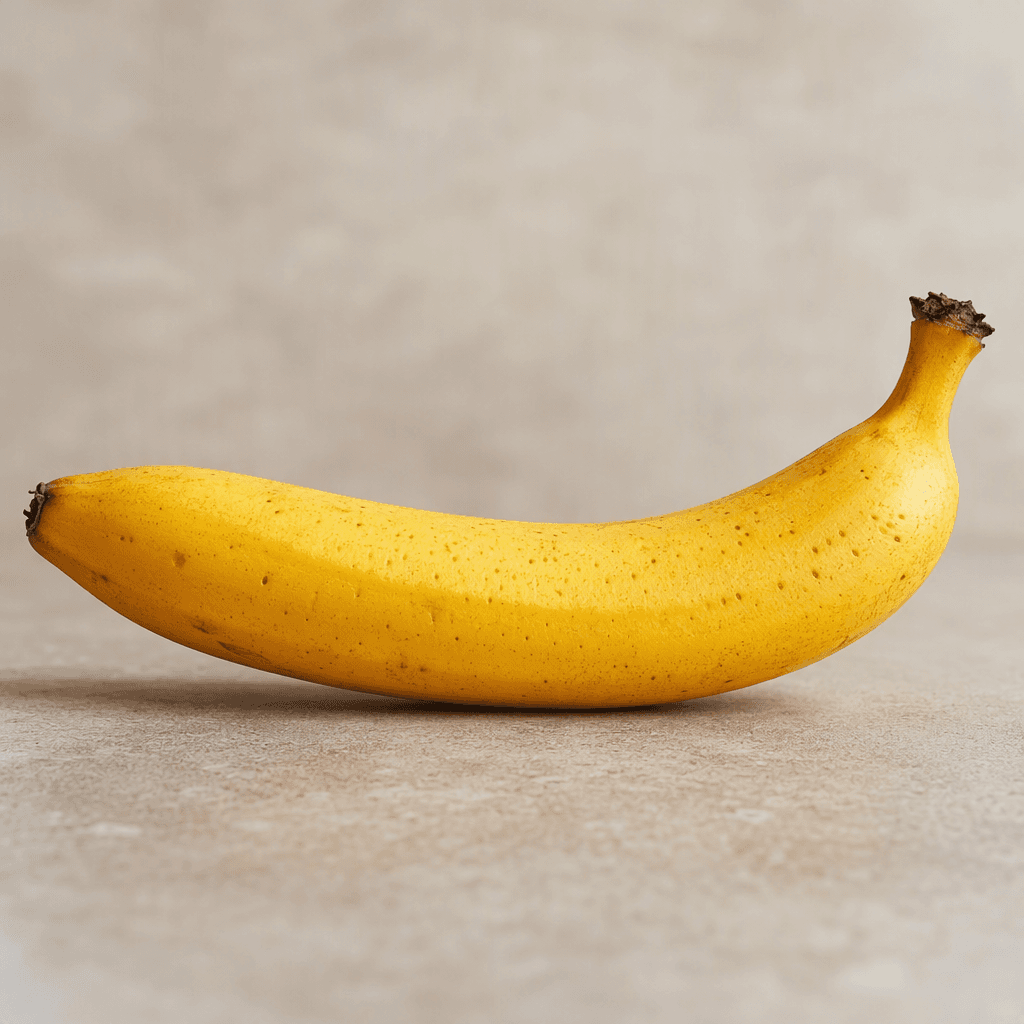
Banana Calories
High in potassium and fiber, low fat, natural energy
In season: Spring · Summer · Autumn · Winter
CALORIES
GI
POTASSIUM
FIBER
Quick answer
1 piece (medium) of Banana (120 g) has 107 calories. That works out to 89 calories per 100 g. It contains 27.4 g of carbs, 1.3 g of protein, 0.4 g of fat and 3.1 g of fiber. Its 0.4 mg of B6 covers 26% of the Daily Value. Its glycemic index is 51 (medium), so it raises blood sugar at a moderate pace.
What is Banana?
Bananas grow in warm tropical regions and are now cultivated in many parts of the world. Their thick peel protects soft, creamy flesh with a mild sweetness; most are eaten fresh once the peel turns yellow. They’re an easy breakfast addition, sliced over cereal or porridge, and a familiar portable snack. Ripe bananas also blend smoothly into smoothies or add moisture and sweetness to baking.
A banana provides natural carbohydrate for energy, along with fibre and potassium, while being very low in fat. Pair one with yoghurt or nut butter for a more filling snack, or use a well-speckled ripe banana to sweeten porridge or a smoothie without adding much else.
Banana Nutrition Facts
Selected: 100 g
89
KCAL / 100G
Carbs
22.8g
· 8% DV
Protein
1.1g
· 2% DV
Fat
0.3g
· 0% DV
Fiber
2.6g
· 9% DV
DV is the share of the daily value covered, on a 2,000 kcal reference diet.
Calories come from: Carbs 93% · Protein 4% · Fat 3%
Banana Vitamins & Minerals
Vitamins
B6
0.37mg · 22% DV
Vitamin C
8.7mg · 10% DV
B5
0.33mg · 7% DV
B2
0.07mg · 5% DV
Minerals
Potassium ⭐
358mg · 11% DV
Magnesium
27mg · 6% DV
Phosphorus
22mg · 3% DV
Selenium
1µg · 2% DV
How Nutritious Is Banana?
Nutrient density
High
How many vitamins, minerals and how much fiber this food carries per calorie. A high score means a lot of nutrition for few calories.
Satiety score
Medium
An EatBetter score computed from fiber, protein and calorie density. A high score means staying full longer on the same calories.
Both scores are calculated per 100 g and do not change with the selected portion. The satiety score is EatBetter's own calculation, not a clinical measure.
Banana Glycemic Index
GLYCEMIC INDEX
GLYCEMIC LOAD
Accounts for portion size — a more realistic measure than GI alone.
How to Burn Off Banana
To burn the 89 calories in 100 g:
🚶
Walking (5 km/h)
🏃
Running (8 km/h)
🚴
Cycling
🏊
Swimming
Times are calculated with the MET equation for a 70 kg adult. Actual burn varies with your weight, age and pace.
Is Banana Processed?
NOVA 1
Unprocessed
1. Unprocessed
2. Minimally Processed
3. Processed
4. Ultra-Processed
NOVA classifies foods into 4 groups by industrial processing. NOVA 1 (unprocessed) is the healthiest.
Does Banana Contain Allergens?
No known major allergens
Which Diets Is Banana Good For?
Vegan
✓ Suitable
Vegetarian
✓ Suitable
Gluten-Free
✓ Suitable
Dairy-Free
— Not suitable
Mediterranean
✓ Suitable
Paleo
✓ Suitable
Whole30
— Not suitable
DASH
— Not suitable
Keto
— Not suitable
Low FODMAP
— Not suitable
Banana Fat Profile
SATURATED
0.11g
MONOUNSATURATED
0.03g
POLYUNSATURATED
0.07g
Omega 6:3 ratio 2:1
Below the ideal 4:1 — a good omega balance.
Compare Banana
Foods Similar to Banana
Frequently Asked Questions About Banana
How can you ripen bananas quickly?
To ripen bananas faster, place them in a paper bag at room temperature. The bag traps the ethylene gas the fruit naturally releases; adding a ripe apple can speed the process further. Avoid sealing them in plastic, which can trap excess moisture.
Should you put bananas in the refrigerator?
Yes, refrigerate bananas once they are as ripe as you like. The peel may darken in the cold, but the flesh usually stays usable longer. Keep green bananas at room temperature first so they can ripen.
Are bananas with brown spots safe to eat?
Yes, brown freckles on a banana peel usually mean the fruit is ripe and sweeter, not spoiled. Throw it away if you see mold, leaking, or notice an unusual sour smell.
Can you freeze bananas, and should you peel them first?
Yes, bananas freeze well. Peel and slice them before freezing so they are easier to portion and use; store the pieces in an airtight container. Add them straight from the freezer to smoothies or baking.
Is a green banana healthier than a yellow banana?
Neither is universally healthier: green bananas contain more resistant starch and are firmer, while ripe yellow bananas are softer and sweeter. As a banana ripens, some of its starch changes into sugars, which also changes its texture and taste.
Why does a peeled banana turn brown, and how can you slow it down?
A peeled banana turns brown when its flesh reacts with oxygen. A little lemon juice on the cut surface and an airtight container in the refrigerator can slow the discoloration, though it is best to eat the banana soon.
Can you eat banana peel?
Yes, banana peel is edible, but it is tougher and more bitter than the fruit inside. Wash it thoroughly before using it, and try cooking it or blending it into a recipe rather than eating it plain.
Do bananas cause constipation?
Ripe bananas do not usually cause constipation and provide fiber. Green bananas have more resistant starch, which may feel harder to digest for some people; drinking enough fluids and eating a varied range of fiber-rich foods also helps support regularity.
Is a banana a good snack before a workout?
Yes, a banana can be a convenient pre-workout snack because it provides carbohydrates that the body can use for energy. Eat it when it feels comfortable for you; a large snack immediately before exercise may feel uncomfortable.
Should you wash a banana before peeling it?
Yes, rinse the banana under running water and dry it before peeling, even though you will discard the peel. This reduces the chance of transferring dirt or microbes from the outside to the fruit through your hands.
Have another question about Banana?
Ask the AI nutrition coach — calories, portions, alternatives and more, answered in seconds in the app.

Scan calories with your camera
Instant AI nutrition analysis

Nutrition data compiled from USDA FoodData Central and scientific sources.