

Ready & Packaged Foods
All →Vegetables & Legumes
All →Desserts & Confectionery
All →Meat & Protein
All →Grains & Bakery
All →Beverages
All →Milk & Dairy
All →

Balsamic Sauce Calories
Sweet-tangy, popular for salads and meats
In season: Spring · Summer · Autumn · Winter
CALORIES
GI
POTASSIUM
FIBER
Quick answer
1 tablespoon (medium) of Balsamic Sauce (15 g) has 18 calories. That works out to 120 calories per 100 g. It contains 4.1 g of carbs, 0.1 g of protein, 0 g of fat and 0.1 g of fiber. Its glycemic index is 35 (low), so it raises blood sugar slowly.
What is Balsamic Sauce?
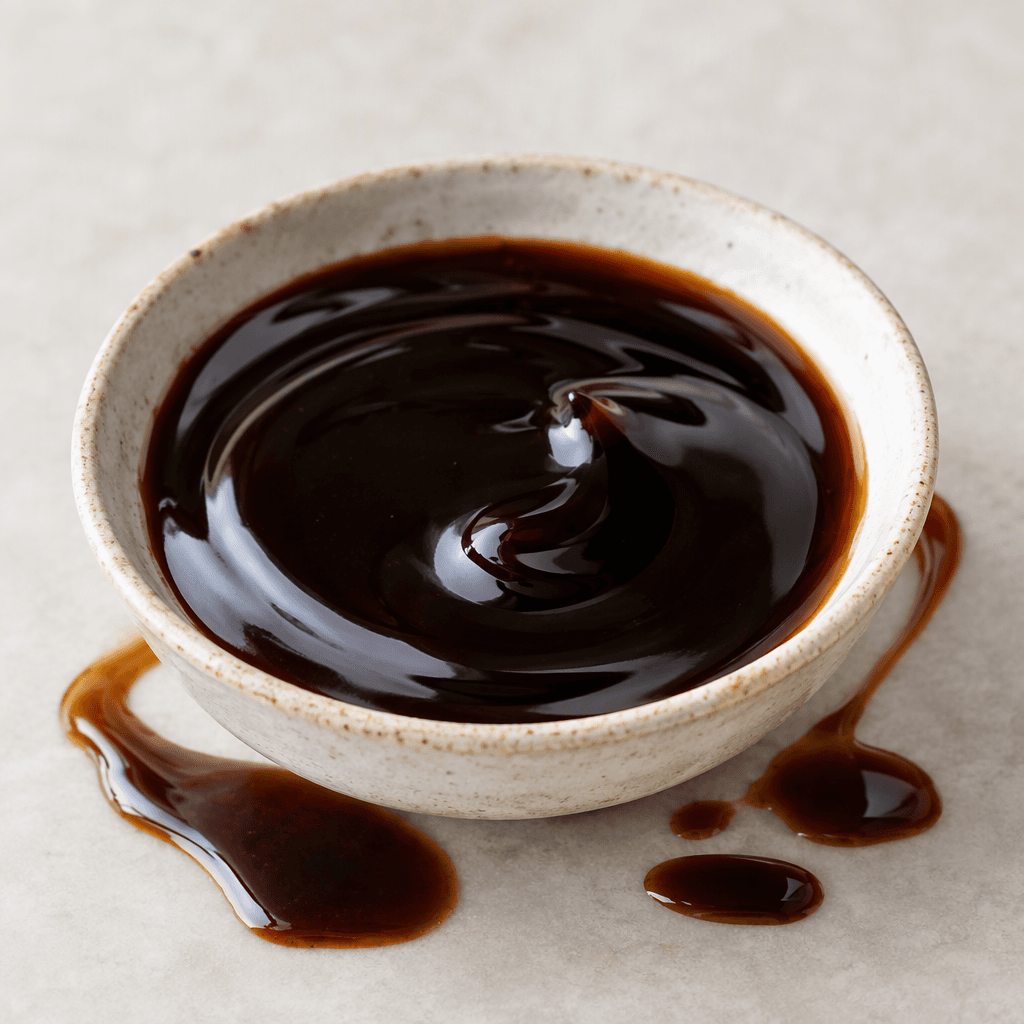
Balsamic Sauce is a glossy, thick sauce inspired by Italy’s balsamic vinegar tradition. It is commonly made by concentrating balsamic vinegar, sometimes with added sweetener or thickener, until it has a syrupy consistency. Its sweet-tangy flavour is more rounded and less sharp than vinegar on its own.
In Italy and elsewhere, it is drizzled over salads, grilled vegetables and meat, or paired with cheese; a little can also add contrast to sandwiches. Nutritionally, it is mostly carbohydrate, with very little fat or protein. Use a light drizzle to bring out the flavour of a dish without making it overly sweet.
Balsamic Sauce Nutrition Facts
Selected: 100 g
120
KCAL / 100G
Carbs
27g
· 10% DV
Protein
0.5g
· 1% DV
Fat
0.2g
· 0% DV
Fiber
0.5g
· 2% DV
DV is the share of the daily value covered, on a 2,000 kcal reference diet.
Calories come from: Carbs 97% · Protein 2% · Fat 1%
Balsamic Sauce Vitamins & Minerals
Vitamins
B1
0.01mg · 1% DV
B2
0.01mg · 1% DV
B3
0.1mg · 1% DV
B6
0.02mg · 1% DV
Minerals
Calcium
27mg · 3% DV
Phosphorus
19mg · 3% DV
Potassium ⭐
90mg · 3% DV
Magnesium
9mg · 2% DV
How Nutritious Is Balsamic Sauce?
Nutrient density
Low
How many vitamins, minerals and how much fiber this food carries per calorie. A high score means a lot of nutrition for few calories.
Satiety score
Low
An EatBetter score computed from fiber, protein and calorie density. A high score means staying full longer on the same calories.
Both scores are calculated per 100 g and do not change with the selected portion. The satiety score is EatBetter's own calculation, not a clinical measure.
Balsamic Sauce Glycemic Index
GLYCEMIC INDEX
GLYCEMIC LOAD
Accounts for portion size — a more realistic measure than GI alone.
How to Burn Off Balsamic Sauce
To burn the 120 calories in 100 g:
🚶
Walking (5 km/h)
🏃
Running (8 km/h)
🚴
Cycling
🏊
Swimming
Times are calculated with the MET equation for a 70 kg adult. Actual burn varies with your weight, age and pace.
Is Balsamic Sauce Processed?
NOVA 3
Processed
1. Unprocessed
2. Minimally Processed
3. Processed
4. Ultra-Processed
NOVA classifies foods into 4 groups by industrial processing. NOVA 1 (unprocessed) is the healthiest.
Does Balsamic Sauce Contain Allergens?
No known major allergens
Which Diets Is Balsamic Sauce Good For?
Vegan
✓ Suitable
Vegetarian
✓ Suitable
Gluten-Free
✓ Suitable
Dairy-Free
— Not suitable
Mediterranean
✓ Suitable
Paleo
— Not suitable
Whole30
— Not suitable
DASH
— Not suitable
Keto
— Not suitable
Low FODMAP
— Not suitable
Balsamic Sauce Fat Profile
SATURATED
0.05g
MONOUNSATURATED
0.07g
POLYUNSATURATED
0.03g
Compare Balsamic Sauce
Foods Similar to Balsamic Sauce
Frequently Asked Questions About Balsamic Sauce
What is balsamic sauce?
Balsamic sauce is a thick, sweet-tart condiment often made by reducing balsamic vinegar. Some bottled versions include sweeteners or thickeners, so its exact ingredients and texture vary by product.
Is balsamic sauce the same as balsamic glaze?
They are often used to describe the same thick, drizzleable condiment, though products labeled balsamic sauce can vary in sweetness and thickness. A glaze is typically reduced until syrupy, while some sauces are thickened with added ingredients.
How do you use balsamic sauce on a salad?
Drizzle balsamic sauce over the salad just before serving so it does not weigh down or wilt delicate leaves. Its concentrated sweetness works especially well with tomatoes, roasted vegetables, and salads that include cheese.
Can you cook with balsamic sauce?
Yes, but add balsamic sauce near the end of cooking or use it as a finishing drizzle. Its sugars can scorch during prolonged high-heat cooking and leave a bitter taste.
What does balsamic sauce go well with besides salad?
Balsamic sauce pairs well with roasted vegetables, grilled meats, and fruit such as strawberries. Add a small drizzle at serving time to bring out a sweet-tart contrast without covering the other flavors.
How do you make balsamic sauce at home?
Simmer balsamic vinegar gently in a small saucepan until it reduces and coats a spoon; it will thicken further as it cools. Stir occasionally and keep the heat low to prevent scorching.
Can balsamic sauce be used as a marinade?
It can be used in a marinade, but its sweetness may burn on a hot grill. Combine it with oil and other marinade ingredients, then wipe off excess sauce before cooking or brush it on near the end.
How should you store balsamic sauce after opening?
Follow the storage directions on the bottle, since commercial balsamic sauces differ in formulation. Refrigerate homemade balsamic reduction in a clean, sealed container and use it while its smell and appearance remain normal.
Can balsamic sauce replace balsamic vinegar in a recipe?
Sometimes, but balsamic sauce is thicker and usually sweeter than balsamic vinegar. It works as a finishing drizzle, while vinegar is better for a runny dressing; thin the sauce with a little water if a recipe needs more liquid.
Why is balsamic sauce so thick?
Balsamic sauce is thick because the vinegar is often reduced, concentrating its liquid and sugars. Some commercial versions also use thickeners, so the texture can differ noticeably between brands.
Have another question about Balsamic Sauce?
Ask the AI nutrition coach — calories, portions, alternatives and more, answered in seconds in the app.

Scan calories with your camera
Instant AI nutrition analysis

Nutrition data compiled from USDA FoodData Central and scientific sources.