

Ready & Packaged Foods
All →Vegetables & Legumes
All →Desserts & Confectionery
All →Meat & Protein
All →Grains & Bakery
All →Beverages
All →Milk & Dairy
All →

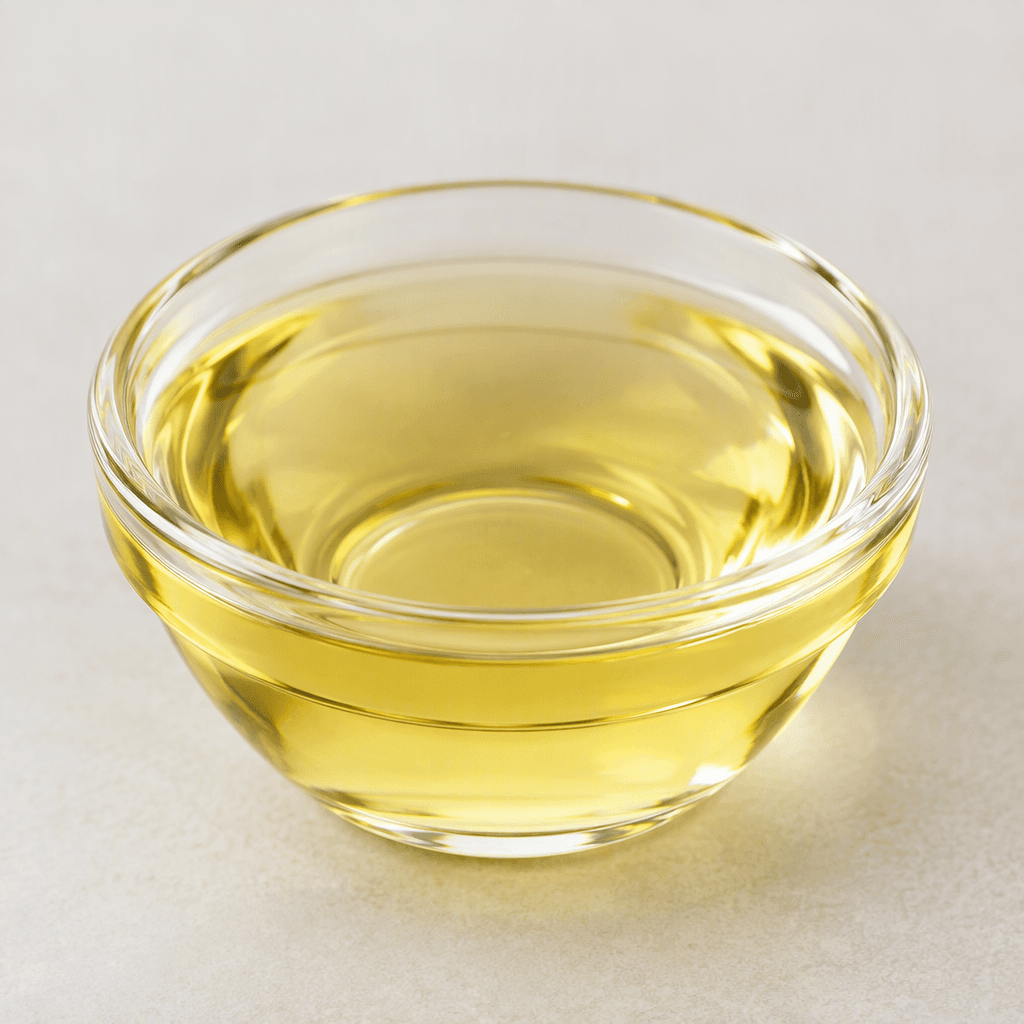
Balance Oil Calories
Blended culinary oil formulated for balanced fatty acids
CALORIES
GI
POTASSIUM
FIBER
Quick answer
1 tablespoon (medium) of Balance Oil (14 g) has 124 calories. That works out to 884 calories per 100 g. It contains 0 g of carbs, 0 g of protein, 14 g of fat and 0 g of fiber. Its 2.5 mg of Vitamin E covers 17% of the Daily Value. Its glycemic index is 0 (low), so it raises blood sugar slowly.
What is Balance Oil?
Balance Oil is a blended culinary oil formulated with a balanced fatty-acid profile. It is a pourable, pale-golden oil; the specific oils in the blend can vary, so check the label for its ingredients and suggested uses.
You can use it in salad dressings, drizzle a little over vegetables or cooked dishes, or follow the package guidance for cooking. Its flavour depends on the blend, so start with a modest amount if you want the other ingredients to stand out. Nutritionally, it contributes fat rather than protein or carbohydrate. Measuring out a small amount can help keep a meal lighter, and the label is the best guide if you plan to heat it.
Balance Oil Nutrition Facts
Selected: 100 g
884
KCAL / 100G
Carbs
0g
· 0% DV
Protein
0g
· 0% DV
Fat
100g
· 128% DV
Fiber
0g
· 0% DV
DV is the share of the daily value covered, on a 2,000 kcal reference diet.
Calories come from: Carbs 0% · Protein 0% · Fat 100%
Balance Oil Vitamins & Minerals
Vitamins
Vitamin E
18mg · 120% DV
Vitamin K
60µg · 50% DV
Vitamin A
0µg · 0% DV
B1
0mg · 0% DV
Minerals
Calcium
0mg · 0% DV
Iron
0mg · 0% DV
Magnesium
0mg · 0% DV
Zinc
0mg · 0% DV
How Nutritious Is Balance Oil?
Nutrient density
Low
How many vitamins, minerals and how much fiber this food carries per calorie. A high score means a lot of nutrition for few calories.
Satiety score
Low
An EatBetter score computed from fiber, protein and calorie density. A high score means staying full longer on the same calories.
Both scores are calculated per 100 g and do not change with the selected portion. The satiety score is EatBetter's own calculation, not a clinical measure.
Balance Oil Glycemic Index
GLYCEMIC INDEX
GLYCEMIC LOAD
Accounts for portion size — a more realistic measure than GI alone.
How to Burn Off Balance Oil
To burn the 884 calories in 100 g:
🚶
Walking (5 km/h)
🏃
Running (8 km/h)
🚴
Cycling
🏊
Swimming
Times are calculated with the MET equation for a 70 kg adult. Actual burn varies with your weight, age and pace.
Is Balance Oil Processed?
NOVA 3
Processed
1. Unprocessed
2. Minimally Processed
3. Processed
4. Ultra-Processed
NOVA classifies foods into 4 groups by industrial processing. NOVA 1 (unprocessed) is the healthiest.
Does Balance Oil Contain Allergens?
No known major allergens
Which Diets Is Balance Oil Good For?
Vegan
✓ Suitable
Vegetarian
✓ Suitable
Gluten-Free
✓ Suitable
Dairy-Free
— Not suitable
Mediterranean
✓ Suitable
Paleo
✓ Suitable
Whole30
— Not suitable
DASH
— Not suitable
Keto
✓ Suitable
Low FODMAP
— Not suitable
Balance Oil Fat Profile
SATURATED
10g
MONOUNSATURATED
38g
POLYUNSATURATED
44g
Omega 6:3 ratio 2.7:1
Below the ideal 4:1 — a good omega balance.
Compare Balance Oil
Foods Similar to Balance Oil
Frequently Asked Questions About Balance Oil
What is Balance Oil?
Balance Oil is a blended culinary oil formulated to provide a balanced fatty-acid profile. It is not a single oil such as olive or sunflower oil; its exact source oils depend on the product’s formulation.
What oils are in Balance Oil?
The oils in Balance Oil depend on the specific formulation. The information provided describes it as a blend designed for balanced fatty acids but does not name its ingredients, so the product’s ingredient list is needed to identify them.
How do you use Balance Oil?
Use Balance Oil in dressings, with vegetables, or in everyday cooking. If you are trying it for the first time, start with a small amount so you can judge its flavor and how it works in the dish.
Can you cook with Balance Oil?
Yes, Balance Oil can be used for cooking, but its suitability for high heat depends on the blend and how it is made. If the product gives no high-heat guidance, use it at low or moderate heat rather than heating it for a long time.
Can you fry with Balance Oil?
Whether Balance Oil is suitable for frying depends on its smoke point and the manufacturer’s instructions. If that information is unavailable, avoid deep-frying with it, and do not keep using oil once it starts smoking.
Can Balance Oil replace olive oil?
Yes, Balance Oil can replace olive oil in some dishes, but they do not have the same flavor or fatty-acid profile. A recipe that relies on olive oil’s distinctive taste may turn out differently.
Is Balance Oil good for salad dressing?
Yes, Balance Oil can be used in salad dressing. Mix it with lemon juice or vinegar and taste as you go; its flavor may differ from olive oil, so adjust the amount to suit the salad.
Does Balance Oil have a good omega-3 to omega-6 ratio?
Balance Oil is formulated with fatty-acid balance in mind, but its omega-3 and omega-6 amounts or ratio are not specified here. Do not assume a particular ratio without product-specific information.
Can you take Balance Oil every day?
Yes, you can use Balance Oil daily in meals, but keep in mind that oils are energy-dense and count the amount you add. It should be one part of your overall mix of food and fat sources.
How should you store Balance Oil?
Store Balance Oil tightly closed in a cool, dark place. Heat and direct sunlight can make oil deteriorate faster; after opening, follow the storage directions on the product packaging.
Have another question about Balance Oil?
Ask the AI nutrition coach — calories, portions, alternatives and more, answered in seconds in the app.

Scan calories with your camera
Instant AI nutrition analysis

Nutrition data compiled from USDA FoodData Central and scientific sources.