

Ready & Packaged Foods
All →Vegetables & Legumes
All →Desserts & Confectionery
All →Meat & Protein
All →Grains & Bakery
All →Beverages
All →Milk & Dairy
All →

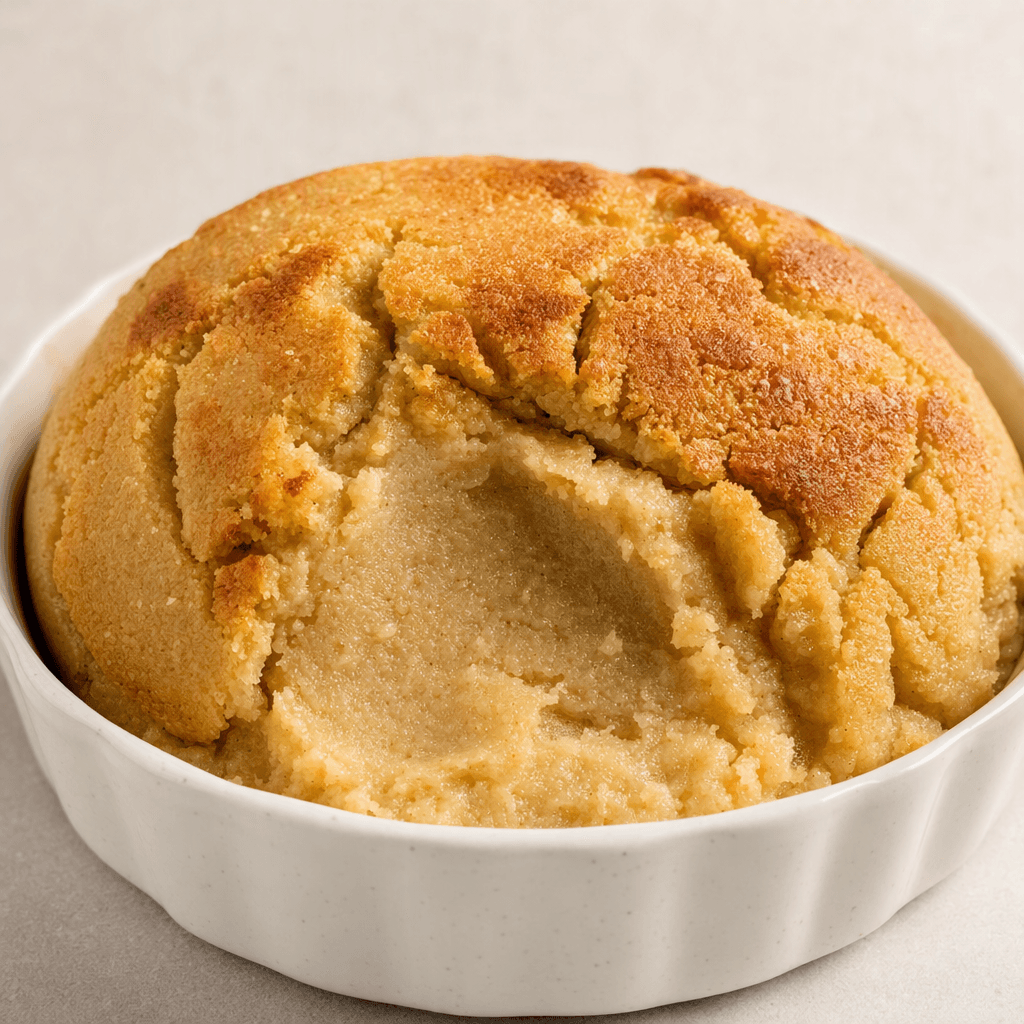
Baked halva Calories
Traditional sweet made from sesame paste and sugar, baked in the oven
In season: Winter
CALORIES
GI
POTASSIUM
FIBER
Quick answer
1 piece (medium) of Baked halva (50 g) has 220 calories. That works out to 440 calories per 100 g. It contains 24.5 g of carbs, 4.3 g of protein, 11 g of fat and 1.8 g of fiber. Its 0.4 mg of Copper covers 39% of the Daily Value. Its glycemic index is 60 (medium), so it raises blood sugar at a moderate pace.
What is Baked halva?
Baked halva is a warm dessert made by baking sesame-based halva until the top is lightly browned. In Turkey, it is especially familiar as a sweet finish to a fish meal; recipes may soften the halva with milk before it goes into the oven.
The surface turns lightly crisp while the middle stays soft and creamy, with toasted sesame flavour balanced by sweetness. It is usually served warm in modest portions, often straight from its baking dish. Sesame paste and sugar make it an energy-dense treat rather than an everyday snack. For a lighter serving, keep the piece small and pair it with fresh fruit or unsweetened tea.
Baked halva Nutrition Facts
Selected: 100 g
440
KCAL / 100G
Carbs
49g
· 18% DV
Protein
8.5g
· 17% DV
Fat
22g
· 28% DV
Fiber
3.5g
· 13% DV
DV is the share of the daily value covered, on a 2,000 kcal reference diet.
Calories come from: Carbs 46% · Protein 8% · Fat 46%
Baked halva Vitamins & Minerals
Vitamins
Vitamin E
2.3mg · 15% DV
B1
0.12mg · 10% DV
B5
0.45mg · 9% DV
Folate
35µg · 9% DV
Minerals
Copper
1mg · 111% DV
Manganese
1mg · 43% DV
Calcium
380mg · 38% DV
Phosphorus
220mg · 31% DV
How Nutritious Is Baked halva?
Nutrient density
Medium
How many vitamins, minerals and how much fiber this food carries per calorie. A high score means a lot of nutrition for few calories.
Satiety score
Low
An EatBetter score computed from fiber, protein and calorie density. A high score means staying full longer on the same calories.
Both scores are calculated per 100 g and do not change with the selected portion. The satiety score is EatBetter's own calculation, not a clinical measure.
Baked halva Glycemic Index
GLYCEMIC INDEX
GLYCEMIC LOAD
Accounts for portion size — a more realistic measure than GI alone.
How to Burn Off Baked halva
To burn the 440 calories in 100 g:
🚶
Walking (5 km/h)
🏃
Running (8 km/h)
🚴
Cycling
🏊
Swimming
Times are calculated with the MET equation for a 70 kg adult. Actual burn varies with your weight, age and pace.
Is Baked halva Processed?
NOVA 3
Processed
1. Unprocessed
2. Minimally Processed
3. Processed
4. Ultra-Processed
NOVA classifies foods into 4 groups by industrial processing. NOVA 1 (unprocessed) is the healthiest.
Does Baked halva Contain Allergens?
Contains these allergens:
Which Diets Is Baked halva Good For?
Vegan
— Not suitable
Vegetarian
✓ Suitable
Gluten-Free
— Not suitable
Dairy-Free
— Not suitable
Mediterranean
✓ Suitable
Paleo
— Not suitable
Whole30
— Not suitable
DASH
— Not suitable
Keto
— Not suitable
Low FODMAP
— Not suitable
Baked halva Fat Profile
SATURATED
3.5g
MONOUNSATURATED
9.1g
POLYUNSATURATED
8.1g
Omega 6:3 ratio 90:1
Above the ideal 4:1 (90:1).
Compare Baked halva
Foods Similar to Baked halva
Frequently Asked Questions About Baked halva
What is baked halva?
Baked halva is a warm dessert made by softening sesame-based tahini halva and baking it until the surface turns golden. It is especially associated with Turkish cooking and is often served in an individual oven-safe dish.
How do you make baked halva?
To make baked halva, mash tahini halva, gradually mix in milk until creamy, then bake it in a small oven-safe dish until the top is lightly browned. Serve it warm after a brief rest.
Is baked halva made from tahini halva?
Yes, baked halva is typically made from tahini halva, the sesame-paste confection. It is not the same as flour or semolina halva: baking softens the tahini version and gives it a warm, creamy center.
Why is milk added to baked halva?
Milk loosens the dense tahini halva and gives baked halva a softer, creamier texture. Add it gradually, since too much can leave the dessert watery rather than thick and spoonable.
How long should baked halva stay in the oven?
Bake baked halva until its top is lightly golden and the edges are hot and bubbling. The time varies with the oven and dish, so use the color and texture as your guide rather than relying on a fixed minute count.
Why is my baked halva runny?
Baked halva is usually runny because too much milk was mixed in or it did not bake long enough. Add milk gradually and bake until the top colors; the dessert also firms a little as it rests.
How is baked halva traditionally served in Turkey?
Baked halva is often served warm after a fish meal in Turkish restaurants. The practice is a familiar pairing rather than a rule, and the dessert is commonly brought to the table in the dish it was baked in.
Can you serve baked halva with ice cream?
Yes, baked halva pairs well with ice cream. A scoop of vanilla ice cream on warm halva gives a pleasing contrast in temperature and texture; because both are sweet, a modest serving is usually enough.
How should you store leftover baked halva?
Store leftover baked halva in a covered container in the refrigerator, then reheat only the portion you plan to eat. Warm it gently in an oven or microwave, since repeated heating can make its texture less pleasant.
Can baked halva contribute to weight gain?
Yes, eating large portions of baked halva often can contribute to weight gain because it is an energy-dense dessert. A smaller serving can fit more easily into a routine than adding it on top of other sweets.
Have another question about Baked halva?
Ask the AI nutrition coach — calories, portions, alternatives and more, answered in seconds in the app.

Scan calories with your camera
Instant AI nutrition analysis

Nutrition data compiled from USDA FoodData Central and scientific sources.