

Ready & Packaged Foods
All →Vegetables & Legumes
All →Desserts & Confectionery
All →Meat & Protein
All →Grains & Bakery
All →Beverages
All →Milk & Dairy
All →

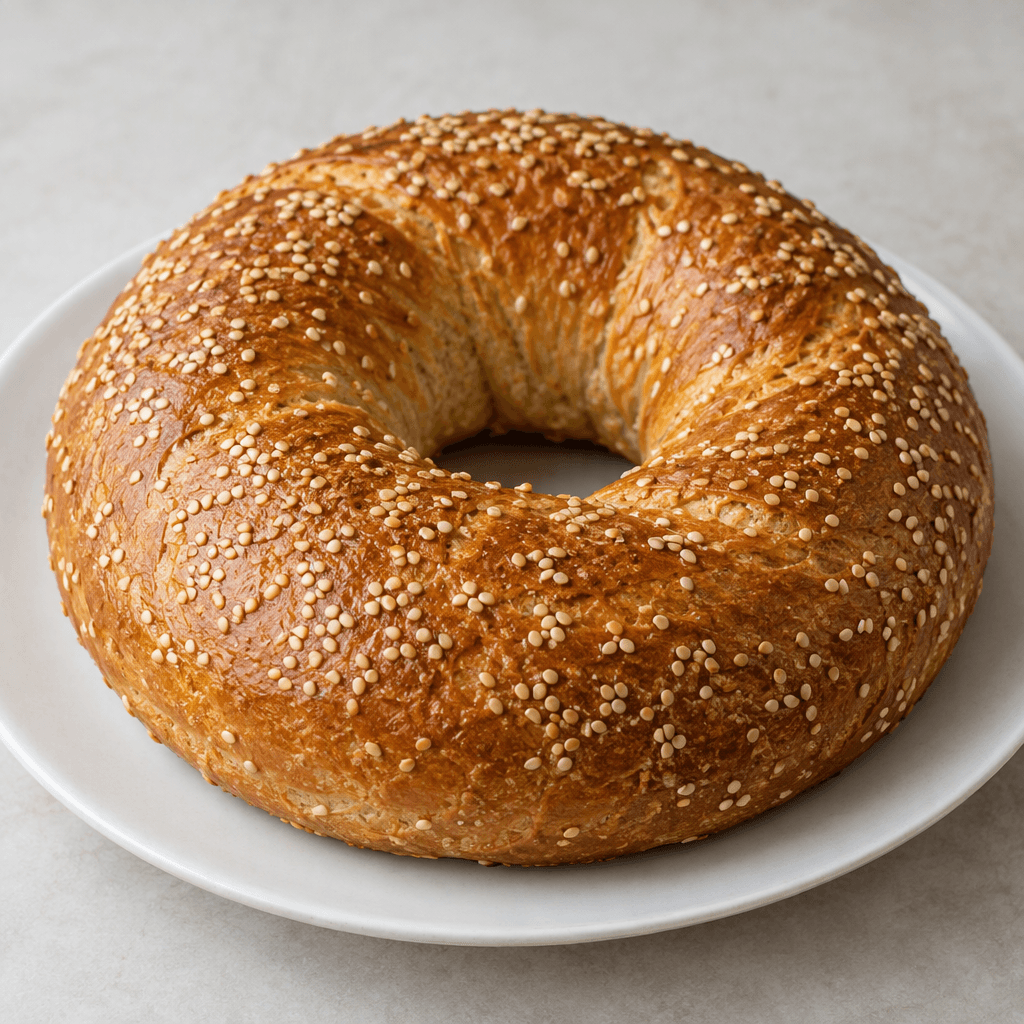
Bagel Calories
Traditional ring-shaped bread, boiled then baked
In season: Spring · Summer · Autumn · Winter
CALORIES
GI
POTASSIUM
FIBER
Quick answer
1 piece (medium) of Bagel (95 g) has 238 calories. That works out to 250 calories per 100 g. It contains 46.6 g of carbs, 9 g of protein, 1.4 g of fat and 2.4 g of fiber. Its 12.4 µg of Selenium covers 22% of the Daily Value. Its glycemic index is 72 (high), so it raises blood sugar quickly.
What is Bagel?
A bagel is a yeasted, ring-shaped bread, traditionally boiled briefly before baking. It is associated with Jewish communities in Poland, and later became especially popular in places such as New York. Sesame is a familiar topping. The crust is lightly glossy and chewy, while the inside is compact rather than airy.
Enjoy it plain or split and filled with cream cheese, smoked fish, egg or vegetables; it works for breakfast, lunch or an on-the-go sandwich. Bagels are mainly a source of carbohydrates, with some protein. Their dense texture makes one filling, so pair it with fruit or vegetables for a more balanced meal.
Bagel Nutrition Facts
Selected: 100 g
250
KCAL / 100G
Carbs
49g
· 18% DV
Protein
9.5g
· 19% DV
Fat
1.5g
· 2% DV
Fiber
2.5g
· 9% DV
DV is the share of the daily value covered, on a 2,000 kcal reference diet.
Calories come from: Carbs 79% · Protein 15% · Fat 6%
Bagel Vitamins & Minerals
Vitamins
B3
2.6mg · 16% DV
B1
0.18mg · 15% DV
Folate
35µg · 9% DV
B2
0.11mg · 8% DV
Minerals
Selenium
13µg · 24% DV
Sodium
450mg · 20% DV
Iron
2mg · 11% DV
Phosphorus
70mg · 10% DV
How Nutritious Is Bagel?
Nutrient density
Low
How many vitamins, minerals and how much fiber this food carries per calorie. A high score means a lot of nutrition for few calories.
Satiety score
Medium
An EatBetter score computed from fiber, protein and calorie density. A high score means staying full longer on the same calories.
Both scores are calculated per 100 g and do not change with the selected portion. The satiety score is EatBetter's own calculation, not a clinical measure.
Bagel Glycemic Index
GLYCEMIC INDEX
GLYCEMIC LOAD
Accounts for portion size — a more realistic measure than GI alone.
How to Burn Off Bagel
To burn the 250 calories in 100 g:
🚶
Walking (5 km/h)
🏃
Running (8 km/h)
🚴
Cycling
🏊
Swimming
Times are calculated with the MET equation for a 70 kg adult. Actual burn varies with your weight, age and pace.
Is Bagel Processed?
NOVA 3
Processed
1. Unprocessed
2. Minimally Processed
3. Processed
4. Ultra-Processed
NOVA classifies foods into 4 groups by industrial processing. NOVA 1 (unprocessed) is the healthiest.
Does Bagel Contain Allergens?
Contains these allergens:
Which Diets Is Bagel Good For?
Vegan
— Not suitable
Vegetarian
✓ Suitable
Gluten-Free
— Not suitable
Dairy-Free
— Not suitable
Mediterranean
✓ Suitable
Paleo
— Not suitable
Whole30
— Not suitable
DASH
— Not suitable
Keto
— Not suitable
Low FODMAP
— Not suitable
Bagel Fat Profile
SATURATED
0.3g
MONOUNSATURATED
0.2g
POLYUNSATURATED
0.5g
Omega 6:3 ratio 16.7:1
Above the ideal 4:1 (16.7:1).
Compare Bagel
Foods Similar to Bagel
Frequently Asked Questions About Bagel
What is a bagel, and how is it made?
A bagel is a chewy, ring-shaped bread. Its dough is shaped into rings, briefly boiled, and then baked; boiling helps create the dense interior and glossy crust that distinguish a bagel from many other breads.
Why are bagels boiled before baking?
Bagels are boiled to develop their characteristic chewy texture and shiny crust. The brief boil sets the outside of the dough before it finishes baking in the oven.
What is the difference between a bagel and a doughnut?
A bagel is a bread that is boiled and then baked, so it is usually dense and chewy. A doughnut is typically sweetened and fried, with a softer, richer texture; the shared ring shape can be misleading.
What do you put on a bagel?
Cream cheese is a classic bagel topping, but butter, eggs, smoked salmon, avocado, or peanut butter also work. Slice the bagel through the middle first, then spread toppings on the cut sides or build a sandwich.
Is a bagel the same as a bialy?
No. A bagel has a hole through the center and is boiled before baking, while a bialy has a shallow indentation, often filled with onion, and is baked without being boiled.
How should you store bagels to keep them fresh?
Keep bagels in a sealed bag or bread box at room temperature if you will eat them soon. Refrigeration can make bread stale faster, so freeze bagels you do not plan to use within a few days.
Can you freeze bagels?
Yes, bagels freeze well. Wrap them airtight, whole or sliced, and thaw or toast them when needed. Freezing them already sliced makes it easy to take out just the portions you want.
Should you toast a bagel?
Toasting a bagel is optional. Toast a sliced bagel if you prefer a crisp surface or are refreshing one that has gone slightly stale; a fresh bagel can be eaten as it is.
Are bagels healthy?
A bagel can be part of a balanced meal, but many are made mainly from refined flour and may be less filling on their own. Choose a whole-grain version when available and pair it with protein or fruit.
Are bagels a good choice for people with diabetes?
Bagels are carbohydrate-rich and can raise blood glucose, so portion size and toppings matter. Pairing a smaller portion with protein and fiber may help make a more balanced meal; a dietitian can tailor advice to your glucose plan.
Have another question about Bagel?
Ask the AI nutrition coach — calories, portions, alternatives and more, answered in seconds in the app.

Scan calories with your camera
Instant AI nutrition analysis

Nutrition data compiled from USDA FoodData Central and scientific sources.