

Ready & Packaged Foods
All →Vegetables & Legumes
All →Desserts & Confectionery
All →Meat & Protein
All →Grains & Bakery
All →Beverages
All →Milk & Dairy
All →

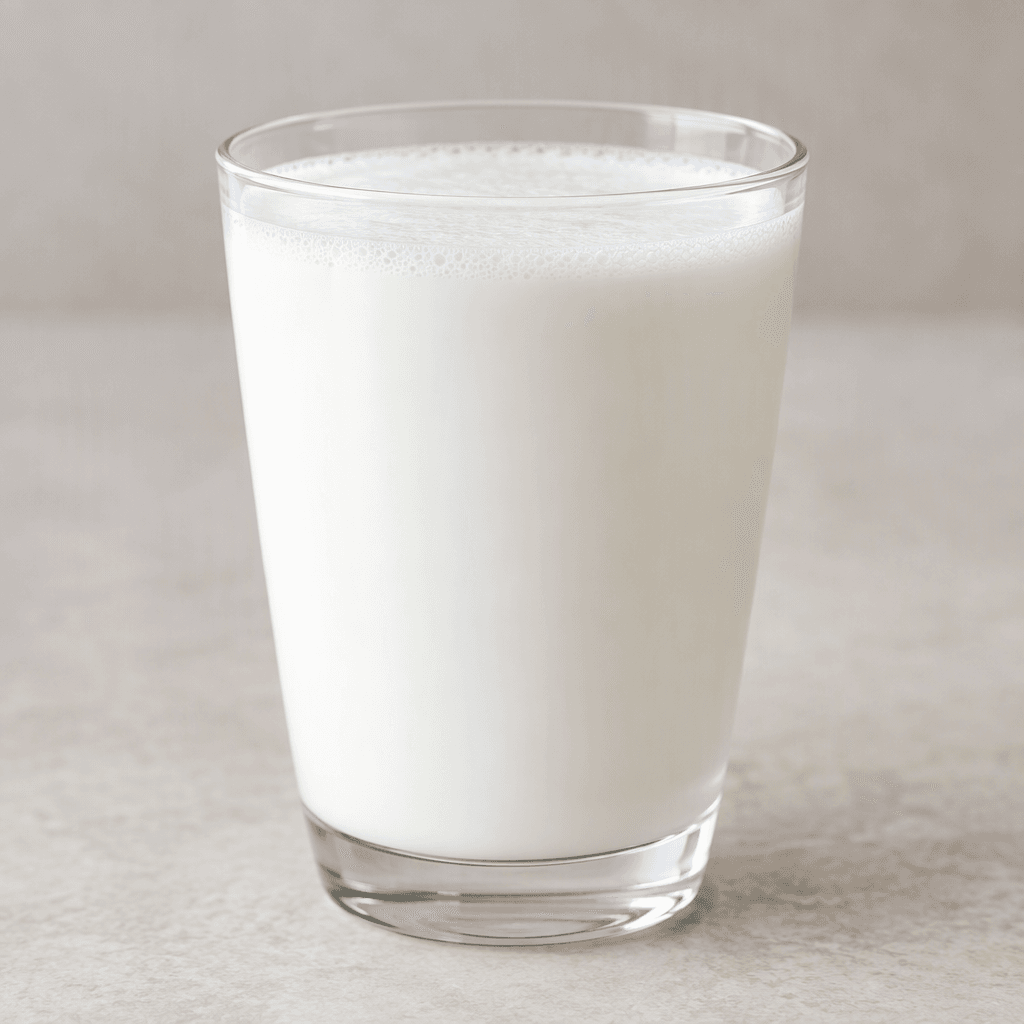
Unsalted Ayran Calories
Yogurt-based, unsalted, refreshing beverage
In season: Spring · Summer · Autumn · Winter
CALORIES
GI
POTASSIUM
FIBER
Quick answer
1 cup (medium) of Unsalted Ayran (200 g) has 76 calories. That works out to 38 calories per 100 g. It contains 8.4 g of carbs, 5.6 g of protein, 2 g of fat and 0 g of fiber. Its 0.7 µg of B12 covers 30% of the Daily Value. Its glycemic index is 35 (low), so it raises blood sugar slowly.
What is Unsalted Ayran?
Unsalted ayran is a traditional yogurt drink popular in Turkey and neighbouring regions, made by whisking yogurt with water until smooth and pourable. Without added salt, it tastes gently tangy and mild, with a thin, refreshing texture; whisking can leave a light layer of foam on top.
In Turkey, ayran is commonly served alongside meals, especially in warm weather, and it also pairs well with grilled foods and savoury pastries. For English-speaking readers, it makes an easy alternative to a sweet drink at lunch: it has some protein from the yogurt and is naturally light. Serve it well chilled, adjusting the water for a thicker or more thirst-quenching consistency.
Unsalted Ayran Nutrition Facts
Selected: 100 g
38
KCAL / 100G
Carbs
4.2g
· 2% DV
Protein
2.8g
· 6% DV
Fat
1g
· 1% DV
Fiber
0g
· 0% DV
DV is the share of the daily value covered, on a 2,000 kcal reference diet.
Calories come from: Carbs 45% · Protein 30% · Fat 25%
Unsalted Ayran Vitamins & Minerals
Vitamins
B12
0.36µg · 15% DV
B2
0.18mg · 14% DV
B5
0.38mg · 8% DV
Biotin
2.2µg · 7% DV
Minerals
Phosphorus
90mg · 13% DV
Calcium
120mg · 12% DV
Iodine
7µg · 5% DV
Potassium ⭐
170mg · 5% DV
How Nutritious Is Unsalted Ayran?
Nutrient density
Medium
How many vitamins, minerals and how much fiber this food carries per calorie. A high score means a lot of nutrition for few calories.
Satiety score
Medium
An EatBetter score computed from fiber, protein and calorie density. A high score means staying full longer on the same calories.
Both scores are calculated per 100 g and do not change with the selected portion. The satiety score is EatBetter's own calculation, not a clinical measure.
Unsalted Ayran Glycemic Index
GLYCEMIC INDEX
GLYCEMIC LOAD
Accounts for portion size — a more realistic measure than GI alone.
How to Burn Off Unsalted Ayran
To burn the 38 calories in 100 g:
🚶
Walking (5 km/h)
🏃
Running (8 km/h)
🚴
Cycling
🏊
Swimming
Times are calculated with the MET equation for a 70 kg adult. Actual burn varies with your weight, age and pace.
Is Unsalted Ayran Processed?
NOVA 2
Minimally Processed
1. Unprocessed
2. Minimally Processed
3. Processed
4. Ultra-Processed
NOVA classifies foods into 4 groups by industrial processing. NOVA 1 (unprocessed) is the healthiest.
Does Unsalted Ayran Contain Allergens?
Contains these allergens:
Which Diets Is Unsalted Ayran Good For?
Vegan
— Not suitable
Vegetarian
✓ Suitable
Gluten-Free
— Not suitable
Dairy-Free
— Not suitable
Mediterranean
✓ Suitable
Paleo
— Not suitable
Whole30
— Not suitable
DASH
— Not suitable
Keto
— Not suitable
Low FODMAP
— Not suitable
Unsalted Ayran Fat Profile
SATURATED
0.7g
MONOUNSATURATED
0.25g
POLYUNSATURATED
0.05g
Omega 6:3 ratio 2:1
Below the ideal 4:1 — a good omega balance.
Compare Unsalted Ayran
Foods Similar to Unsalted Ayran
Frequently Asked Questions About Unsalted Ayran
What is unsalted ayran?
Unsalted ayran is a Turkish yogurt drink made by mixing yogurt with water and leaving out the salt. It is usually served cold and has a tangy, thinner texture than yogurt. Its simple ingredients make it different from many flavoured yogurt drinks.
How do you make unsalted ayran at home?
You can make unsalted ayran by whisking plain yogurt with cold water until smooth, without adding salt. Add the water gradually to reach the consistency you like, then chill it. A brief extra whisk makes it frothier.
How is unsalted ayran different from regular ayran?
Unsalted ayran has no added salt, while traditional ayran is commonly salted. The unsalted version tastes milder and lets the yogurt’s tang come through more. It may still contain naturally occurring sodium from the yogurt.
Is unsalted ayran the same as lassi?
No, unsalted ayran and lassi are related yogurt drinks but are not the same. Ayran is typically yogurt diluted with water, while lassi can be thicker and may include sugar, fruit, spices, or other ingredients.
Does unsalted ayran contain probiotics?
It can contain live yogurt cultures if it is made with yogurt that retains them, but not every product will. Heat treatment can reduce or eliminate live cultures, so the preparation and processing of the particular ayran matter.
Can unsalted ayran replace salted ayran in recipes?
Yes, unsalted ayran can replace salted ayran in most recipes that use ayran as a drink or marinade. The result will be less salty, so adjust the dish’s seasoning separately if needed rather than salting the drink itself.
Can you drink unsalted ayran every day?
Yes, most people can include unsalted ayran regularly as a dairy drink. If you have a milk allergy, it is not suitable; and if you have been given a specific sodium or dairy restriction, account for the yogurt it contains.
Does unsalted ayran hydrate you as well as water?
Unsalted ayran contributes fluid, but water is the simplest choice for everyday hydration. Ayran is not a replacement for oral rehydration solution during significant fluid loss, because it is not formulated to provide the needed balance of salts and sugars.
How should you store unsalted ayran after opening?
Keep opened unsalted ayran refrigerated and follow the package’s instructions for how soon to finish it. Homemade ayran should be covered and chilled, then used within a few days; discard it if its smell, appearance, or taste changes.
What does unsalted ayran taste like?
Unsalted ayran tastes tangy, creamy, and mildly sour, with a thinner consistency than yogurt. Because there is no added salt to balance the acidity, the yogurt’s flavour is more noticeable than in traditional salted ayran.
Have another question about Unsalted Ayran?
Ask the AI nutrition coach — calories, portions, alternatives and more, answered in seconds in the app.

Scan calories with your camera
Instant AI nutrition analysis

Nutrition data compiled from USDA FoodData Central and scientific sources.