

Ready & Packaged Foods
All →Vegetables & Legumes
All →Desserts & Confectionery
All →Meat & Protein
All →Grains & Bakery
All →Beverages
All →Milk & Dairy
All →

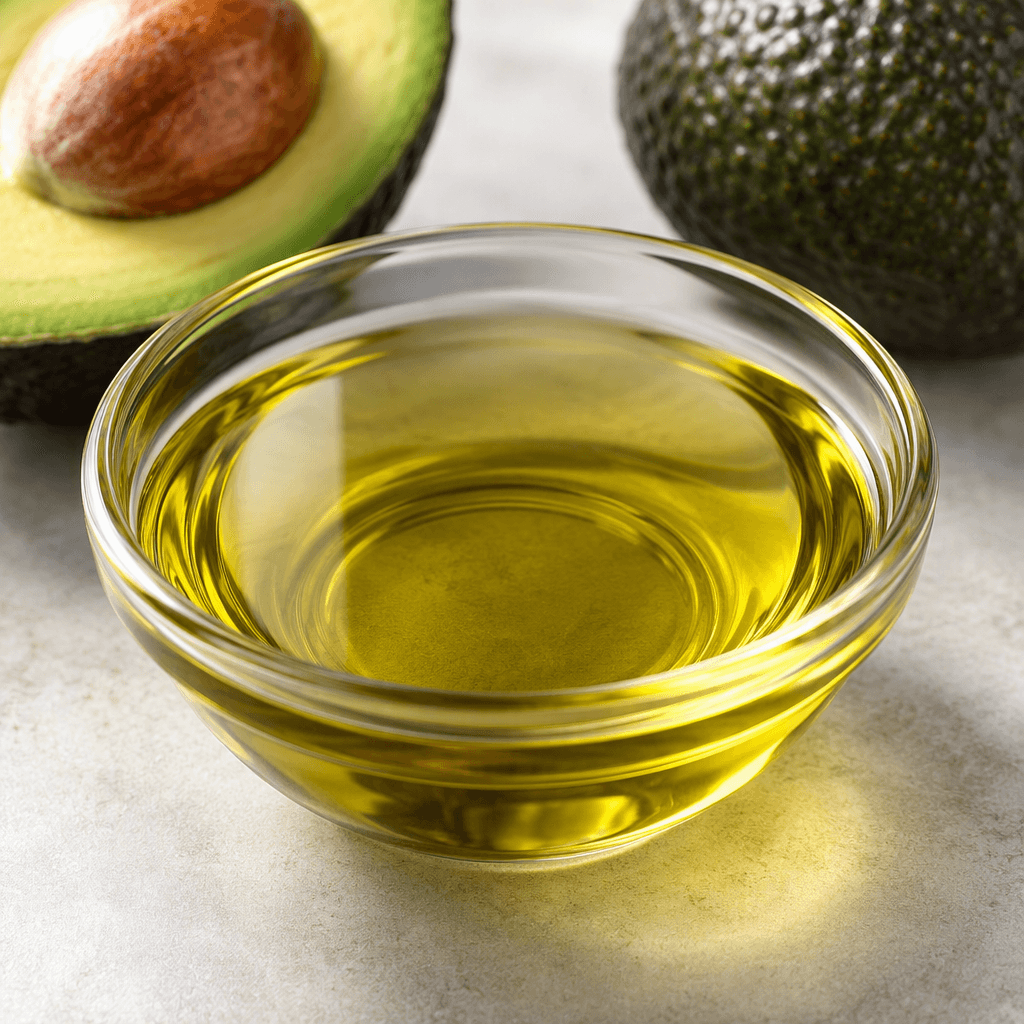
Avocado oil Calories
Cold-pressed, rich in monounsaturated fats, source of vitamin E
In season: Spring · Summer · Autumn · Winter
CALORIES
GI
POTASSIUM
FIBER
Quick answer
1 tablespoon (medium) of Avocado oil (14 g) has 119 calories. That works out to 884 calories per 100 g. It contains 0 g of carbs, 0 g of protein, 13.5 g of fat and 0 g of fiber. Its 1.9 mg of Vitamin E covers 13% of the Daily Value. Its glycemic index is 0 (low), so it raises blood sugar slowly.
What is Avocado oil?
Avocado oil is made from the flesh of the avocado, a fruit native to Mexico and Central America. Cold-pressed versions can retain more of the fruit’s fresh, gently grassy aroma.
Its flavour is mild and smooth, sometimes with a buttery note. Use it in dressings, drizzle it over roasted vegetables, or cook eggs and fish with it; it fits easily into everyday cooking in many English-speaking kitchens. The oil is mostly monounsaturated fat and also provides vitamin E. Like any oil, it is energy-dense, so measure a modest amount for a lighter meal, or pair it with lemon or vinegar in a dressing.
Avocado oil Nutrition Facts
Selected: 100 g
884
KCAL / 100G
Carbs
0g
· 0% DV
Protein
0g
· 0% DV
Fat
100g
· 128% DV
Fiber
0g
· 0% DV
DV is the share of the daily value covered, on a 2,000 kcal reference diet.
Calories come from: Carbs 0% · Protein 0% · Fat 100%
Avocado oil Vitamins & Minerals
Vitamins
Vitamin E
14mg · 93% DV
Vitamin K
21µg · 18% DV
Vitamin A
0µg · 0% DV
B1
0mg · 0% DV
Minerals
Calcium
1mg · 0% DV
Iron
0mg · 0% DV
Magnesium
0mg · 0% DV
Zinc
0mg · 0% DV
How Nutritious Is Avocado oil?
Nutrient density
Low
How many vitamins, minerals and how much fiber this food carries per calorie. A high score means a lot of nutrition for few calories.
Satiety score
Low
An EatBetter score computed from fiber, protein and calorie density. A high score means staying full longer on the same calories.
Both scores are calculated per 100 g and do not change with the selected portion. The satiety score is EatBetter's own calculation, not a clinical measure.
Avocado oil Glycemic Index
GLYCEMIC INDEX
GLYCEMIC LOAD
Accounts for portion size — a more realistic measure than GI alone.
How to Burn Off Avocado oil
To burn the 884 calories in 100 g:
🚶
Walking (5 km/h)
🏃
Running (8 km/h)
🚴
Cycling
🏊
Swimming
Times are calculated with the MET equation for a 70 kg adult. Actual burn varies with your weight, age and pace.
Is Avocado oil Processed?
NOVA 2
Minimally Processed
1. Unprocessed
2. Minimally Processed
3. Processed
4. Ultra-Processed
NOVA classifies foods into 4 groups by industrial processing. NOVA 1 (unprocessed) is the healthiest.
Does Avocado oil Contain Allergens?
No known major allergens
Which Diets Is Avocado oil Good For?
Vegan
✓ Suitable
Vegetarian
✓ Suitable
Gluten-Free
✓ Suitable
Dairy-Free
— Not suitable
Mediterranean
✓ Suitable
Paleo
✓ Suitable
Whole30
— Not suitable
DASH
— Not suitable
Keto
✓ Suitable
Low FODMAP
— Not suitable
Avocado oil Fat Profile
SATURATED
11.6g
MONOUNSATURATED
70.6g
POLYUNSATURATED
13.5g
Omega 6:3 ratio 13.9:1
Above the ideal 4:1 (13.9:1).
Compare Avocado oil
Foods Similar to Avocado oil
Frequently Asked Questions About Avocado oil
What is avocado oil used for?
Avocado oil is used for salad dressings, drizzling over cooked vegetables, roasting, and stovetop cooking. Its relatively mild flavour works in dishes where you want an oil without a strong, distinctive taste.
Is avocado oil healthy?
Avocado oil is rich in monounsaturated fats and contains vitamin E, making it a useful choice among cooking oils. It is still a concentrated fat, so its benefits come from using it in place of other fats rather than adding it on top of them.
What is the difference between refined and unrefined avocado oil?
Unrefined avocado oil is less processed and usually has a more noticeable avocado flavour. Refining makes the oil milder and generally more suitable for higher-heat cooking, so choose according to how you plan to use it.
Can avocado oil replace vegetable oil?
Yes, avocado oil can replace vegetable oil in many recipes, including sautéing and baking. Its mild flavour is usually unobtrusive, though it may cost more and can give a dish a slightly different taste depending on the oil.
How does avocado oil compare with olive oil?
Avocado oil is usually milder in flavour, while olive oil—especially extra-virgin olive oil—has a more recognizable taste. Either can work in dressings and everyday cooking; the better choice depends on the flavour and cooking method you want.
How should you store avocado oil after opening?
Keep avocado oil tightly sealed in a cool, dark cupboard, away from the stove and direct sunlight. Limiting exposure to heat, light, and air helps preserve its flavour; follow any storage directions on the bottle if they differ.
Does avocado oil have a high smoke point?
Refined avocado oil generally tolerates higher cooking temperatures than unrefined avocado oil, but the smoke point varies by product and processing. Check the bottle’s cooking guidance, and lower the heat if the oil starts smoking.
Can you use avocado oil for deep frying?
Yes, refined avocado oil can be used for deep frying, although it may be an expensive choice for a large volume of oil. Avoid overheating it, and discard oil that smells unpleasant or has become very dark.
Does avocado oil have a strong flavour?
No, avocado oil usually has a mild flavour rather than a strong one. Unrefined varieties can taste more distinctly of avocado, while refined oil is often close to neutral and less noticeable in a finished dish.
Why is avocado oil often expensive?
Avocado oil can cost more because producing it requires avocados and extracting oil from them, and prices also vary with processing and product quality. Compare the intended use and storage instructions rather than assuming every bottle is interchangeable.
Have another question about Avocado oil?
Ask the AI nutrition coach — calories, portions, alternatives and more, answered in seconds in the app.

Scan calories with your camera
Instant AI nutrition analysis

Nutrition data compiled from USDA FoodData Central and scientific sources.