

Ready & Packaged Foods
All →Vegetables & Legumes
All →Desserts & Confectionery
All →Meat & Protein
All →Grains & Bakery
All →Beverages
All →Milk & Dairy
All →

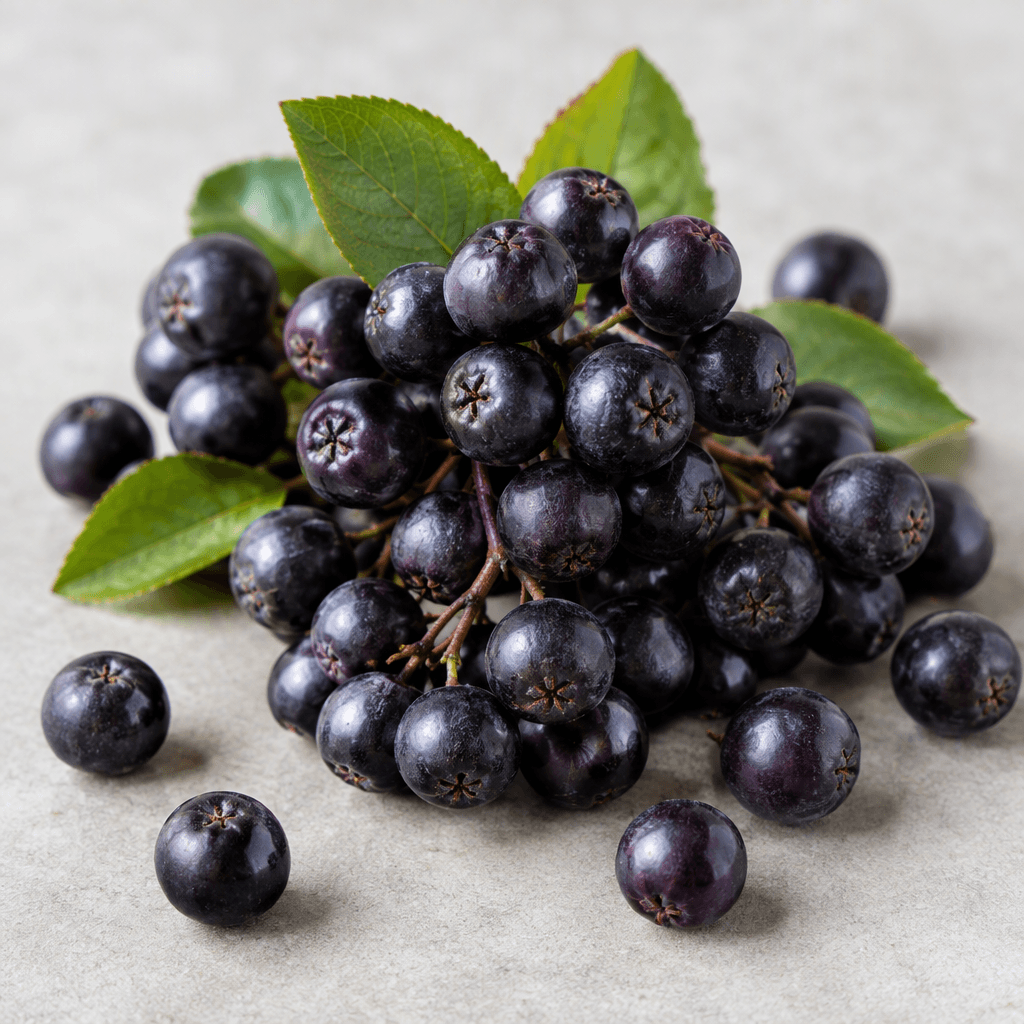
Aronia Calories
Rich in antioxidants, source of vitamin C, low calorie
In season: Summer · Autumn
CALORIES
GI
POTASSIUM
FIBER
Quick answer
100 g of Aronia has 47 calories. It contains 9.6 g of carbs, 1.4 g of protein, 0.5 g of fat and 5.3 g of fiber. Its 21 mg of Vitamin C covers 23% of the Daily Value. Its glycemic index is 25 (low), so it raises blood sugar slowly.
What is Aronia?
Aronia berries are small, dark fruits that grow in clusters on a shrub native to eastern North America. Their sharp, mouth-drying astringency makes them less of a casual handful fruit than sweeter berries, though they can be eaten fresh when ripe.
They’re often turned into juice, jam or dried fruit, and are also easy to blend into smoothies or stir into porridge and yoghurt. Aronia is low in calories and provides fibre and vitamin C. If you find the flavour too tart, pair the berries with a sweeter fruit such as banana, or add a small handful to a breakfast bowl rather than serving them alone.
Aronia Nutrition Facts
Selected: 100 g
47
KCAL / 100G
Carbs
9.6g
· 3% DV
Protein
1.4g
· 3% DV
Fat
0.5g
· 1% DV
Fiber
5.3g
· 19% DV
DV is the share of the daily value covered, on a 2,000 kcal reference diet.
Calories come from: Carbs 79% · Protein 12% · Fat 9%
Aronia Vitamins & Minerals
Vitamins
Vitamin C
21mg · 23% DV
Vitamin K
13µg · 11% DV
Vitamin E
1.5mg · 10% DV
Folate
25µg · 6% DV
Minerals
Manganese
1mg · 43% DV
Magnesium
28mg · 7% DV
Calcium
60mg · 6% DV
Iron
1mg · 6% DV
How Nutritious Is Aronia?
Nutrient density
Very high
How many vitamins, minerals and how much fiber this food carries per calorie. A high score means a lot of nutrition for few calories.
Satiety score
High
An EatBetter score computed from fiber, protein and calorie density. A high score means staying full longer on the same calories.
Both scores are calculated per 100 g and do not change with the selected portion. The satiety score is EatBetter's own calculation, not a clinical measure.
Aronia Glycemic Index
GLYCEMIC INDEX
GLYCEMIC LOAD
Accounts for portion size — a more realistic measure than GI alone.
How to Burn Off Aronia
To burn the 47 calories in 100 g:
🚶
Walking (5 km/h)
🏃
Running (8 km/h)
🚴
Cycling
🏊
Swimming
Times are calculated with the MET equation for a 70 kg adult. Actual burn varies with your weight, age and pace.
Is Aronia Processed?
NOVA 1
Unprocessed
1. Unprocessed
2. Minimally Processed
3. Processed
4. Ultra-Processed
NOVA classifies foods into 4 groups by industrial processing. NOVA 1 (unprocessed) is the healthiest.
Does Aronia Contain Allergens?
No known major allergens
Which Diets Is Aronia Good For?
Vegan
✓ Suitable
Vegetarian
✓ Suitable
Gluten-Free
✓ Suitable
Dairy-Free
— Not suitable
Mediterranean
✓ Suitable
Paleo
✓ Suitable
Whole30
— Not suitable
DASH
— Not suitable
Keto
— Not suitable
Low FODMAP
— Not suitable
Aronia Fat Profile
SATURATED
0.02g
MONOUNSATURATED
0.03g
POLYUNSATURATED
0.08g
Omega 6:3 ratio 3:1
Below the ideal 4:1 — a good omega balance.
Compare Aronia
Foods Similar to Aronia
Frequently Asked Questions About Aronia
What is an aronia berry?
An aronia berry, also called a chokeberry, is a small, dark purple-to-black fruit that grows in clusters on a shrub. It is native to North America and is eaten fresh or used in juices, jams, and other foods.
What does aronia taste like?
Aronia berries taste tart and distinctly astringent, with some sweetness. Their tannins can leave a dry, puckery feeling in the mouth, so many people prefer them cooked or mixed with sweeter fruit rather than eaten by the handful.
How do you eat aronia berries?
You can eat aronia berries fresh, add them to oatmeal or yogurt, or cook them into sauces, baked goods, and jam. Their strong tartness pairs well with sweeter fruits such as apples, pears, and berries.
Can you eat aronia berries raw?
Yes, aronia berries are safe to eat raw for most people. Rinse them under running water first; if their astringent taste is too strong, try a small handful mixed with sweeter fruit or dairy.
What are the health benefits of aronia berries?
Aronia berries contain antioxidant compounds and vitamin C, but they are not a proven treatment or cure for disease. Enjoy them as one fruit in a varied diet rather than relying on aronia juice or supplements for a health effect.
Are aronia berries the same as chokeberries?
Yes. Aronia berry and chokeberry are common names for fruit from the Aronia genus, especially Aronia melanocarpa. Despite the similar name, chokeberries are not the same fruit as chokecherries.
Can you freeze aronia berries?
Yes, aronia berries freeze well. Rinse and dry them thoroughly, spread them in a single layer on a tray until firm, then transfer them to a freezer-safe container to keep the berries from clumping together.
How should you store fresh aronia berries?
Keep fresh aronia berries unwashed in a covered container in the refrigerator, and rinse them just before eating. Remove damaged or moldy berries, since moisture and bruising can make the rest spoil faster.
Can aronia berries lower blood pressure?
Aronia berries are not an established treatment for high blood pressure, and studies do not show that eating the fruit can replace prescribed care. If you take blood-pressure medication, ask your clinician before using concentrated aronia products regularly.
Can you make aronia juice at home?
Yes. Simmer rinsed aronia berries with a little water until they soften, then strain or blend them, depending on the texture you want. The juice is naturally tart, so dilute it or combine it with sweeter fruit if desired.
Have another question about Aronia?
Ask the AI nutrition coach — calories, portions, alternatives and more, answered in seconds in the app.

Scan calories with your camera
Instant AI nutrition analysis

Nutrition data compiled from USDA FoodData Central and scientific sources.