

Ready & Packaged Foods
All →Vegetables & Legumes
All →Desserts & Confectionery
All →Meat & Protein
All →Grains & Bakery
All →Beverages
All →Milk & Dairy
All →

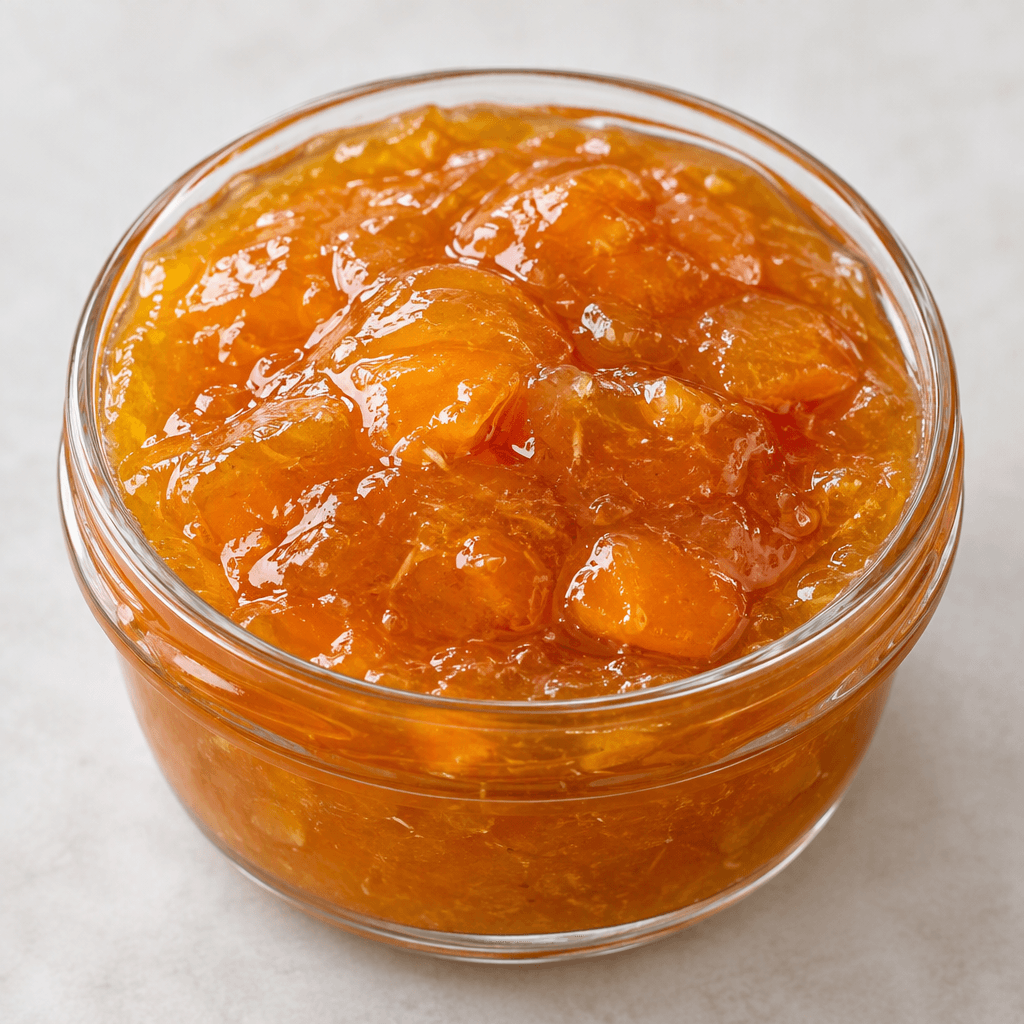
Apricot jam Calories
Sweet, apricot-flavored, breakfast spread, high sugar
In season: Summer
CALORIES
GI
POTASSIUM
FIBER
Quick answer
1 tablespoon (medium) of Apricot jam (20 g) has 50 calories. That works out to 250 calories per 100 g. It contains 12.8 g of carbs, 0.1 g of protein, 0 g of fat and 0.3 g of fiber. Its glycemic index is 65 (high), so it raises blood sugar quickly.
What is Apricot jam?
Apricot jam is a fruit preserve made by cooking apricots with sugar until they soften and the mixture thickens. Depending on the recipe, it may be smooth or retain tender pieces of fruit. It is made in many apricot-growing regions, including Turkey, where home cooks often leave some of the fruit intact.
Its sweet, tangy flavour and soft, sometimes slightly fibrous texture make it an easy spread for toast or bread. In Turkey it is commonly served at breakfast with tea; in English-speaking homes, it also pairs well with toast, scones or yoghurt. It is high in sugar and provides little protein, so a modest spoonful is a practical way to enjoy its fruit flavour without making breakfast overly sweet.
Apricot jam Nutrition Facts
Selected: 100 g
250
KCAL / 100G
Carbs
64g
· 23% DV
Protein
0.4g
· 1% DV
Fat
0.1g
· 0% DV
Fiber
1.5g
· 5% DV
DV is the share of the daily value covered, on a 2,000 kcal reference diet.
Calories come from: Carbs 99% · Protein 1% · Fat 0%
Apricot jam Vitamins & Minerals
Vitamins
Vitamin A
120µg · 13% DV
Vitamin E
0.5mg · 3% DV
B2
0.02mg · 2% DV
B3
0.3mg · 2% DV
Minerals
Potassium ⭐
60mg · 2% DV
Calcium
10mg · 1% DV
Magnesium
6mg · 1% DV
Phosphorus
8mg · 1% DV
How Nutritious Is Apricot jam?
Nutrient density
Low
How many vitamins, minerals and how much fiber this food carries per calorie. A high score means a lot of nutrition for few calories.
Satiety score
Low
An EatBetter score computed from fiber, protein and calorie density. A high score means staying full longer on the same calories.
Both scores are calculated per 100 g and do not change with the selected portion. The satiety score is EatBetter's own calculation, not a clinical measure.
Apricot jam Glycemic Index
GLYCEMIC INDEX
GLYCEMIC LOAD
Accounts for portion size — a more realistic measure than GI alone.
How to Burn Off Apricot jam
To burn the 250 calories in 100 g:
🚶
Walking (5 km/h)
🏃
Running (8 km/h)
🚴
Cycling
🏊
Swimming
Times are calculated with the MET equation for a 70 kg adult. Actual burn varies with your weight, age and pace.
Is Apricot jam Processed?
NOVA 3
Processed
1. Unprocessed
2. Minimally Processed
3. Processed
4. Ultra-Processed
NOVA classifies foods into 4 groups by industrial processing. NOVA 1 (unprocessed) is the healthiest.
Does Apricot jam Contain Allergens?
No known major allergens
Which Diets Is Apricot jam Good For?
Vegan
✓ Suitable
Vegetarian
✓ Suitable
Gluten-Free
— Not suitable
Dairy-Free
— Not suitable
Mediterranean
✓ Suitable
Paleo
— Not suitable
Whole30
— Not suitable
DASH
— Not suitable
Keto
— Not suitable
Low FODMAP
— Not suitable
Apricot jam Fat Profile
SATURATED
0.01g
MONOUNSATURATED
0.02g
POLYUNSATURATED
0.03g
Omega 6:3 ratio 2:1
Below the ideal 4:1 — a good omega balance.
Compare Apricot jam
Foods Similar to Apricot jam
Frequently Asked Questions About Apricot jam
How do you make apricot jam?
Apricot jam is made by simmering ripe apricots with sugar until the fruit softens and the syrup thickens. Stir gently to keep the pieces intact, and add lemon juice near the end to help prevent crystallization. Spoon the hot jam into clean, prepared jars.
Why is my apricot jam runny?
Apricot jam can stay runny if it has not cooked long enough for its syrup to concentrate, or if the fruit was especially juicy. It thickens further as it cools, so test a little on a chilled plate before deciding to cook it longer.
Why did my apricot jam crystallize?
Apricot jam may crystallize when the syrup becomes too concentrated or sugar crystals form on the pan during cooking. Wiping down the pan’s sides and adding lemon juice near the end can help; gently reheating the jam may dissolve small crystals.
Do you need to peel apricots for apricot jam?
No, apricots do not need to be peeled for apricot jam. Their skins soften during cooking and add fruit texture; wash the fruit well, remove the pits, and cut it only if you prefer smaller pieces in the finished jam.
Can you make apricot jam without pectin?
Yes, apricot jam can be made without added pectin. Apricots contain some natural pectin, and reducing the fruit-and-sugar mixture helps it thicken; lemon juice supports setting, though the final texture may be softer than jam made with commercial pectin.
What can you use apricot jam for besides toast?
Apricot jam works as a glaze for pastries or roasted foods, a filling for cakes and cookies, and a fruity layer in yogurt or oatmeal. Warm it gently to make it easier to brush over baked goods or stir into sauces.
How should you store homemade apricot jam after opening?
Keep opened homemade apricot jam refrigerated in a tightly closed jar, and use a clean spoon each time. If you see mold, bubbling, or an unusual smell, discard the whole jar rather than removing only the visibly affected portion.
Can you freeze apricot jam?
Yes, apricot jam can be frozen in a freezer-safe container. Leave room at the top for expansion, thaw it in the refrigerator, and stir before serving; freezing may soften the fruit pieces or slightly change the texture.
Can apricot jam be used instead of apricot preserves in a recipe?
Usually, apricot jam can replace apricot preserves in baking or as a glaze. Jam is often smoother, while preserves may contain larger fruit pieces, so the result can have a different texture; chop or warm the jam if the recipe needs a looser spread.
Is apricot jam healthy to eat every day?
Apricot jam can fit into meals, but it is a sweet spread and is easy to use generously. Pairing a modest amount with unsweetened yogurt or whole-grain toast can make it part of a more balanced breakfast without treating it as a source of fresh fruit.
Have another question about Apricot jam?
Ask the AI nutrition coach — calories, portions, alternatives and more, answered in seconds in the app.

Scan calories with your camera
Instant AI nutrition analysis

Nutrition data compiled from USDA FoodData Central and scientific sources.