

Ready & Packaged Foods
All →Vegetables & Legumes
All →Desserts & Confectionery
All →Meat & Protein
All →Grains & Bakery
All →Beverages
All →Milk & Dairy
All →

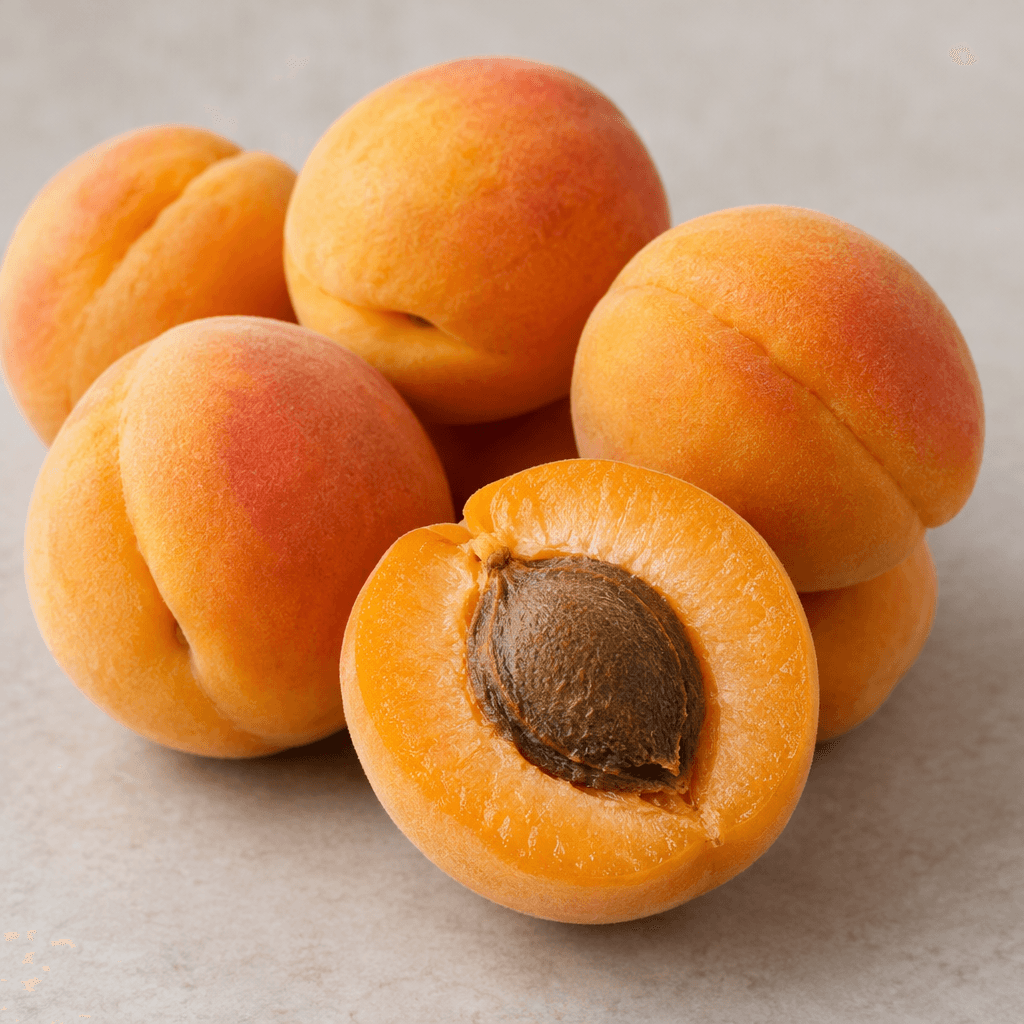
Apricot Calories
Vitamin C, fiber, low calorie
In season: Summer
CALORIES
GI
POTASSIUM
FIBER
Quick answer
1 piece (medium) of Apricot (35 g) has 17 calories. That works out to 48 calories per 100 g. It contains 3.9 g of carbs, 0.5 g of protein, 0.1 g of fat and 0.7 g of fiber. Its glycemic index is 34 (low), so it raises blood sugar slowly.
What is Apricot?
Apricots are small stone fruits with soft orange flesh surrounding a single hard pit. They have a long history of cultivation across Asia and are now grown in many regions, including Turkey, where Malatya is especially known for its dried fruit. Ripe apricots are tender and fragrant, with a sweetness balanced by a gentle tang; their skin has a soft, velvety feel.
Eat them fresh as a snack, slice them into porridge or yoghurt, or bake them into cakes and tarts. Drying concentrates their sweetness, making dried apricots a convenient addition to trail mix and savoury dishes such as tagines. Fresh apricots are mostly water, with some fibre, and are relatively low in calories. For a simple snack, pair one with nuts or enjoy it chilled on a warm day.
Apricot Nutrition Facts
Selected: 100 g
48
KCAL / 100G
Carbs
11g
· 4% DV
Protein
1.4g
· 3% DV
Fat
0.4g
· 1% DV
Fiber
2g
· 7% DV
DV is the share of the daily value covered, on a 2,000 kcal reference diet.
Calories come from: Carbs 83% · Protein 11% · Fat 6%
Apricot Vitamins & Minerals
Vitamins
Vitamin A
96µg · 11% DV
Vitamin C
10mg · 11% DV
Vitamin E
0.9mg · 6% DV
B3
0.6mg · 4% DV
Minerals
Potassium ⭐
259mg · 8% DV
Phosphorus
23mg · 3% DV
Magnesium
10mg · 2% DV
Calcium
13mg · 1% DV
How Nutritious Is Apricot?
Nutrient density
High
How many vitamins, minerals and how much fiber this food carries per calorie. A high score means a lot of nutrition for few calories.
Satiety score
Medium
An EatBetter score computed from fiber, protein and calorie density. A high score means staying full longer on the same calories.
Both scores are calculated per 100 g and do not change with the selected portion. The satiety score is EatBetter's own calculation, not a clinical measure.
Apricot Glycemic Index
GLYCEMIC INDEX
GLYCEMIC LOAD
Accounts for portion size — a more realistic measure than GI alone.
How to Burn Off Apricot
To burn the 48 calories in 100 g:
🚶
Walking (5 km/h)
🏃
Running (8 km/h)
🚴
Cycling
🏊
Swimming
Times are calculated with the MET equation for a 70 kg adult. Actual burn varies with your weight, age and pace.
Is Apricot Processed?
NOVA 1
Unprocessed
1. Unprocessed
2. Minimally Processed
3. Processed
4. Ultra-Processed
NOVA classifies foods into 4 groups by industrial processing. NOVA 1 (unprocessed) is the healthiest.
Does Apricot Contain Allergens?
No known major allergens
Which Diets Is Apricot Good For?
Vegan
✓ Suitable
Vegetarian
✓ Suitable
Gluten-Free
✓ Suitable
Dairy-Free
— Not suitable
Mediterranean
✓ Suitable
Paleo
✓ Suitable
Whole30
— Not suitable
DASH
— Not suitable
Keto
— Not suitable
Low FODMAP
— Not suitable
Apricot Fat Profile
SATURATED
0.03g
MONOUNSATURATED
0.08g
POLYUNSATURATED
0.09g
Omega 6:3 ratio 9:1
Above the ideal 4:1 (9:1).
Compare Apricot
Foods Similar to Apricot
Frequently Asked Questions About Apricot
How can you tell when an apricot is ripe?
A ripe apricot gives slightly when pressed and has a sweet fragrance. Choose fruit with golden-orange skin and no bruises or mushy patches; a greenish, firm apricot is usually not ready to eat.
Are apricot kernels safe to eat?
No, apricot kernels are not considered safe to eat. They can contain amygdalin, which releases cyanide in the body, and bitter kernels can pose a serious poisoning risk even in small amounts.
How should you store apricots?
Keep firm, unripe apricots at room temperature, away from direct sunlight. Once they soften and smell fragrant, refrigerate them and eat them within a few days; handle them gently because they bruise easily.
Can you freeze apricots?
Yes, apricots freeze well for later cooking. Wash and dry them, halve the fruit and remove the stones, then freeze the halves on a tray before transferring them to a sealed container. Thawed apricots are softer than fresh ones.
Can you eat apricot skin?
Yes, apricot skin is edible, so peeling is optional. Rinse the fruit under running water and rub the surface gently before eating, especially if you plan to eat it with the skin on.
Can apricots ripen after they are picked?
Yes, apricots can continue to ripen after picking. Leave firm fruit at room temperature, loosely covered or in a paper bag, and check it daily; refrigerate it once it softens and develops a sweet smell.
What is the difference between an apricot and a peach?
Apricots are generally smaller, firmer, and less juicy than peaches, with a smoother, velvety skin rather than peach fuzz. Both have a central stone, but their flavor and texture are distinct.
Are apricots good for constipation?
Apricots can support regular bowel movements because they contain fiber, and dried apricots provide a more concentrated source. Drink enough fluids as well, since fiber works best when you are well hydrated.
Can dogs eat apricots?
Dogs may eat a small amount of plain apricot flesh, but remove the stone first. The stone, leaves, and stems can be dangerous, and the fruit's natural sugar makes it unsuitable as a large or frequent treat.
Can people with diabetes eat apricots?
Yes, fresh apricots can fit into a diabetes meal plan, but dried apricots contain more concentrated carbohydrate per bite. Portion size matters, so ask your diabetes care team how to include them in your individual plan.
Have another question about Apricot?
Ask the AI nutrition coach — calories, portions, alternatives and more, answered in seconds in the app.

Scan calories with your camera
Instant AI nutrition analysis

Nutrition data compiled from USDA FoodData Central and scientific sources.