

Ready & Packaged Foods
All →Vegetables & Legumes
All →Desserts & Confectionery
All →Meat & Protein
All →Grains & Bakery
All →Beverages
All →Milk & Dairy
All →

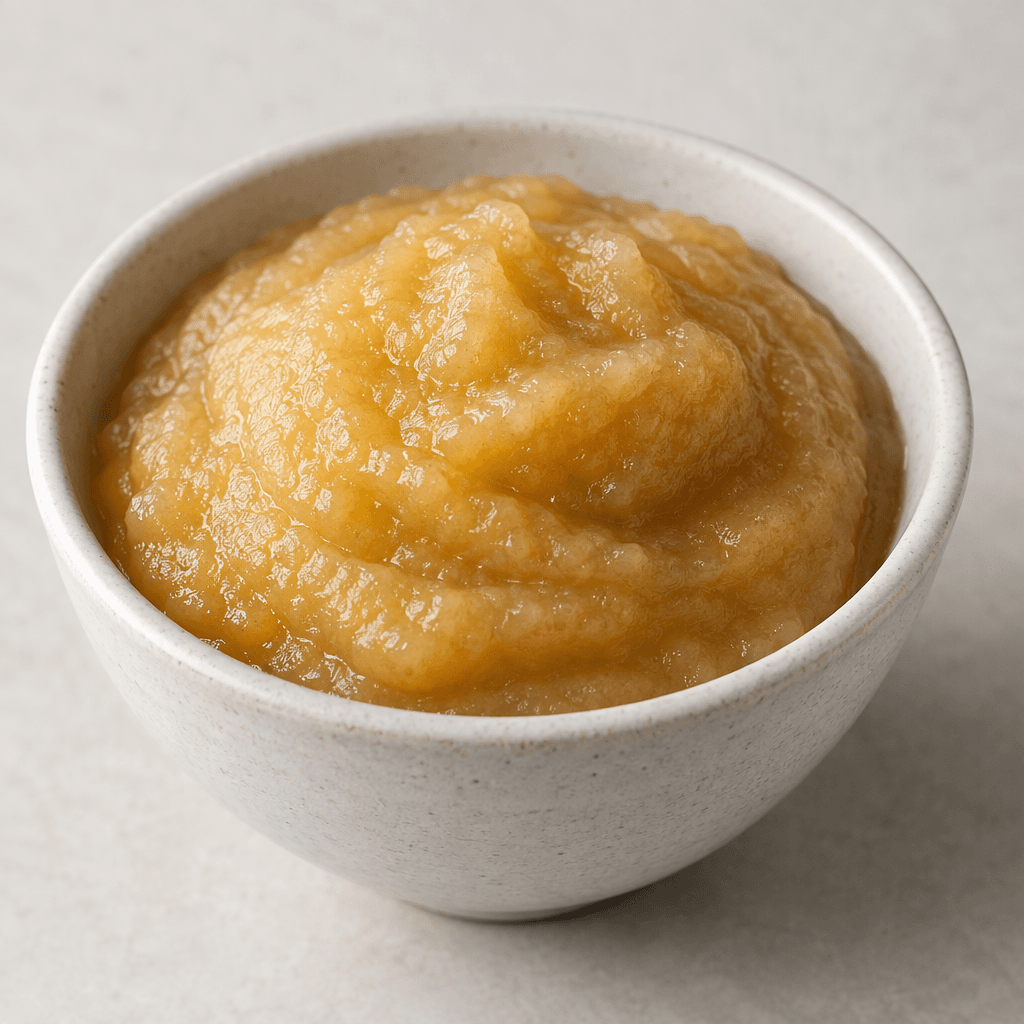
Applesauce Calories
Unsweetened apple puree-style fruit product, low in fat
In season: Autumn · Winter
CALORIES · 100 G
GI
POTASSIUM · 100 G
FIBER · 100 G
Quick answer
1 cup (medium) of Applesauce (245 g) has 103 calories. That works out to 42 calories per 100 g. It contains 27 g of carbs, 0.5 g of protein, 0.2 g of fat and 2.9 g of fiber. Its 0.1 mg of Copper covers 7% of the Daily Value. Its glycemic index is 40 (low), so it raises blood sugar slowly.
Applesauce Nutrition Facts
Selected: 1 cup (medium) · 245 g
103
KCAL / 245G
Carbs
27g
· 10% DV
Protein
0.5g
· 1% DV
Fat
0.2g
· 0% DV
Fiber
2.9g
· 10% DV
DV is the share of the daily value covered, on a 2,000 kcal reference diet.
Calories come from: Carbs 97% · Protein 2% · Fat 1%
Applesauce nutrition facts table · 1 cup (medium) (245 g)
| Nutrient | Amount | % DV |
|---|---|---|
| Calories | 103 kcal | |
| Total fat | 0.2 g | 0% |
| Saturated fat | 0.05 g | 0% |
| Trans fat | 0 g | |
| Sodium | 2.45 mg | 0% |
| Total carbohydrate | 27 g | 10% |
| Fiber | 2.9 g | 10% |
| Protein | 0.5 g | 1% |
Calories: Calories measure energy. Average daily need is 2,000 kcal. Excess calories are stored as fat, too few cause weight loss.
Carbs: Your body's primary energy source. The brain runs exclusively on carbs. Daily need: 275g.
Protein: Essential for muscle repair and cell growth. Daily need: 50g. Keeps you full and boosts metabolism.
Fat: Needed for hormone production and vitamin absorption. Daily need: 78g. Limit saturated fats, choose unsaturated.
Fiber: Critical for digestive health and satiety. Daily need: 28g. Stabilizes blood sugar, lowers cholesterol.

Log this food in EatBetter
100,000+ people use it
- Get your daily calorie target
- Snap your meal, log it in seconds
- See every vitamin and mineral

📸 Scan the code to get the app free.

How Many Calories in 1 Cup of Applesauce?
| Serving | Amount | Calories |
|---|---|---|
| 1 cup (medium) | 245 g | 103 kcal |
| 1 tablespoon (medium) | 16 g | 7 kcal |
| 1 ounce (small) | 28 g | 12 kcal |
| 2 tablespoon (double) | 32 g | 13 kcal |
| 0.25 cup (quarter) | 61 g | 26 kcal |
| 1 serving (small) | 90 g | 38 kcal |
| 100 g | 100 g | 42 kcal |
| 1 pack (mini) | 113 g | 47 kcal |
| ½ cup (half) | 122 g | 51 kcal |
| 1 serving (medium) | 150 g | 63 kcal |
| 1 serving (large) | 245 g | 103 kcal |
Calculated from 42 calories per 100 g.
Frequently Asked Questions About Applesauce
What is applesauce made of?
Applesauce is made from cooked apples that are mashed or blended into a soft purée. It can be prepared with just apples, or flavored with ingredients such as cinnamon or lemon; some versions also contain added sweetener.
How do you make applesauce?
To make applesauce, core and chop apples, then simmer them with a little water until soft. Mash them for a chunky texture or blend until smooth. Add cinnamon or lemon if you like, then cool before storing.
Can you freeze applesauce?
Yes, applesauce freezes well. Cool it first, portion it into freezer-safe airtight containers, and leave a little room for expansion. Thaw it in the refrigerator and stir before serving, since the texture may separate slightly.
Can applesauce replace oil in baking?
Yes, applesauce can replace some of the oil in cakes, muffins, and similar bakes. It adds moisture but can make the result denser, so replacing all the oil may noticeably change the texture and rise.
How long does homemade applesauce last in the fridge?
Homemade applesauce generally keeps for 3–5 days in a clean, covered container in the refrigerator. Use a clean spoon when serving, and discard it if you notice mold, an unusual smell, or a marked change in appearance.
Is unsweetened applesauce better than sweetened applesauce?
Unsweetened applesauce has no sweetener added, while sweetened applesauce contains extra sugar or another sweetener. Unsweetened applesauce gives you more control over sweetness when baking or serving it with meals.
Can babies eat applesauce?
Yes, babies who are ready for solid foods can have smooth, plain applesauce. Avoid added sugar and honey, and offer an age-appropriate texture in a small amount. Supervise your baby while they eat.
Does applesauce help with diarrhea?
Applesauce may be easy to eat during mild diarrhea, but it does not treat the cause. It is not a substitute for fluids and electrolytes; seek medical advice if symptoms are severe, persistent, or accompanied by signs of dehydration.
Do you have to peel apples to make applesauce?
No, peeling apples is optional. Leaving the skins on adds texture and color, while peeling them makes a smoother, more uniform applesauce. Blend the cooked mixture well if you want to keep the skins but prefer a fine texture.
Are applesauce and apple purée the same thing?
They are very similar: both are cooked apples mashed or blended into a purée. Applesauce is often seasoned or sweetened and may be chunkier, while apple purée usually suggests a smoother, simpler preparation; usage varies by recipe.
Applesauce Vitamins & Minerals
Vitamins
B6
0.09mg · 5% DV
B1
0.04mg · 3% DV
B5
0.15mg · 3% DV
Vitamin C
2.21mg · 2% DV
Minerals
Copper
0.06mg · 7% DV
Manganese
0.15mg · 7% DV
Potassium ⭐
181mg · 5% DV
Phosphorus
15mg · 2% DV
Sodium
2.45mg · 0% DV
Applesauce Glycemic Index
GLYCEMIC INDEX
GLYCEMIC LOAD
Accounts for portion size — a more realistic measure than GI alone.
How to Burn Off Applesauce
To burn the 103 calories in 1 cup (medium) (245 g):
🚶
Walking (5 km/h)
🏃
Running (8 km/h)
🚴
Cycling
🏊
Swimming
Times are calculated with the MET equation for a 70 kg adult. Actual burn varies with your weight, age and pace.
What is Applesauce?
Applesauce is a soft purée made by cooking apples until tender and mashing or blending them. It may be left plain or seasoned with spices such as cinnamon; unsweetened versions get their sweetness from the fruit. It is familiar in European and North American cooking, though recipes and serving habits vary from place to place.
Its smooth texture and gently sweet, sometimes tart flavour work well alongside pork, stirred into porridge or yogurt, or served as a simple dessert. It is naturally low in fat, but is not especially filling on its own. For a more substantial snack, pair it with yogurt or oats, and choose an unsweetened version if you want the apple flavour without added sugar.
How Nutritious Is Applesauce?
Nutrient density
Medium
How many vitamins, minerals and how much fiber this food carries per calorie. A high score means a lot of nutrition for few calories.
Satiety score
Medium
An EatBetter score computed from fiber, protein and calorie density. A high score means staying full longer on the same calories.
Both scores are calculated per 100 g and do not change with the selected portion. The satiety score is EatBetter's own calculation, not a clinical measure.
Is Applesauce Processed?
NOVA 2
Minimally Processed
1. Unprocessed
2. Minimally Processed
3. Processed
4. Ultra-Processed
NOVA classifies foods into 4 groups by industrial processing. NOVA 1 (unprocessed) is the healthiest.
Does Applesauce Contain Allergens?
No known major allergens
Which Diets Is Applesauce Good For?
Vegan
✓ Suitable
Vegetarian
✓ Suitable
Gluten-Free
✓ Suitable
Dairy-Free
— Not suitable
Mediterranean
✓ Suitable
Paleo
— Not suitable
Whole30
— Not suitable
DASH
— Not suitable
Keto
— Not suitable
Low FODMAP
— Not suitable
Applesauce Fat Profile
SATURATED
0.05g
MONOUNSATURATED
0.01g
POLYUNSATURATED
0.07g
Omega 6:3 ratio 2.5:1
Below the ideal 4:1 — a good omega balance.
Compare Applesauce
Foods Similar to Applesauce
Have another question about Applesauce?
Ask the AI nutrition coach — calories, portions, alternatives and more, answered in seconds in the app.

Scan calories with your camera
Instant AI nutrition analysis

Nutrition data compiled from USDA FoodData Central and scientific sources.