

Ready & Packaged Foods
All →Vegetables & Legumes
All →Desserts & Confectionery
All →Meat & Protein
All →Grains & Bakery
All →Beverages
All →Milk & Dairy
All →

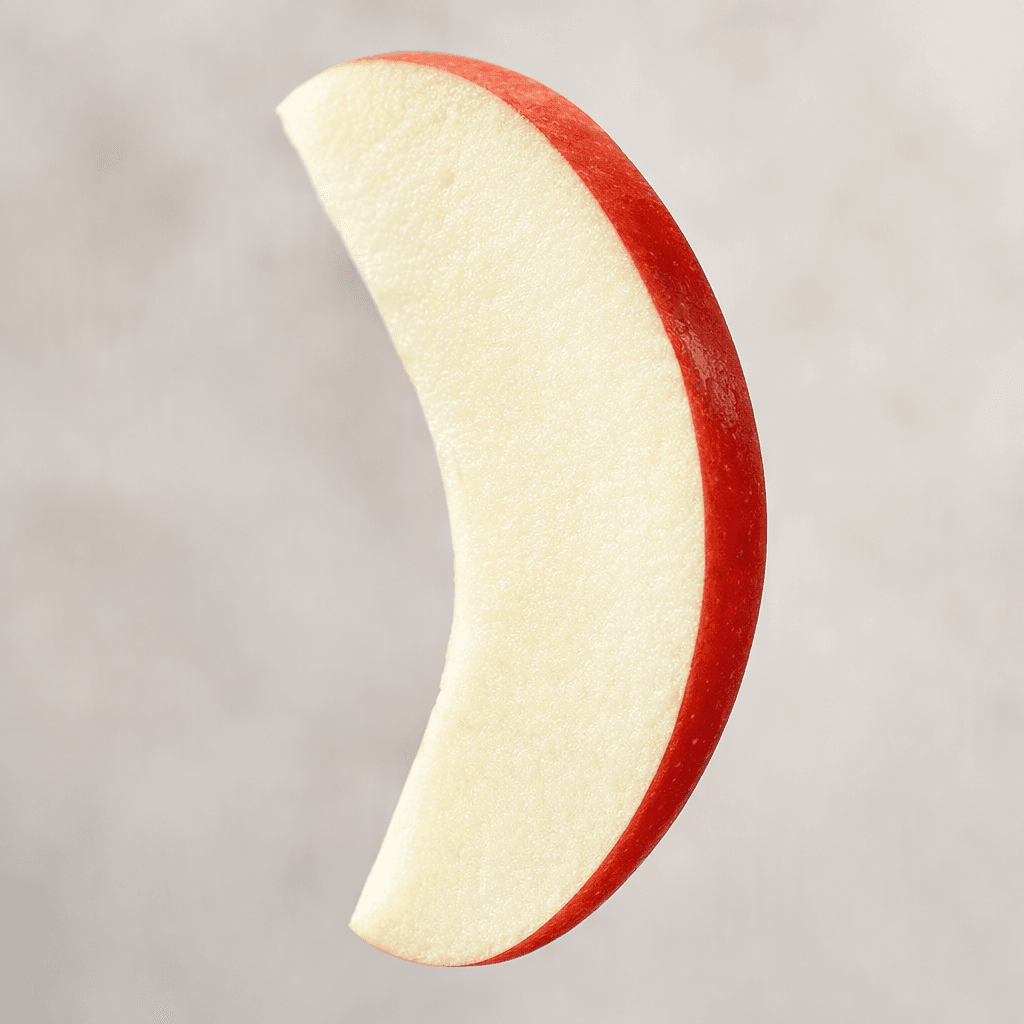
Apple Slice Calories
Fresh, high fiber, low calorie, source of vitamin C
In season: Autumn · Winter
CALORIES
GI
POTASSIUM
FIBER
Quick answer
1 slice (medium) of Apple Slice (20 g) has 10 calories. That works out to 52 calories per 100 g. It contains 2.8 g of carbs, 0.1 g of protein, 0 g of fat and 0.5 g of fiber. Its glycemic index is 36 (low), so it raises blood sugar slowly.
What is Apple Slice?
An apple slice is a freshly cut piece of apple, with the skin left on or removed; its colour and sweetness vary with the variety. Apple slices are an easy snack around the world, packed for lunches or served with breakfast. They also pair well with yoghurt, porridge or nut butter.
Crisp and juicy, they can taste sweet or pleasantly tart. Apple Slice is mostly water and carbohydrates, with fibre and some vitamin C, while remaining low in calories. Eat it on its own for a light snack, or pair it with yoghurt or nuts when you want something more filling. A little lemon juice can help slow browning after cutting.
Apple Slice Nutrition Facts
Selected: 100 g
52
KCAL / 100G
Carbs
13.8g
· 5% DV
Protein
0.3g
· 1% DV
Fat
0.2g
· 0% DV
Fiber
2.4g
· 9% DV
DV is the share of the daily value covered, on a 2,000 kcal reference diet.
Calories come from: Carbs 95% · Protein 2% · Fat 3%
Apple Slice Vitamins & Minerals
Vitamins
Vitamin C
4.6mg · 5% DV
B1
0.02mg · 2% DV
B2
0.03mg · 2% DV
B6
0.04mg · 2% DV
Minerals
Potassium ⭐
107mg · 3% DV
Phosphorus
11mg · 2% DV
Calcium
6mg · 1% DV
Magnesium
5mg · 1% DV
How Nutritious Is Apple Slice?
Nutrient density
High
How many vitamins, minerals and how much fiber this food carries per calorie. A high score means a lot of nutrition for few calories.
Satiety score
Medium
An EatBetter score computed from fiber, protein and calorie density. A high score means staying full longer on the same calories.
Both scores are calculated per 100 g and do not change with the selected portion. The satiety score is EatBetter's own calculation, not a clinical measure.
Apple Slice Glycemic Index
GLYCEMIC INDEX
GLYCEMIC LOAD
Accounts for portion size — a more realistic measure than GI alone.
How to Burn Off Apple Slice
To burn the 52 calories in 100 g:
🚶
Walking (5 km/h)
🏃
Running (8 km/h)
🚴
Cycling
🏊
Swimming
Times are calculated with the MET equation for a 70 kg adult. Actual burn varies with your weight, age and pace.
Is Apple Slice Processed?
NOVA 1
Unprocessed
1. Unprocessed
2. Minimally Processed
3. Processed
4. Ultra-Processed
NOVA classifies foods into 4 groups by industrial processing. NOVA 1 (unprocessed) is the healthiest.
Does Apple Slice Contain Allergens?
No known major allergens
Which Diets Is Apple Slice Good For?
Vegan
✓ Suitable
Vegetarian
✓ Suitable
Gluten-Free
✓ Suitable
Dairy-Free
— Not suitable
Mediterranean
✓ Suitable
Paleo
✓ Suitable
Whole30
— Not suitable
DASH
— Not suitable
Keto
— Not suitable
Low FODMAP
— Not suitable
Apple Slice Fat Profile
SATURATED
0.03g
MONOUNSATURATED
0.01g
POLYUNSATURATED
0.05g
Omega 6:3 ratio 3:1
Below the ideal 4:1 — a good omega balance.
Compare Apple Slice
Foods Similar to Apple Slice
Frequently Asked Questions About Apple Slice
Why do apple slices turn brown?
Apple slices turn brown when enzymes in the cut flesh react with oxygen in the air. This natural oxidation changes the colour but does not, by itself, mean the apple has spoiled.
How do you keep apple slices from browning in a lunchbox?
To slow browning, toss apple slices with a little lemon juice or pack them tightly in an airtight container. Keep the container cool until lunchtime, especially on warm days.
Are brown apple slices safe to eat?
Yes, apple slices that have only browned from exposure to air are generally safe to eat. Discard them if they also show mould, smell unpleasant, or feel slimy.
How long do apple slices last in the fridge?
Apple slices usually keep for about 3–5 days in a covered container in the refrigerator, though their texture is best sooner. Refrigerate them promptly rather than leaving them at room temperature.
Can you freeze apple slices?
Yes, you can freeze apple slices, but thawed slices are usually softer than fresh ones. Freeze them in a single layer first, then transfer them to a sealed container for use in baking or cooked dishes.
Should you wash apple slices before eating them?
Wash the whole apple under clean running water before cutting it, rubbing the skin gently with your hands. Don’t use soap or detergent; washing after slicing can make the pieces watery.
Can you eat apple slices with the peel on?
Yes, apple slices can be eaten with the peel on; the skin is edible and contributes fibre. Rinse the whole apple well under running water before slicing it.
Can babies eat apple slices?
Babies who are ready for solid foods can have apple, but firm raw slices can be a choking hazard. Offer apple cooked until soft or finely grated, with a texture suited to the baby’s development.
Are apple slices good for weight loss?
Apple slices can make a useful snack when you want something filling, since their fibre adds bulk. Pairing them with a protein-rich food, such as yogurt, can make a snack more satisfying.
Can people with diabetes eat apple slices?
Yes, people with diabetes can eat apple slices, but the carbohydrates in apple can raise blood glucose. Keep the portion in line with your meal plan and follow any guidance you have for monitoring your blood sugar.
Have another question about Apple Slice?
Ask the AI nutrition coach — calories, portions, alternatives and more, answered in seconds in the app.

Scan calories with your camera
Instant AI nutrition analysis

Nutrition data compiled from USDA FoodData Central and scientific sources.