

Ready & Packaged Foods
All →Vegetables & Legumes
All →Desserts & Confectionery
All →Meat & Protein
All →Grains & Bakery
All →Beverages
All →Milk & Dairy
All →

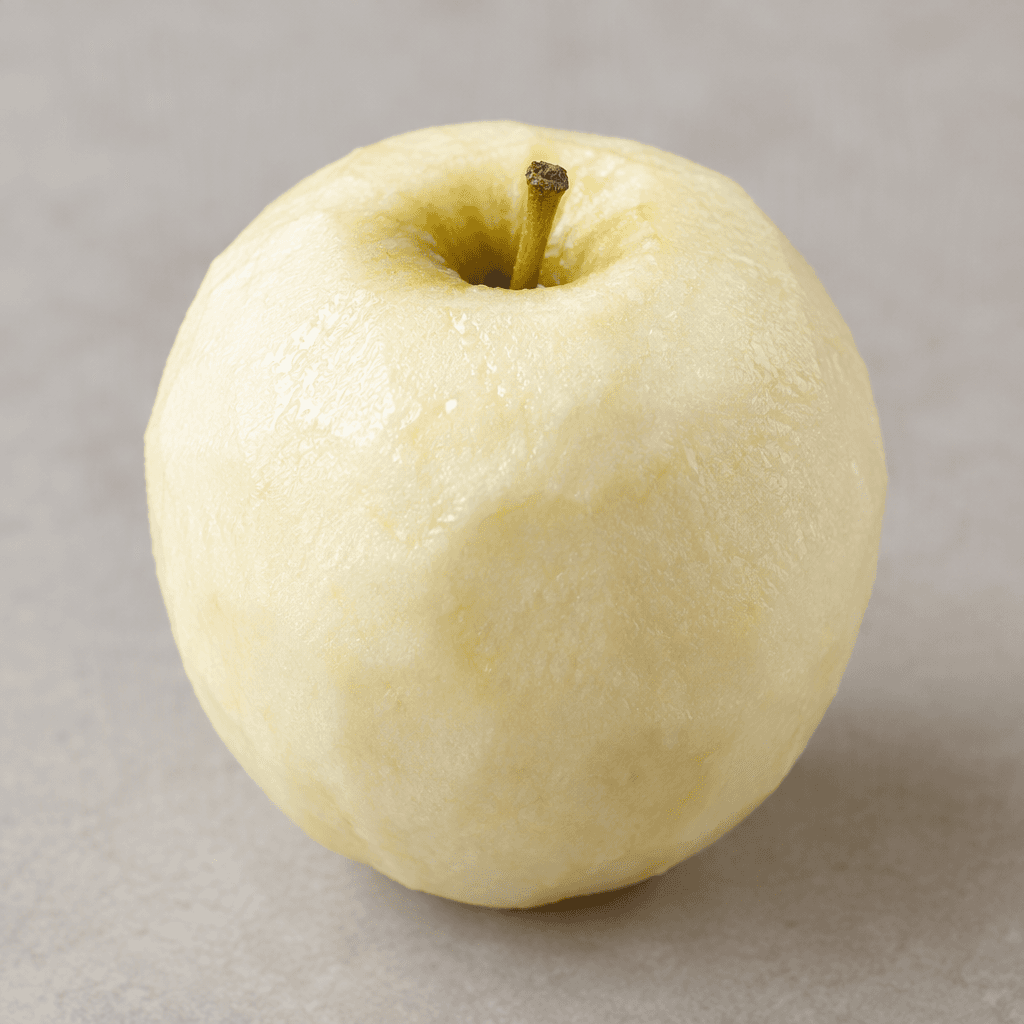
Apple (Peeled) Calories
Vitamin C, less fiber (peeled), low calorie
In season: Autumn · Winter
CALORIES
GI
POTASSIUM
FIBER
Quick answer
1 piece (medium) of Apple (Peeled) (130 g) has 65 calories. That works out to 50 calories per 100 g. It contains 17.2 g of carbs, 0.3 g of protein, 0.1 g of fat and 2 g of fiber. Its 5.5 mg of Vitamin C covers 6% of the Daily Value. Its glycemic index is 38 (low), so it raises blood sugar slowly.
What is Apple (Peeled)?
A peeled apple is simply an apple with its skin removed, leaving its crisp, pale flesh. It is often eaten fresh as a snack, sliced into fruit salads, or cooked into compotes, pies and other desserts. Peeling makes the bite softer and removes some of the apple’s fibre, while its mild sweetness and juiciness remain.
Apples are mostly water and carbohydrates, with very little fat; a peeled one is a light option when you want something simple between meals. It provides less fibre than an unpeeled apple, and has about 50 calories per 100 g. Pair slices with yoghurt or add them to porridge for a more substantial snack. A little lemon juice helps keep cut pieces from browning.
Apple (Peeled) Nutrition Facts
Selected: 100 g
50
KCAL / 100G
Carbs
13.2g
· 5% DV
Protein
0.2g
· 0% DV
Fat
0.1g
· 0% DV
Fiber
1.5g
· 5% DV
DV is the share of the daily value covered, on a 2,000 kcal reference diet.
Calories come from: Carbs 97% · Protein 1% · Fat 2%
Apple (Peeled) Vitamins & Minerals
Vitamins
Vitamin C
4.2mg · 5% DV
B1
0.02mg · 2% DV
B2
0.02mg · 2% DV
B6
0.04mg · 2% DV
Minerals
Potassium ⭐
95mg · 3% DV
Calcium
5mg · 1% DV
Magnesium
4mg · 1% DV
Phosphorus
10mg · 1% DV
How Nutritious Is Apple (Peeled)?
Nutrient density
High
How many vitamins, minerals and how much fiber this food carries per calorie. A high score means a lot of nutrition for few calories.
Satiety score
Medium
An EatBetter score computed from fiber, protein and calorie density. A high score means staying full longer on the same calories.
Both scores are calculated per 100 g and do not change with the selected portion. The satiety score is EatBetter's own calculation, not a clinical measure.
Apple (Peeled) Glycemic Index
GLYCEMIC INDEX
GLYCEMIC LOAD
Accounts for portion size — a more realistic measure than GI alone.
How to Burn Off Apple (Peeled)
To burn the 50 calories in 100 g:
🚶
Walking (5 km/h)
🏃
Running (8 km/h)
🚴
Cycling
🏊
Swimming
Times are calculated with the MET equation for a 70 kg adult. Actual burn varies with your weight, age and pace.
Is Apple (Peeled) Processed?
NOVA 2
Minimally Processed
1. Unprocessed
2. Minimally Processed
3. Processed
4. Ultra-Processed
NOVA classifies foods into 4 groups by industrial processing. NOVA 1 (unprocessed) is the healthiest.
Does Apple (Peeled) Contain Allergens?
No known major allergens
Which Diets Is Apple (Peeled) Good For?
Vegan
✓ Suitable
Vegetarian
✓ Suitable
Gluten-Free
✓ Suitable
Dairy-Free
— Not suitable
Mediterranean
✓ Suitable
Paleo
✓ Suitable
Whole30
— Not suitable
DASH
— Not suitable
Keto
— Not suitable
Low FODMAP
— Not suitable
Apple (Peeled) Fat Profile
SATURATED
0.02g
MONOUNSATURATED
0.01g
POLYUNSATURATED
0.03g
Omega 6:3 ratio 2:1
Below the ideal 4:1 — a good omega balance.
Compare Apple (Peeled)
Foods Similar to Apple (Peeled)
Frequently Asked Questions About Apple (Peeled)
Are peeled apples healthy?
Yes, peeled apples are a nutritious fruit choice, and their flesh still provides fibre and other nutrients. Peeling does remove some fibre and beneficial compounds concentrated in the skin, so they offer less than whole apples.
How can you stop a peeled apple from turning brown?
Dip or brush the cut surface of a peeled apple with lemon juice to slow browning. The colour change is caused by exposure to air, so storing the pieces in an airtight container also helps.
How long can you keep a peeled apple in the fridge?
For the best taste and texture, eat a peeled apple within a day or two. Keep it covered in the refrigerator; discard it if it develops an unusual smell, slimy surface, or visible mould.
Can you freeze peeled apples?
Yes, peeled apples freeze well for cooked dishes, smoothies, or purées. Their texture becomes softer after thawing, so frozen pieces usually won’t have the crisp bite of a fresh apple.
Does peeling an apple reduce its fibre?
Yes, peeling an apple reduces its fibre because the skin contributes a substantial share. The flesh still contains fibre, but a peeled apple provides less than the same apple eaten with its skin.
Are peeled apples easier to digest than apples with skin?
They can be easier for some people to chew or tolerate because the skin is removed, but this is not true for everyone. The apple flesh still contains fibre and natural sugars, which can bother some sensitive stomachs.
Can babies eat peeled apples?
Yes, babies who are ready for solid foods can have peeled apple cooked until soft and mashed or prepared in an age-appropriate texture. Avoid hard chunks, which can be a choking hazard, and follow your baby’s feeding stage.
Can dogs eat peeled apples?
Yes, dogs can have small pieces of plain peeled apple as an occasional treat. Remove the core and seeds, and avoid sweetened apple products; too much fruit can upset a dog’s stomach.
Can you bake with peeled apples?
Yes, peeled apples work well in pies, cakes, crumbles, and baked apple dishes. They soften as they cook, so cut them to a similar size for more even cooking and adjust the baking time to the recipe.
Do peeled apples raise blood sugar?
Yes, peeled apples contain natural carbohydrates that can raise blood sugar, although the response varies with the portion and the person. If you manage diabetes, use the portion guidance in your care plan rather than treating the fruit as sugar-free.
Have another question about Apple (Peeled)?
Ask the AI nutrition coach — calories, portions, alternatives and more, answered in seconds in the app.

Scan calories with your camera
Instant AI nutrition analysis

Nutrition data compiled from USDA FoodData Central and scientific sources.