

Ready & Packaged Foods
All →Vegetables & Legumes
All →Desserts & Confectionery
All →Meat & Protein
All →Grains & Bakery
All →Beverages
All →Milk & Dairy
All →

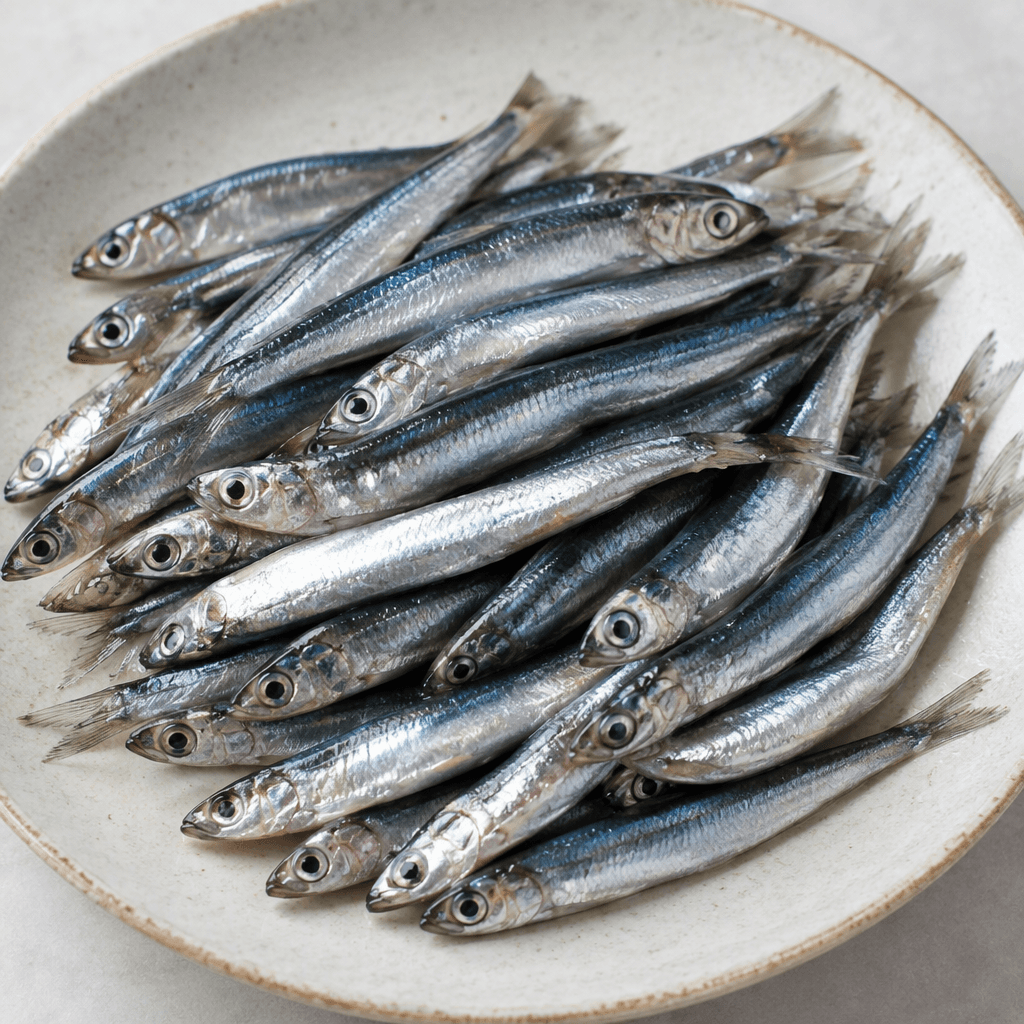
Anchovy Calories
Rich in omega-3, high protein, low calorie
In season: Autumn · Winter
CALORIES
GI
POTASSIUM
FIBER
Quick answer
1 piece (medium) of Anchovy (15 g) has 20 calories. That works out to 131 calories per 100 g. It contains 0 g of carbs, 3.1 g of protein, 0.6 g of fat and 0 g of fiber. Its 5.4 µg of Selenium covers 10% of the Daily Value. Its glycemic index is 0 (low), so it raises blood sugar slowly.
What is Anchovy?
Anchovy here refers to the small, fresh fish eaten whole in Turkey, especially along the Black Sea coast—not just the salt-cured fillets often used as a seasoning elsewhere. It is commonly cooked soon after purchase: rolled in cornmeal and pan-fried, baked, steamed, or folded into rice.
Fresh Anchovy has tender, savoury flesh; frying gives it a crisp outside while keeping the centre moist. In its home region it is often served hot with salad, lemon, and bread, and it also fits naturally into Mediterranean and Black Sea cooking. It provides plenty of protein and omega-3 fats. For a lighter plate, bake or steam it and pair it with greens.
Anchovy Nutrition Facts
Selected: 100 g
131
KCAL / 100G
Carbs
0g
· 0% DV
Protein
20.4g
· 41% DV
Fat
4.1g
· 5% DV
Fiber
0g
· 0% DV
DV is the share of the daily value covered, on a 2,000 kcal reference diet.
Calories come from: Carbs 0% · Protein 69% · Fat 31%
Anchovy Vitamins & Minerals
Vitamins
B12
0.9µg · 38% DV
Vitamin D
7µg · 35% DV
B3
3.6mg · 23% DV
B5
0.6mg · 12% DV
Minerals
Selenium
36µg · 65% DV
Phosphorus
224mg · 32% DV
Iodine
30µg · 20% DV
Zinc
2mg · 18% DV
How Nutritious Is Anchovy?
Nutrient density
Very high
How many vitamins, minerals and how much fiber this food carries per calorie. A high score means a lot of nutrition for few calories.
Satiety score
Medium
An EatBetter score computed from fiber, protein and calorie density. A high score means staying full longer on the same calories.
Both scores are calculated per 100 g and do not change with the selected portion. The satiety score is EatBetter's own calculation, not a clinical measure.
Anchovy Glycemic Index
GLYCEMIC INDEX
GLYCEMIC LOAD
Accounts for portion size — a more realistic measure than GI alone.
How to Burn Off Anchovy
To burn the 131 calories in 100 g:
🚶
Walking (5 km/h)
🏃
Running (8 km/h)
🚴
Cycling
🏊
Swimming
Times are calculated with the MET equation for a 70 kg adult. Actual burn varies with your weight, age and pace.
Is Anchovy Processed?
NOVA 1
Unprocessed
1. Unprocessed
2. Minimally Processed
3. Processed
4. Ultra-Processed
NOVA classifies foods into 4 groups by industrial processing. NOVA 1 (unprocessed) is the healthiest.
Does Anchovy Contain Allergens?
Contains these allergens:
Which Diets Is Anchovy Good For?
Vegan
— Not suitable
Vegetarian
— Not suitable
Gluten-Free
✓ Suitable
Dairy-Free
— Not suitable
Mediterranean
✓ Suitable
Paleo
✓ Suitable
Whole30
— Not suitable
DASH
— Not suitable
Keto
✓ Suitable
Low FODMAP
— Not suitable
Anchovy Fat Profile
SATURATED
1.1g
MONOUNSATURATED
1.4g
POLYUNSATURATED
1.1g
Omega 6:3 ratio 0.1:1
Below the ideal 4:1 — a good omega balance.
Compare Anchovy
Foods Similar to Anchovy
Frequently Asked Questions About Anchovy
Are anchovies and sardines the same fish?
No. Anchovies are a different, generally smaller and more slender fish than sardines. Their flavors also differ: anchovies tend to taste more intense, while sardines have a meatier texture. Both are sold fresh and preserved.
What do fresh anchovies taste like?
Fresh anchovies taste savory and distinctly fishy, but they are milder and less salty than cured anchovies. Their small, tender flesh cooks quickly, and a squeeze of lemon or a crisp coating pairs well with it.
How do you clean fresh anchovies?
To clean fresh anchovies, pinch off the head and pull out the entrails, then rinse the fish briefly under cold water. You can also remove the backbone by pulling it gently toward the tail, especially if you want boneless fillets.
How do you cook fresh anchovies?
Fresh anchovies cook quickly by frying, baking, or grilling. Pat them dry first; for a crisp finish, coat them lightly in cornmeal and fry in a hot pan. They are ready when the flesh turns opaque and separates easily.
Do anchovies have bones, and can you eat them?
Yes, anchovies have a backbone and small bones. When the fish are cooked until tender, their fine bones are often soft enough to eat; remove the backbone before cooking if you prefer a boneless bite.
How long do fresh anchovies last in the refrigerator?
Fresh anchovies are best cooked the day you buy them and should generally be used within one to two days. Keep them covered in the coldest part of the refrigerator, ideally over ice without letting them sit in meltwater.
Can you freeze fresh anchovies?
Yes. Clean the anchovies, pat them dry, and freeze them in airtight, meal-sized portions. Thaw them in the refrigerator and cook soon afterward; avoid refreezing once thawed, since repeated freezing worsens their texture.
Is it safe to eat raw anchovies?
Raw anchovies can carry parasites and harmful bacteria, so ordinary fresh fish should not be eaten raw. Use fish specifically handled and frozen for raw consumption, or cook anchovies thoroughly; lemon juice alone does not make them safe.
Why are anchovies so salty?
Fresh anchovies are not naturally as salty as the familiar preserved kind. The intense saltiness usually comes from curing them in salt or packing them in brine; fresh anchovies need only ordinary seasoning before cooking.
Are anchovies good for you?
Yes, fresh anchovies provide protein and omega-3 fats as part of a balanced meal. They are different from heavily salted or oil-packed anchovies, which can contribute considerably more sodium or added oil.
Have another question about Anchovy?
Ask the AI nutrition coach — calories, portions, alternatives and more, answered in seconds in the app.

Scan calories with your camera
Instant AI nutrition analysis

Nutrition data compiled from USDA FoodData Central and scientific sources.