

Ready & Packaged Foods
All →Vegetables & Legumes
All →Desserts & Confectionery
All →Meat & Protein
All →Grains & Bakery
All →Beverages
All →Milk & Dairy
All →

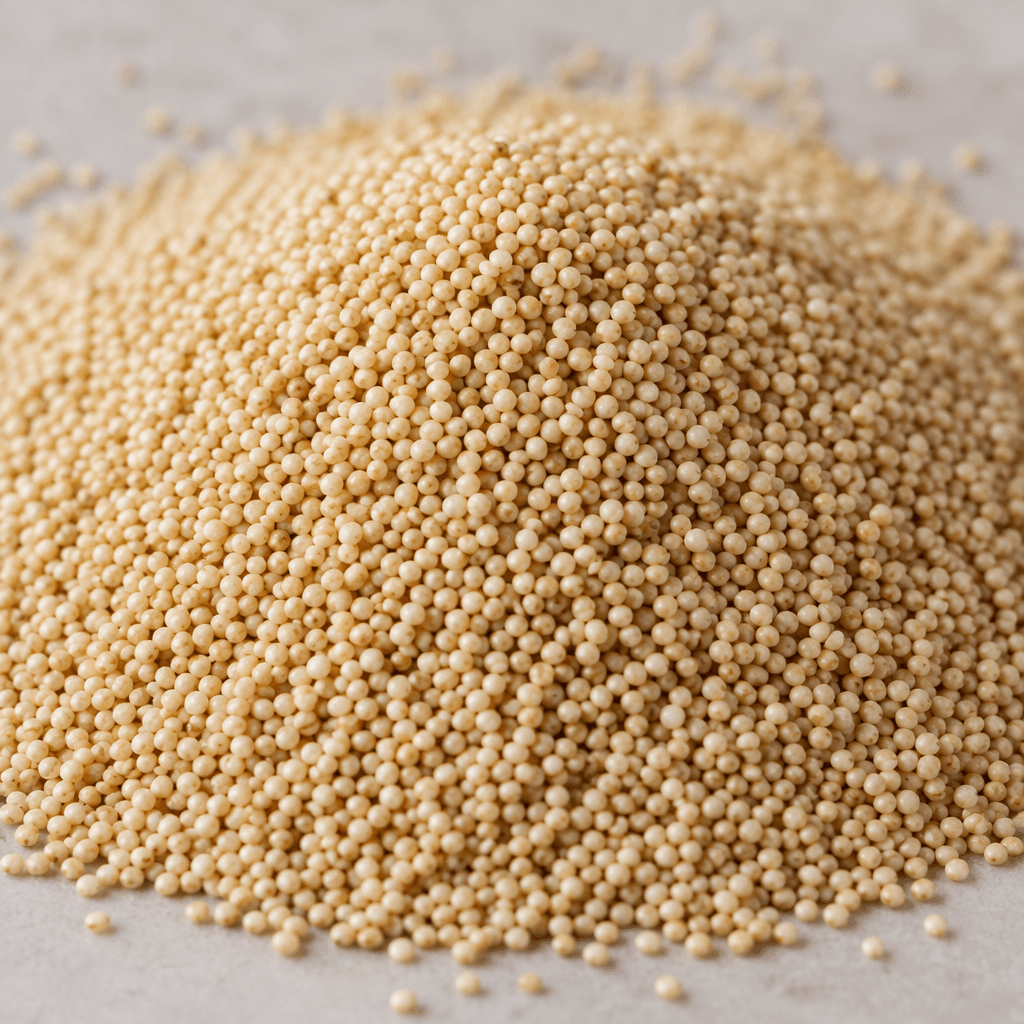
Amaranth Calories
Gluten-free, high in protein, fiber and minerals
In season: Spring · Summer · Autumn
CALORIES · 100 G
GI
POTASSIUM · 100 G
FIBER · 100 G
Quick answer
1 cup (medium) of Amaranth (193 g) has 716 calories. That works out to 371 calories per 100 g. It contains 126 g of carbs, 26.2 g of protein, 13.5 g of fat and 12.9 g of fiber. Its 6.4 mg of Manganese covers 279% of the Daily Value. Its glycemic index is 97 (high), so it raises blood sugar quickly.
Amaranth Nutrition Facts
Selected: 1 cup (medium) · 193 g
716
KCAL / 193G
Carbs
126g
· 46% DV
Protein
26.2g
· 52% DV
Fat
13.5g
· 17% DV
Fiber
12.9g
· 46% DV
DV is the share of the daily value covered, on a 2,000 kcal reference diet.
Calories come from: Carbs 69% · Protein 14% · Fat 17%
Amaranth nutrition facts table · 1 cup (medium) (193 g)
| Nutrient | Amount | % DV |
|---|---|---|
| Calories | 716 kcal | |
| Total fat | 13.5 g | 17% |
| Saturated fat | 2.9 g | 14% |
| Trans fat | 0 g | |
| Sodium | 7.72 mg | 0% |
| Total carbohydrate | 126 g | 46% |
| Fiber | 12.9 g | 46% |
| Protein | 26.2 g | 52% |
Calories: Calories measure energy. Average daily need is 2,000 kcal. Excess calories are stored as fat, too few cause weight loss.
Carbs: Your body's primary energy source. The brain runs exclusively on carbs. Daily need: 275g.
Protein: Essential for muscle repair and cell growth. Daily need: 50g. Keeps you full and boosts metabolism.
Fat: Needed for hormone production and vitamin absorption. Daily need: 78g. Limit saturated fats, choose unsaturated.
Fiber: Critical for digestive health and satiety. Daily need: 28g. Stabilizes blood sugar, lowers cholesterol.

Log this food in EatBetter
100,000+ people use it
- Get your daily calorie target
- Snap your meal, log it in seconds
- See every vitamin and mineral

📸 Scan the code to get the app free.

How Many Calories in 1 Cup of Amaranth?
| Serving | Amount | Calories |
|---|---|---|
| 1 cup (medium) | 193 g | 716 kcal |
| 1 tablespoon (small) | 10 g | 37 kcal |
| 1 piece (mini) | 20 g | 74 kcal |
| 1 ounce (small) | 28 g | 104 kcal |
| 1 serving (small) | 40 g | 148 kcal |
| ½ cup (small) | 96 g | 356 kcal |
| 100 g | 100 g | 371 kcal |
| 2 cup (large) | 386 g | 1432 kcal |
Calculated from 371 calories per 100 g.
Frequently Asked Questions About Amaranth
What is amaranth, and is it a grain?
Amaranth is the seed of a flowering plant, used in cooking like a grain. It is therefore called a pseudograin, rather than a cereal grain such as wheat or rice.
What does amaranth taste like?
Amaranth has a mild, earthy, slightly nutty flavor. Cooked seeds can be soft and a little sticky, while popped amaranth is crisp. Its mild taste works in both savory dishes and sweet porridges.
How do you cook amaranth without making it mushy?
Rinse amaranth in a fine-mesh sieve, then simmer it in water until tender. It naturally becomes softer and more porridge-like than rice, so use it in dishes where that texture works rather than expecting separate, fluffy grains.
Can you pop amaranth in a pan?
Yes, amaranth pops in a hot, dry pan. Add a small amount at a time and keep the pan moving, then remove the popped seeds quickly so they do not burn. Some seeds may remain unpopped.
Can amaranth replace rice in recipes?
Amaranth can replace rice in soups, bowls, or as a side, but it will not have the same texture. Its tiny seeds tend to cook into a softer, stickier mixture, so it is not an ideal swap when fluffy, separate grains matter.
Is amaranth the same as quinoa?
No. Amaranth and quinoa are different plants, although both are pseudograins and can be cooked in similar ways. Amaranth has much smaller seeds and usually turns softer and more porridge-like than quinoa.
Can you eat amaranth raw?
It is better to cook or pop amaranth seeds rather than eat them raw. Raw seeds can be hard and difficult to digest; cooking softens them and makes them easier to use in meals.
How do you use amaranth flour in baking?
Use amaranth flour as part of a flour blend in breads, pancakes, or other baked goods. Because it contains no gluten, it cannot provide the stretch and structure of wheat flour on its own.
How should you store amaranth?
Keep dry amaranth seeds in a sealed container in a cool, dry pantry. Store amaranth flour the same way, or refrigerate it in a warm or humid kitchen to help preserve its freshness.
Is amaranth good for weight loss?
Amaranth does not cause weight loss on its own, but its protein and fiber can make a meal more filling. Pair it with vegetables or other minimally prepared foods, and choose a portion that fits your meal.
Amaranth Vitamins & Minerals
Vitamins
B6
1.14mg · 67% DV
B5
2.81mg · 56% DV
Biotin
13.51µg · 45% DV
Folate
158.26µg · 40% DV
Minerals
Manganese
6.43mg · 280% DV
Phosphorus
1075mg · 154% DV
Magnesium
479mg · 114% DV
Copper
1.01mg · 112% DV
Potassium ⭐
980mg · 29% DV
Sodium
7.72mg · 0% DV
Amaranth Glycemic Index
GLYCEMIC INDEX
GLYCEMIC LOAD
Accounts for portion size — a more realistic measure than GI alone.
How to Burn Off Amaranth
To burn the 716 calories in 1 cup (medium) (193 g):
🚶
Walking (5 km/h)
🏃
Running (8 km/h)
🚴
Cycling
🏊
Swimming
Times are calculated with the MET equation for a 70 kg adult. Actual burn varies with your weight, age and pace.
What is Amaranth?
Amaranth is a small-seeded plant native to the Americas, used much like a grain despite being botanically different from cereal grains. Cooked, it turns soft and somewhat porridge-like, with a mild, earthy, nutty flavour; the seeds can also be popped. In parts of the Americas it has long been eaten in porridges and other everyday dishes. Elsewhere, it works well in breakfast bowls, soups, salads or as a base for a warm grain-style side.
Naturally gluten-free, amaranth offers a notable amount of protein and fibre: 100 g provides 13.6 g of protein. Pair it with fruit and yoghurt for breakfast, or cook it with vegetables for a lighter savoury meal.
How Nutritious Is Amaranth?
Nutrient density
High
How many vitamins, minerals and how much fiber this food carries per calorie. A high score means a lot of nutrition for few calories.
Satiety score
Medium
An EatBetter score computed from fiber, protein and calorie density. A high score means staying full longer on the same calories.
Both scores are calculated per 100 g and do not change with the selected portion. The satiety score is EatBetter's own calculation, not a clinical measure.
Is Amaranth Processed?
NOVA 1
Unprocessed
1. Unprocessed
2. Minimally Processed
3. Processed
4. Ultra-Processed
NOVA classifies foods into 4 groups by industrial processing. NOVA 1 (unprocessed) is the healthiest.
Does Amaranth Contain Allergens?
No known major allergens
Which Diets Is Amaranth Good For?
Vegan
✓ Suitable
Vegetarian
✓ Suitable
Gluten-Free
✓ Suitable
Dairy-Free
— Not suitable
Mediterranean
✓ Suitable
Paleo
✓ Suitable
Whole30
— Not suitable
DASH
— Not suitable
Keto
— Not suitable
Low FODMAP
— Not suitable
Amaranth Fat Profile
SATURATED
2.9g
MONOUNSATURATED
3.28g
POLYUNSATURATED
5.4g
Omega 6:3 ratio 33.1:1
Above the ideal 4:1 (33.1:1).
Compare Amaranth
Foods Similar to Amaranth
Have another question about Amaranth?
Ask the AI nutrition coach — calories, portions, alternatives and more, answered in seconds in the app.

Scan calories with your camera
Instant AI nutrition analysis

Nutrition data compiled from USDA FoodData Central and scientific sources.