

Ready & Packaged Foods
All →Vegetables & Legumes
All →Desserts & Confectionery
All →Meat & Protein
All →Grains & Bakery
All →Beverages
All →Milk & Dairy
All →

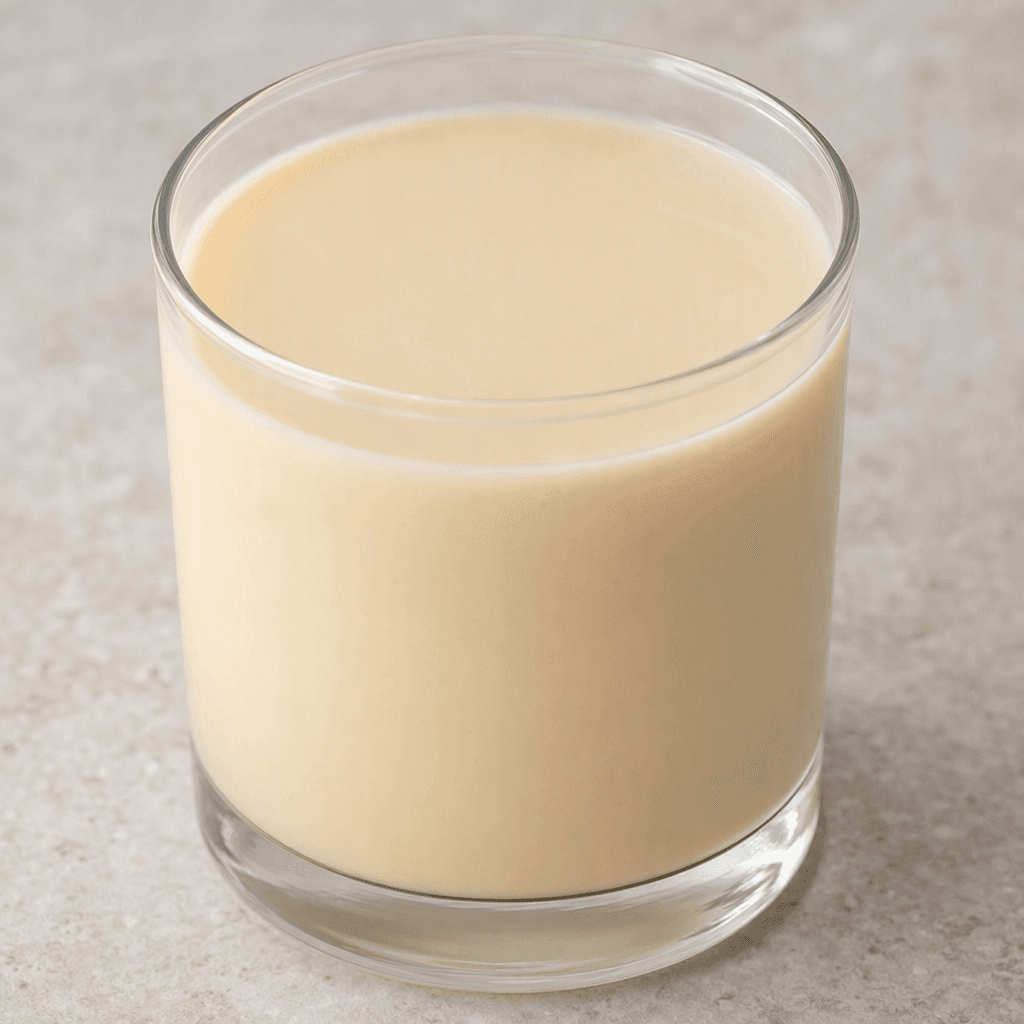
Almond Milk Calories
Plant-based milk alternative, low calorie, lactose-free
In season: Spring · Summer · Autumn · Winter
CALORIES
GI
POTASSIUM
FIBER
Quick answer
1 cup (medium) of Almond Milk (240 g) has 41 calories. That works out to 17 calories per 100 g. It contains 0.7 g of carbs, 1.4 g of protein, 2.9 g of fat and 0.5 g of fiber. Its 144 mg of Calcium covers 14% of the Daily Value. Its glycemic index is 30 (low), so it raises blood sugar slowly.
What is Almond Milk?
Almond milk is a plant-based drink made by blending almonds with water and straining the mixture. It contains no dairy, and its consistency can range from fairly light to creamy depending on the product. The flavour is mild and nutty, making it an easy addition to coffee, cereal, porridge or smoothies; it is also served chilled on its own.
It is low in calories but also low in protein, so it is not nutritionally equivalent to dairy milk in every respect. Choose an unsweetened version if you want to limit added sugar, and give the carton a shake before pouring, as the contents can settle.
Almond Milk Nutrition Facts
Selected: 100 g
17
KCAL / 100G
Carbs
0.3g
· 0% DV
Protein
0.6g
· 1% DV
Fat
1.2g
· 2% DV
Fiber
0.2g
· 1% DV
DV is the share of the daily value covered, on a 2,000 kcal reference diet.
Calories come from: Carbs 8% · Protein 17% · Fat 75%
Almond Milk Vitamins & Minerals
Vitamins
Vitamin E
0.5mg · 3% DV
B2
0.02mg · 2% DV
Biotin
0.5µg · 2% DV
B1
0.01mg · 1% DV
Minerals
Calcium
60mg · 6% DV
Magnesium
7mg · 2% DV
Sodium
40mg · 2% DV
Phosphorus
15mg · 2% DV
How Nutritious Is Almond Milk?
Nutrient density
Medium
How many vitamins, minerals and how much fiber this food carries per calorie. A high score means a lot of nutrition for few calories.
Satiety score
Medium
An EatBetter score computed from fiber, protein and calorie density. A high score means staying full longer on the same calories.
Both scores are calculated per 100 g and do not change with the selected portion. The satiety score is EatBetter's own calculation, not a clinical measure.
Almond Milk Glycemic Index
GLYCEMIC INDEX
GLYCEMIC LOAD
Accounts for portion size — a more realistic measure than GI alone.
How to Burn Off Almond Milk
To burn the 17 calories in 100 g:
🚶
Walking (5 km/h)
🏃
Running (8 km/h)
🚴
Cycling
🏊
Swimming
Times are calculated with the MET equation for a 70 kg adult. Actual burn varies with your weight, age and pace.
Is Almond Milk Processed?
NOVA 2
Minimally Processed
1. Unprocessed
2. Minimally Processed
3. Processed
4. Ultra-Processed
NOVA classifies foods into 4 groups by industrial processing. NOVA 1 (unprocessed) is the healthiest.
Does Almond Milk Contain Allergens?
Contains these allergens:
Which Diets Is Almond Milk Good For?
Vegan
✓ Suitable
Vegetarian
✓ Suitable
Gluten-Free
✓ Suitable
Dairy-Free
— Not suitable
Mediterranean
✓ Suitable
Paleo
✓ Suitable
Whole30
— Not suitable
DASH
— Not suitable
Keto
— Not suitable
Low FODMAP
— Not suitable
Almond Milk Fat Profile
SATURATED
0.1g
MONOUNSATURATED
0.7g
POLYUNSATURATED
0.3g
Omega 6:3 ratio 25:1
Above the ideal 4:1 (25:1).
Compare Almond Milk
Foods Similar to Almond Milk
Frequently Asked Questions About Almond Milk
Is almond milk good for you?
Almond milk can be a useful plant-based drink, especially if you avoid dairy, but it is not nutritionally identical to cow’s milk. Check whether it is fortified with calcium and vitamin D if you rely on it regularly.
Can almond milk replace cow’s milk?
Almond milk can replace cow’s milk in many drinks and recipes, but it generally provides much less protein. If you use it as a regular milk alternative, choose a fortified variety and get protein from other foods.
How do you make almond milk at home?
Soak raw almonds, drain and rinse them, then blend with fresh water and strain through a fine cloth or nut-milk bag. Homemade almond milk has no added stabilizers, so shake it before serving if it separates.
Why does almond milk curdle in coffee?
Almond milk can separate when it meets very hot or acidic coffee, making it look curdled. Warm the milk gently and pour the coffee into it slowly; a barista-style almond milk is often designed to foam and blend more smoothly.
Can you cook with almond milk?
Yes, almond milk works in many cooked dishes, including soups, sauces, and porridge. Add it gently and avoid a hard boil, which can encourage separation; unsweetened almond milk is the better choice for savoury recipes.
Can almond milk be used in baking?
Yes, almond milk can replace dairy milk in many cakes, muffins, and pancakes, usually in the same amount. Unsweetened almond milk keeps the recipe’s sweetness predictable, though it may add a subtle nutty flavor.
How long does almond milk last after opening?
Keep opened almond milk refrigerated and use it within the period stated on its package, since products differ. Pour only what you need, close the carton promptly, and discard it if its smell or appearance changes.
Can you freeze almond milk?
Yes, almond milk can be frozen, but it may separate or become grainy after thawing. Shake or blend it well before use, and save thawed almond milk for cooking or smoothies if the texture is no longer pleasant to drink.
What is the difference between sweetened and unsweetened almond milk?
Sweetened almond milk has sugar or another sweetener added, while unsweetened almond milk does not. The unsweetened kind works better in savoury food and lets you control the sweetness when adding it to coffee or cereal.
Can babies drink almond milk?
Almond milk should not replace breast milk or infant formula for babies under 12 months because it does not provide the nutrition they need. For an older child, ask a pediatrician before using it as a regular replacement for dairy.
Have another question about Almond Milk?
Ask the AI nutrition coach — calories, portions, alternatives and more, answered in seconds in the app.

Scan calories with your camera
Instant AI nutrition analysis

Nutrition data compiled from USDA FoodData Central and scientific sources.