

Ready & Packaged Foods
All →Vegetables & Legumes
All →Desserts & Confectionery
All →Meat & Protein
All →Grains & Bakery
All →Beverages
All →Milk & Dairy
All →

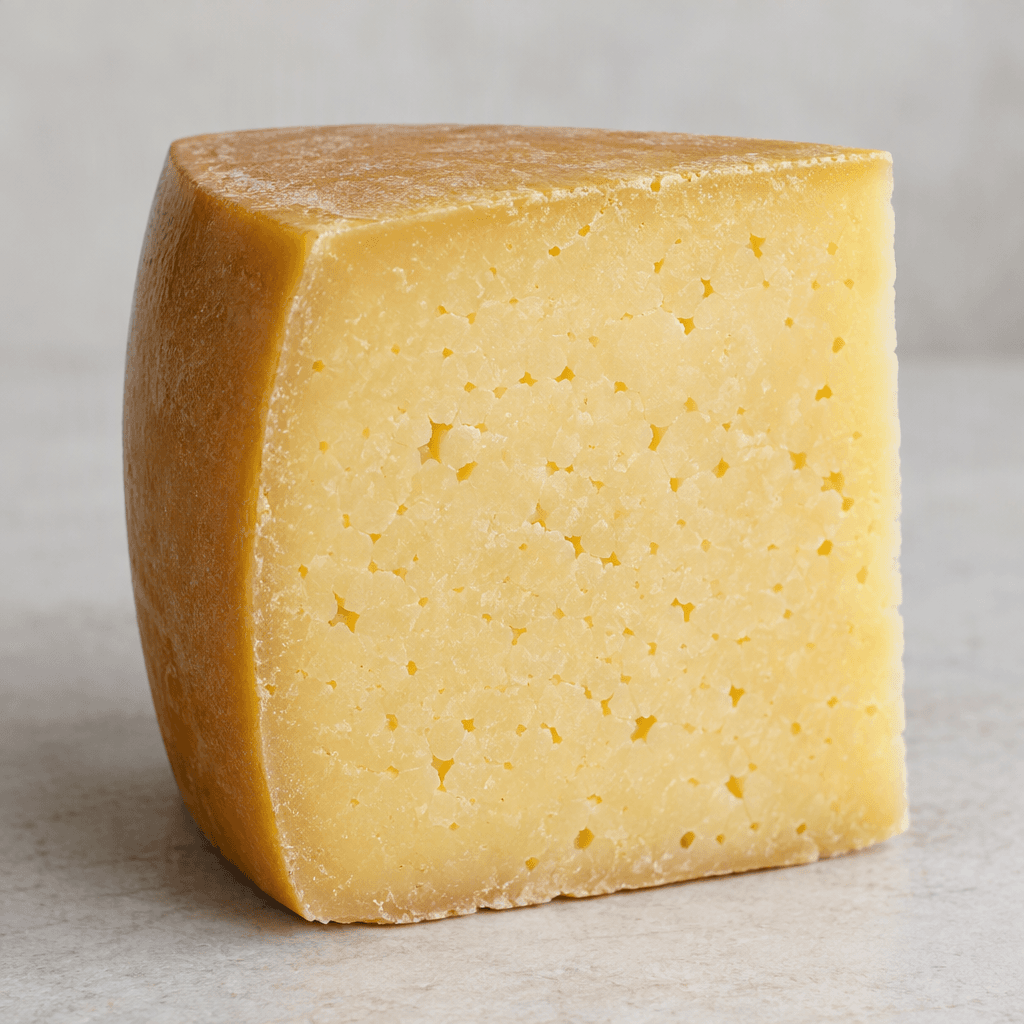
Aged Kashar Cheese Calories
Intensely flavored, firm and salty Turkish cheese
In season: Spring · Summer · Autumn · Winter
CALORIES
GI
POTASSIUM
FIBER
Quick answer
1 slice (medium) of Aged Kashar Cheese (30 g) has 111 calories. That works out to 370 calories per 100 g. It contains 0.8 g of carbs, 7.8 g of protein, 8.4 g of fat and 0 g of fiber. Its 240 mg of Calcium covers 24% of the Daily Value. Its glycemic index is 0 (low), so it raises blood sugar slowly.
What is Aged Kashar Cheese?
Aged Kashar Cheese is the matured form of kaşar, a Turkish cheese made from milk. As it ages, it becomes firmer and develops a deeper, more concentrated flavour; the exact milk blend and maturation style can vary by producer and region.
Its savoury, salty taste works well in thin slices with bread, olives and fresh vegetables, or grated over pasta and baked dishes. In Turkey it may appear at breakfast or as part of a spread for guests; elsewhere, serve it on a cheese board or use it where you want a punchier cheese. It is protein-rich but also fairly rich in fat, so a modest portion with fruit or salad makes a balanced pairing.
Aged Kashar Cheese Nutrition Facts
Selected: 100 g
370
KCAL / 100G
Carbs
2.5g
· 1% DV
Protein
26g
· 52% DV
Fat
28g
· 36% DV
Fiber
0g
· 0% DV
DV is the share of the daily value covered, on a 2,000 kcal reference diet.
Calories come from: Carbs 3% · Protein 28% · Fat 69%
Aged Kashar Cheese Vitamins & Minerals
Vitamins
B12
1.6µg · 67% DV
Vitamin A
260µg · 29% DV
B2
0.35mg · 27% DV
B5
0.45mg · 9% DV
Minerals
Calcium
800mg · 80% DV
Phosphorus
520mg · 74% DV
Sodium
1100mg · 48% DV
Zinc
4mg · 36% DV
How Nutritious Is Aged Kashar Cheese?
Nutrient density
High
How many vitamins, minerals and how much fiber this food carries per calorie. A high score means a lot of nutrition for few calories.
Satiety score
Low
An EatBetter score computed from fiber, protein and calorie density. A high score means staying full longer on the same calories.
Both scores are calculated per 100 g and do not change with the selected portion. The satiety score is EatBetter's own calculation, not a clinical measure.
Aged Kashar Cheese Glycemic Index
GLYCEMIC INDEX
GLYCEMIC LOAD
Accounts for portion size — a more realistic measure than GI alone.
How to Burn Off Aged Kashar Cheese
To burn the 370 calories in 100 g:
🚶
Walking (5 km/h)
🏃
Running (8 km/h)
🚴
Cycling
🏊
Swimming
Times are calculated with the MET equation for a 70 kg adult. Actual burn varies with your weight, age and pace.
Is Aged Kashar Cheese Processed?
NOVA 3
Processed
1. Unprocessed
2. Minimally Processed
3. Processed
4. Ultra-Processed
NOVA classifies foods into 4 groups by industrial processing. NOVA 1 (unprocessed) is the healthiest.
Does Aged Kashar Cheese Contain Allergens?
Contains these allergens:
Which Diets Is Aged Kashar Cheese Good For?
Vegan
— Not suitable
Vegetarian
✓ Suitable
Gluten-Free
✓ Suitable
Dairy-Free
— Not suitable
Mediterranean
✓ Suitable
Paleo
— Not suitable
Whole30
— Not suitable
DASH
— Not suitable
Keto
✓ Suitable
Low FODMAP
— Not suitable
Aged Kashar Cheese Fat Profile
SATURATED
18.5g
MONOUNSATURATED
7.2g
POLYUNSATURATED
1.1g
Omega 6:3 ratio 2.9:1
Below the ideal 4:1 — a good omega balance.
Compare Aged Kashar Cheese
Foods Similar to Aged Kashar Cheese
Frequently Asked Questions About Aged Kashar Cheese
What does aged Kashar cheese taste like?
Aged Kashar cheese tastes savory, tangy, and more concentrated than young Kashar. Its firm texture and pronounced saltiness make it suitable for eating in thin slices or grating over dishes.
How is aged Kashar cheese made?
Aged Kashar cheese is made by preparing Kashar cheese and then letting it mature. As it ages, it loses moisture, becomes firmer, and develops a deeper, sharper flavor.
Can you use aged Kashar cheese instead of Parmesan?
Yes, aged Kashar cheese can replace Parmesan in many grated applications, such as pasta or soups. It has a distinct Turkish Kashar flavor, so the result will taste different; start with less if you are unsure about its saltiness.
Does aged Kashar cheese melt well?
Yes, aged Kashar cheese melts, though its lower moisture and strong flavor make it behave differently from a mild melting cheese. Grate it for toast, baked dishes, or sauces, and combine it with a milder cheese if you want a subtler result.
How should you store aged Kashar cheese after opening?
Wrap aged Kashar cheese so the cut surface is protected from air, then keep it refrigerated in a covered container. A layer of cheese paper or parchment helps limit drying while avoiding a tightly damp wrap.
Can you freeze aged Kashar cheese?
Yes, aged Kashar cheese can be frozen, but thawing may make its firm texture crumbly. Freeze it in portions and use the thawed cheese grated or melted rather than expecting neat slices.
What milk is aged Kashar cheese made from?
Aged Kashar cheese may be made from cow’s milk, sheep’s milk, or a blend, depending on the producer. The milk used and the maturation process both influence the cheese’s flavor and texture.
Is the rind on aged Kashar cheese edible?
The rind on aged Kashar cheese may be edible if it is a natural part of the cheese and is clean. Remove it if it is waxed, coated, unusually hard, or not intended to be eaten.
Why is aged Kashar cheese saltier than fresh Kashar?
Aged Kashar cheese often tastes saltier because its lower moisture makes its flavor more concentrated, and salt is part of cheesemaking. The actual saltiness varies between products, so taste it before adding more salt to a recipe.
How is aged Kashar cheese different from Kasseri?
Aged Kashar cheese and Kasseri are related-style cheeses, but they are not always the same product. Their milk, production methods, aging, and texture can differ, so a recipe may not taste or melt exactly the same when one replaces the other.
Have another question about Aged Kashar Cheese?
Ask the AI nutrition coach — calories, portions, alternatives and more, answered in seconds in the app.

Scan calories with your camera
Instant AI nutrition analysis

Nutrition data compiled from USDA FoodData Central and scientific sources.