

Ready & Packaged Foods
All →Vegetables & Legumes
All →Desserts & Confectionery
All →Meat & Protein
All →Grains & Bakery
All →Beverages
All →Milk & Dairy
All →

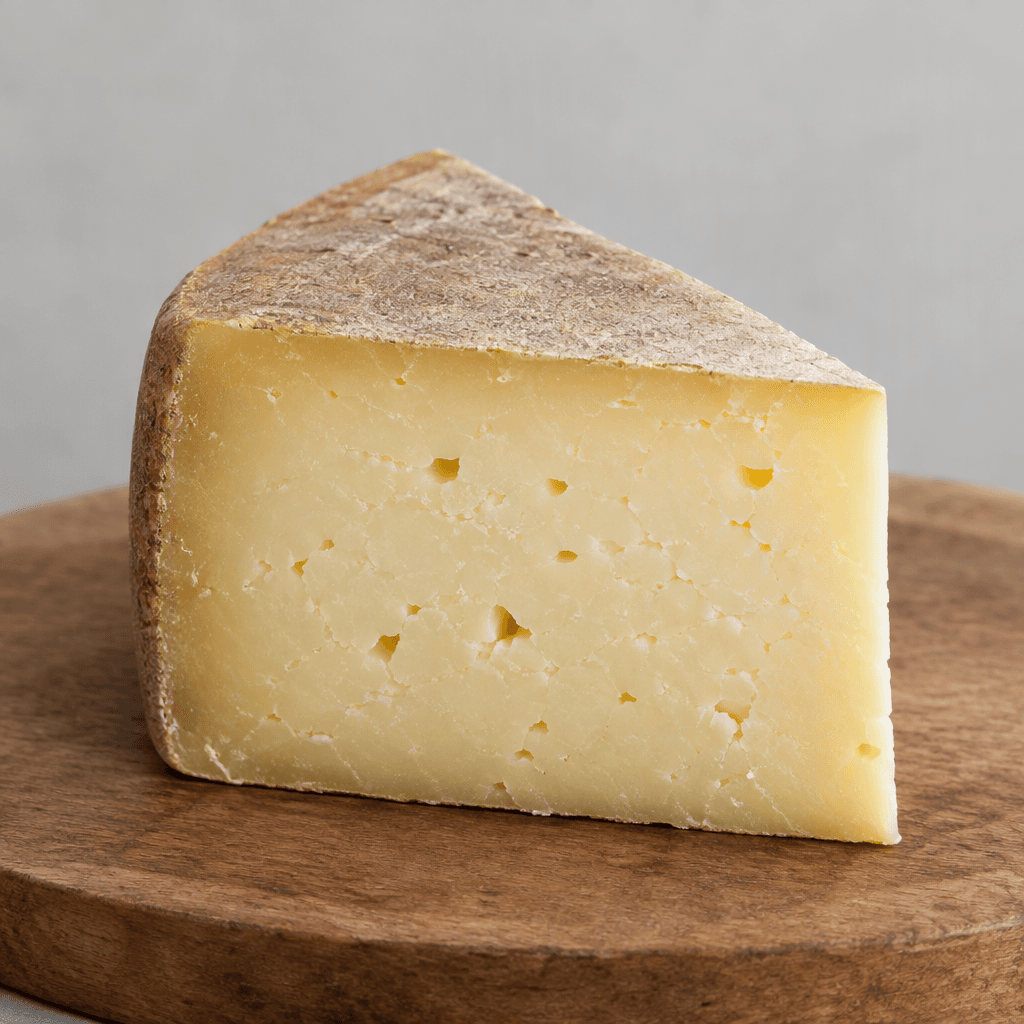
Aged cow cheese Calories
Rich flavor, high protein and calcium, made from aged cow's milk cheese.
In season: Spring · Summer · Autumn · Winter
CALORIES
GI
POTASSIUM
FIBER
Quick answer
1 slice (medium) of Aged cow cheese (30 g) has 114 calories. That works out to 380 calories per 100 g. It contains 0.6 g of carbs, 7.5 g of protein, 9 g of fat and 0 g of fiber. Its 0.6 µg of B12 covers 25% of the Daily Value. Its glycemic index is 0 (low), so it raises blood sugar slowly.
What is Aged cow cheese?
Aged cow cheese is made from cow’s milk and left to mature, allowing its flavour to deepen and its texture to firm. The exact taste and consistency vary with the cheesemaking method and length of aging; it is often savoury, dense and easy to slice.
Serve it on a cheeseboard with bread, fruit or olives, or grate it over pasta and other savoury dishes. It is protein-rich and also relatively high in fat, so a few slices can add plenty of flavour. For a lighter snack, pair a smaller portion with fresh fruit or vegetables.
Aged cow cheese Nutrition Facts
Selected: 100 g
380
KCAL / 100G
Carbs
2g
· 1% DV
Protein
25g
· 50% DV
Fat
30g
· 38% DV
Fiber
0g
· 0% DV
DV is the share of the daily value covered, on a 2,000 kcal reference diet.
Calories come from: Carbs 2% · Protein 26% · Fat 72%
Aged cow cheese Vitamins & Minerals
Vitamins
B12
2µg · 83% DV
Biotin
18µg · 60% DV
Vitamin A
280µg · 31% DV
B2
0.35mg · 27% DV
Minerals
Calcium
800mg · 80% DV
Phosphorus
500mg · 71% DV
Zinc
4mg · 36% DV
Sodium
800mg · 35% DV
How Nutritious Is Aged cow cheese?
Nutrient density
High
How many vitamins, minerals and how much fiber this food carries per calorie. A high score means a lot of nutrition for few calories.
Satiety score
Low
An EatBetter score computed from fiber, protein and calorie density. A high score means staying full longer on the same calories.
Both scores are calculated per 100 g and do not change with the selected portion. The satiety score is EatBetter's own calculation, not a clinical measure.
Aged cow cheese Glycemic Index
GLYCEMIC INDEX
GLYCEMIC LOAD
Accounts for portion size — a more realistic measure than GI alone.
How to Burn Off Aged cow cheese
To burn the 380 calories in 100 g:
🚶
Walking (5 km/h)
🏃
Running (8 km/h)
🚴
Cycling
🏊
Swimming
Times are calculated with the MET equation for a 70 kg adult. Actual burn varies with your weight, age and pace.
Is Aged cow cheese Processed?
NOVA 3
Processed
1. Unprocessed
2. Minimally Processed
3. Processed
4. Ultra-Processed
NOVA classifies foods into 4 groups by industrial processing. NOVA 1 (unprocessed) is the healthiest.
Does Aged cow cheese Contain Allergens?
Contains these allergens:
Which Diets Is Aged cow cheese Good For?
Vegan
— Not suitable
Vegetarian
✓ Suitable
Gluten-Free
✓ Suitable
Dairy-Free
— Not suitable
Mediterranean
✓ Suitable
Paleo
✓ Suitable
Whole30
— Not suitable
DASH
— Not suitable
Keto
✓ Suitable
Low FODMAP
— Not suitable
Aged cow cheese Fat Profile
SATURATED
18g
MONOUNSATURATED
8g
POLYUNSATURATED
1.2g
Omega 6:3 ratio 5:1
Above the ideal 4:1 (5:1).
Compare Aged cow cheese
Foods Similar to Aged cow cheese
Frequently Asked Questions About Aged cow cheese
What is aged cow cheese?
Aged cow cheese is cheese made from cow’s milk that is rested under controlled conditions to develop a firmer texture and more pronounced flavor. The term describes aging, not one specific cheese variety, so taste and texture vary by style and producer.
What does aged cow cheese taste like?
Aged cow cheese usually tastes more concentrated and savory than fresh cow’s-milk cheese, with a firmer, sometimes crumbly texture. Its exact flavor can range from mild and buttery to sharp and tangy depending on the cheese and how it was aged.
How is aged cow cheese different from fresh cheese?
Aged cow cheese has had time to lose moisture and develop flavor, so it is generally firmer and more savory than fresh cheese. Fresh cheese tends to be softer and milder, and it usually has a shorter keeping life once opened.
Does aged cow cheese melt well?
Some aged cow cheeses melt smoothly, while very dry or crumbly styles may soften without becoming fully stretchy. For an even melt, grate the cheese and add it over gentle heat; it works well in sauces, baked dishes, and toasted sandwiches.
How should you serve aged cow cheese?
Serve aged cow cheese in thin slices or small pieces so its concentrated flavor is easy to enjoy. It pairs well with bread, fruit, nuts, and savory accompaniments, and can also be grated over pasta or vegetables.
How do you store aged cow cheese after opening?
Wrap aged cow cheese so its cut surface is protected, then keep it refrigerated in a sealed container or suitable cheese paper. Avoid leaving it exposed to air, which dries it out, and keep it separate from strongly scented foods.
Can you freeze aged cow cheese?
Yes, you can freeze aged cow cheese, but freezing may make its texture more crumbly after thawing. Freeze it in portions and use the thawed cheese in cooked dishes, such as sauces or casseroles, rather than expecting the original texture on a cheese board.
Can you eat the rind on aged cow cheese?
Only if the rind is edible. Some aged cow cheeses have a natural rind, while others have a coating that should be removed; when the rind’s type is not clear, trim it off before eating.
Is aged cow cheese low in lactose?
Aged cow cheese often contains less lactose than fresh cheese because aging reduces the amount of lactose, but the level varies by product. People with lactose intolerance may tolerate some aged cheeses, while anyone with a cow’s-milk allergy should avoid them.
Can you eat aged cow cheese during pregnancy?
Yes, aged cow cheese made with pasteurized milk is generally suitable during pregnancy when it has been stored and handled safely. Avoid cheese made from unpasteurized milk, and ask your healthcare professional if you are unsure about a particular product.
Have another question about Aged cow cheese?
Ask the AI nutrition coach — calories, portions, alternatives and more, answered in seconds in the app.

Scan calories with your camera
Instant AI nutrition analysis

Nutrition data compiled from USDA FoodData Central and scientific sources.