

Ready & Packaged Foods
All →Vegetables & Legumes
All →Desserts & Confectionery
All →Meat & Protein
All →Grains & Bakery
All →Beverages
All →Milk & Dairy
All →

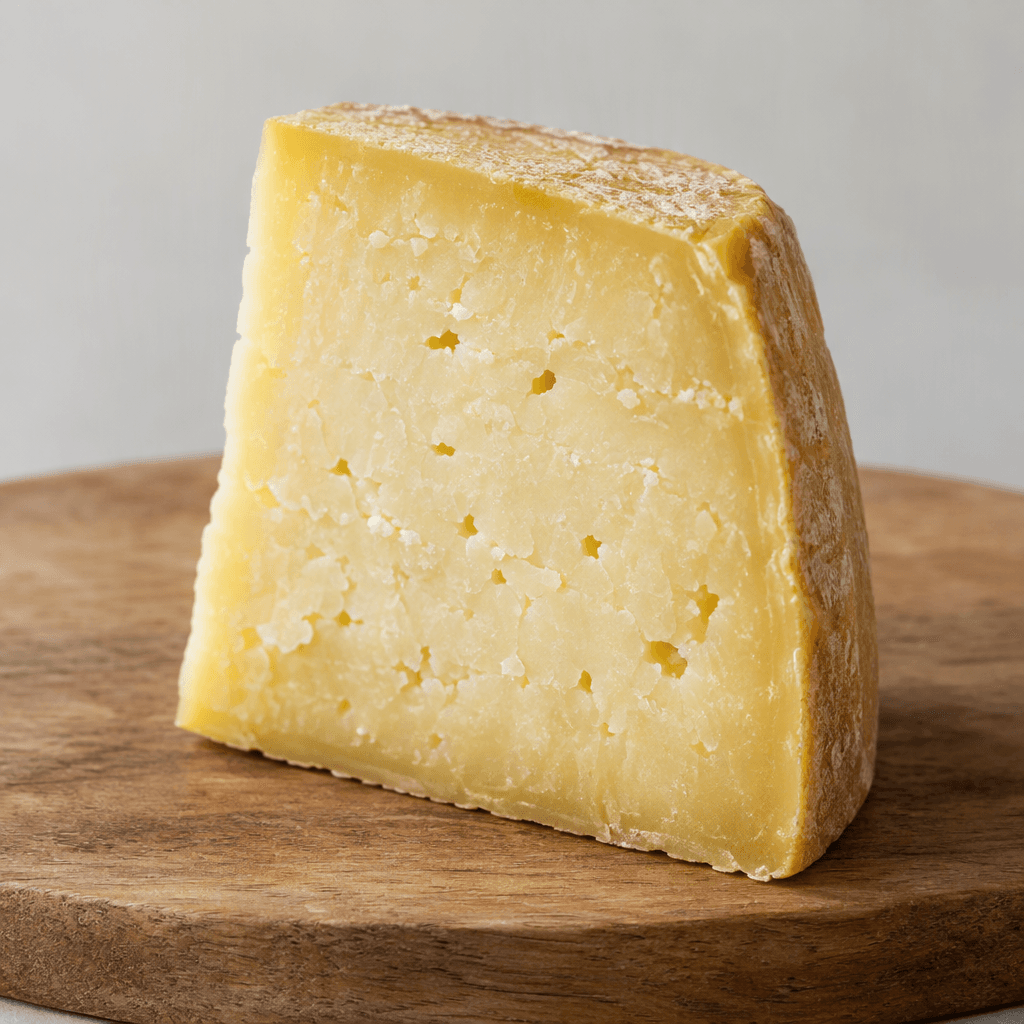
Aged Cheese Calories
Rich in protein and calcium, contains probiotics
In season: Spring · Summer · Autumn · Winter
CALORIES
GI
POTASSIUM
FIBER
Quick answer
1 slice (medium) of Aged Cheese (30 g) has 114 calories. That works out to 380 calories per 100 g. It contains 0.6 g of carbs, 7.5 g of protein, 9 g of fat and 0 g of fiber. Its 240 mg of Calcium covers 24% of the Daily Value. Its glycemic index is 0 (low), so it raises blood sugar slowly.
What is Aged Cheese?
Aged cheese is made by letting cheese mature after the milk has been cultured and the curds formed. It is a broad family found in cheesemaking traditions around the world, rather than one cheese from a single place. As it matures, it becomes firmer and its flavour more concentrated; some varieties have a dense, slightly crumbly texture.
Serve it on a cheese board, with bread and fruit, or grate it over savoury dishes. It is rich in protein and calcium, and also relatively high in fat, so a modest slice alongside fresh vegetables makes a satisfying snack or meal addition.
Aged Cheese Nutrition Facts
Selected: 100 g
380
KCAL / 100G
Carbs
2g
· 1% DV
Protein
25g
· 50% DV
Fat
30g
· 38% DV
Fiber
0g
· 0% DV
DV is the share of the daily value covered, on a 2,000 kcal reference diet.
Calories come from: Carbs 2% · Protein 26% · Fat 72%
Aged Cheese Vitamins & Minerals
Vitamins
B12
1.5µg · 63% DV
Vitamin A
260µg · 29% DV
B2
0.35mg · 27% DV
B5
0.5mg · 10% DV
Minerals
Calcium
800mg · 80% DV
Phosphorus
500mg · 71% DV
Sodium
900mg · 39% DV
Zinc
4mg · 36% DV
How Nutritious Is Aged Cheese?
Nutrient density
High
How many vitamins, minerals and how much fiber this food carries per calorie. A high score means a lot of nutrition for few calories.
Satiety score
Low
An EatBetter score computed from fiber, protein and calorie density. A high score means staying full longer on the same calories.
Both scores are calculated per 100 g and do not change with the selected portion. The satiety score is EatBetter's own calculation, not a clinical measure.
Aged Cheese Glycemic Index
GLYCEMIC INDEX
GLYCEMIC LOAD
Accounts for portion size — a more realistic measure than GI alone.
How to Burn Off Aged Cheese
To burn the 380 calories in 100 g:
🚶
Walking (5 km/h)
🏃
Running (8 km/h)
🚴
Cycling
🏊
Swimming
Times are calculated with the MET equation for a 70 kg adult. Actual burn varies with your weight, age and pace.
Is Aged Cheese Processed?
NOVA 3
Processed
1. Unprocessed
2. Minimally Processed
3. Processed
4. Ultra-Processed
NOVA classifies foods into 4 groups by industrial processing. NOVA 1 (unprocessed) is the healthiest.
Does Aged Cheese Contain Allergens?
Contains these allergens:
Which Diets Is Aged Cheese Good For?
Vegan
— Not suitable
Vegetarian
✓ Suitable
Gluten-Free
✓ Suitable
Dairy-Free
— Not suitable
Mediterranean
✓ Suitable
Paleo
— Not suitable
Whole30
— Not suitable
DASH
— Not suitable
Keto
✓ Suitable
Low FODMAP
— Not suitable
Aged Cheese Fat Profile
SATURATED
18g
MONOUNSATURATED
8g
POLYUNSATURATED
1.2g
Omega 6:3 ratio 2.5:1
Below the ideal 4:1 — a good omega balance.
Compare Aged Cheese
Foods Similar to Aged Cheese
Frequently Asked Questions About Aged Cheese
What is aged cheese, and how is it made?
Aged cheese is cheese left to mature under controlled conditions after the curds are formed, drained, and usually salted. During aging, moisture falls and enzymes and microbes develop its firmer texture and more concentrated flavor.
How is aged cheese different from fresh cheese?
Aged cheese is generally firmer, drier, and more intense in flavor than fresh cheese because it has matured longer. Fresh cheese tends to be softer and milder, so it is often used differently in cooking and at the table.
Can you eat the rind on aged cheese?
Sometimes; whether an aged cheese rind is edible depends on how it was made. Natural rinds may be edible, while wax, cloth, or other protective coatings should be removed. If the rind is unusually hard or artificial-looking, cut it away.
How should you store aged cheese after opening?
Wrap aged cheese so it is protected from drying out but not trapped in excess moisture, then refrigerate it in a container. Cheese paper or waxed paper works well; keep it away from strong-smelling foods and rewrap the cut surface after serving.
Can you freeze aged cheese?
Yes, aged cheese can be frozen, but thawing may make its texture more crumbly. Freeze it in small, well-wrapped portions and use it grated or in cooked dishes rather than expecting it to keep the same texture for a cheese board.
Why does aged cheese have crunchy crystals?
The small crunchy crystals in aged cheese are often tyrosine, which forms naturally as proteins break down during maturation. They are not usually a sign of spoilage. Fuzzy colored growth, an unpleasant odor, or a slimy surface is different and warrants discarding it.
Does aged cheese melt well?
Aged cheese can melt, but its lower moisture often makes it less smooth and stretchy than young cheese. Grate it finely and stir it into a warm sauce or dish gradually; combining it with a moister cheese can improve the texture.
Is aged cheese low in lactose?
Aged cheese is usually lower in lactose than fresh cheese because bacteria consume some lactose during maturation. The amount varies by cheese and production method, so people with lactose intolerance may still react differently to different aged cheeses.
Why does aged cheese taste sharper than mild cheese?
Aged cheese tastes sharper because its proteins and fats break down during maturation, creating more concentrated flavors and aromas. Longer aging often intensifies those characteristics, although the milk, cultures, and method also shape the final taste.
What should you serve with aged cheese?
Serve aged cheese with fruit, nuts, bread, or crackers to balance its concentrated savory flavor. Apples, pears, and grapes are common pairings; choose accompaniments that do not overwhelm the particular cheese’s aroma.
Have another question about Aged Cheese?
Ask the AI nutrition coach — calories, portions, alternatives and more, answered in seconds in the app.

Scan calories with your camera
Instant AI nutrition analysis

Nutrition data compiled from USDA FoodData Central and scientific sources.