

Ready & Packaged Foods
All →Vegetables & Legumes
All →Desserts & Confectionery
All →Meat & Protein
All →Grains & Bakery
All →Beverages
All →Milk & Dairy
All →

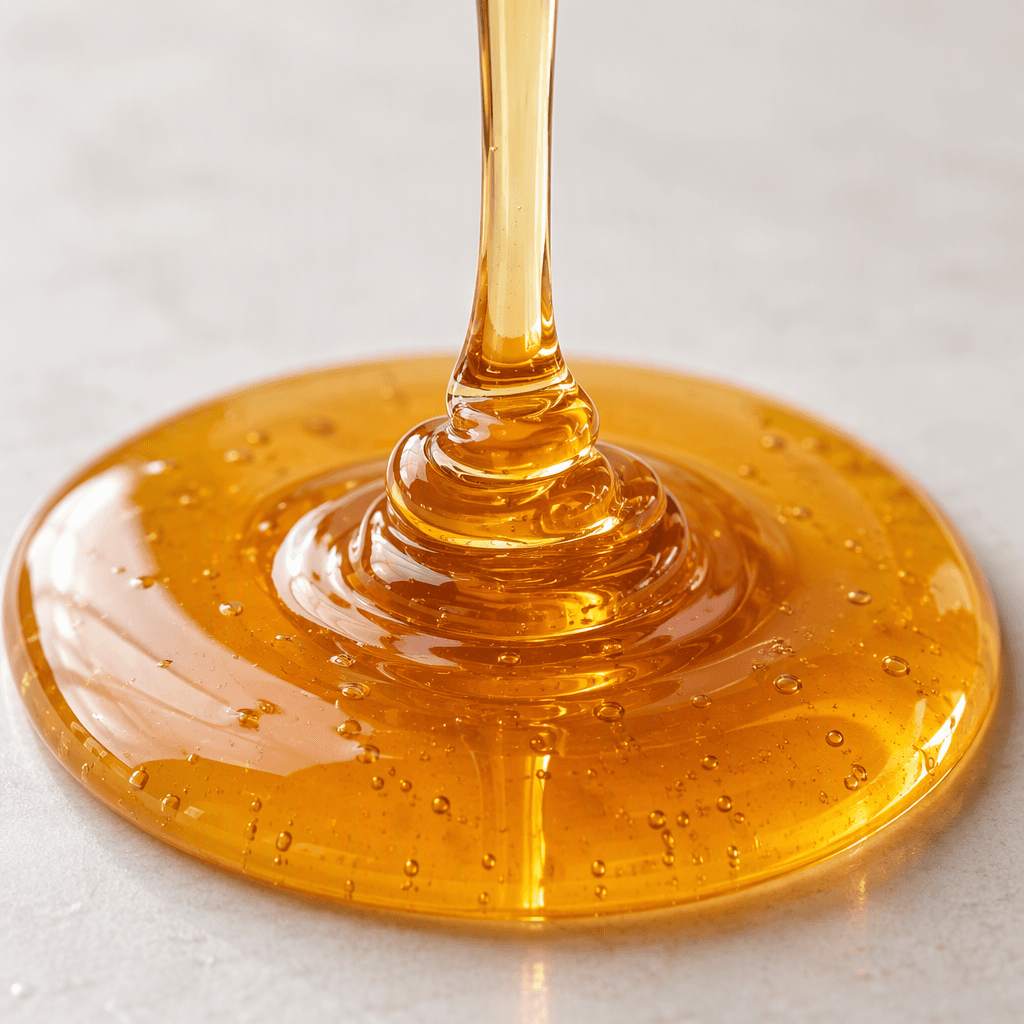
Agave Calories
Natural sweetener, low glycemic index
In season: Spring · Summer · Autumn · Winter
CALORIES · 100 G
GI
POTASSIUM · 100 G
FIBER · 100 G
Quick answer
1 tablespoon (medium) of Agave (21 g) has 65 calories. That works out to 310 calories per 100 g. It contains 16 g of carbs, 0 g of protein, 0 g of fat and 0 g of fiber. Its glycemic index is 17 (low), so it raises blood sugar slowly.
Agave Nutrition Facts
Selected: 1 tablespoon (medium) · 21 g
65
KCAL / 21G
Carbs
16g
· 6% DV
Protein
0g
· 0% DV
Fat
0g
· 0% DV
Fiber
0g
· 0% DV
DV is the share of the daily value covered, on a 2,000 kcal reference diet.
Calories come from: Carbs 100% · Protein 0% · Fat 0%
Agave nutrition facts table · 1 tablespoon (medium) (21 g)
| Nutrient | Amount | % DV |
|---|---|---|
| Calories | 65 kcal | |
| Total fat | 0 g | 0% |
| Saturated fat | 0 g | 0% |
| Trans fat | 0 g | |
| Sodium | 0.84 mg | 0% |
| Total carbohydrate | 16 g | 6% |
| Fiber | 0 g | 0% |
| Protein | 0 g | 0% |
Calories: Calories measure energy. Average daily need is 2,000 kcal. Excess calories are stored as fat, too few cause weight loss.
Carbs: Your body's primary energy source. The brain runs exclusively on carbs. Daily need: 275g.
Protein: Essential for muscle repair and cell growth. Daily need: 50g. Keeps you full and boosts metabolism.
Fat: Needed for hormone production and vitamin absorption. Daily need: 78g. Limit saturated fats, choose unsaturated.
Fiber: Critical for digestive health and satiety. Daily need: 28g. Stabilizes blood sugar, lowers cholesterol.

Log this food in EatBetter
100,000+ people use it
- Get your daily calorie target
- Snap your meal, log it in seconds
- See every vitamin and mineral

📸 Scan the code to get the app free.

How Many Calories in 1 Tablespoon of Agave?
| Serving | Amount | Calories |
|---|---|---|
| 1 tablespoon (medium) | 21 g | 65 kcal |
| 1 g | 1 g | 3 kcal |
| 1 teaspoon (small) | 7 g | 22 kcal |
| 1 ounce (medium) | 28 g | 87 kcal |
| 1 serving (medium) | 30 g | 93 kcal |
| 2 tablespoon (large) | 42 g | 130 kcal |
| 100 g | 100 g | 310 kcal |
| 1 pack (medium) | 250 g | 775 kcal |
| 1 cup (large) | 336 g | 1042 kcal |
| 1 bottle (large) | 350 g | 1085 kcal |
Calculated from 310 calories per 100 g.
Frequently Asked Questions About Agave
What is agave, and how is agave syrup made?
Agave syrup is a liquid sweetener made from the sap of agave plants. The sap is filtered and processed, often with heat or enzymes, to make syrup, so the finished product is not simply raw agave juice.
Is agave syrup healthy?
Agave syrup is not automatically a healthy sweetener; it is still an added sugar used to sweeten foods and drinks. Its plant origin does not make frequent or generous use a healthier choice than limiting other sweeteners.
Is agave syrup better than sugar?
Agave syrup can taste sweeter than table sugar, so some recipes may need less of it. It is still a concentrated sweetener, though, and swapping it for sugar does not remove the added-sugar content from a recipe.
Is agave syrup better than honey?
Agave syrup is not universally better than honey; both are sweeteners, and the better choice depends on what you need it for. Agave syrup works for vegan recipes, while honey has a distinct flavor that agave syrup does not reproduce.
Can people with diabetes use agave syrup?
Agave syrup is not automatically a safe choice for people with diabetes: a low glycemic index does not mean it has no effect on blood glucose. Its carbohydrate content and portion still matter, so ask your clinician or dietitian how to fit it into your plan.
Can agave syrup replace sugar in baking?
Yes, agave syrup can replace sugar in some baked goods, but it adds liquid and may change browning, texture, and sweetness. Use a recipe designed for liquid sweeteners or adjust the other ingredients rather than making a direct one-for-one swap.
Are agave nectar and agave syrup the same thing?
Usually, yes: agave nectar and agave syrup are two names commonly used for the same sweetener. The word “nectar” can make it sound less processed, but it does not mean the product is unprocessed agave juice.
Does agave syrup go bad after opening?
Agave syrup can eventually spoil or lose quality, although its high sugar content helps it keep for a long time when stored properly. Close the cap tightly, keep the container in a cool, dry place, and follow the date and storage directions on the label.
Can you use agave syrup in cocktails?
Yes, agave syrup is used to sweeten cocktails, including drinks made with tequila. It blends more readily than granulated sugar, especially in cold drinks; start with a small amount because its sweetness can dominate the other flavors.
Does agave syrup crystallize like honey?
Agave syrup is less likely than honey to crystallize during ordinary storage, but changes in temperature or the product’s composition can affect its texture. If it thickens or forms crystals, warm the closed container gently in warm water and stir.
Agave Vitamins & Minerals
Vitamins
B2
0mg · 0% DV
B1
0mg · 0% DV
B5
0.01mg · 0% DV
B6
0mg · 0% DV
Minerals
Copper
0mg · 0% DV
Iron
0.02mg · 0% DV
Manganese
0mg · 0% DV
Phosphorus
0.42mg · 0% DV
Sodium
0.84mg · 0% DV
Potassium ⭐
1.05mg · 0% DV
Agave Glycemic Index
GLYCEMIC INDEX
GLYCEMIC LOAD
Accounts for portion size — a more realistic measure than GI alone.
How to Burn Off Agave
To burn the 65 calories in 1 tablespoon (medium) (21 g):
🚶
Walking (5 km/h)
🏃
Running (8 km/h)
🚴
Cycling
🏊
Swimming
Times are calculated with the MET equation for a 70 kg adult. Actual burn varies with your weight, age and pace.
What is Agave?
Agave is a pourable sweetener made by filtering and concentrating the sap of agave plants, most commonly associated with Mexico. It dissolves readily, so it works in cold drinks as well as in baking and sauces. Its mild, honey-like sweetness has a faintly vegetal note, and a little can go a long way.
In Mexico and elsewhere, people drizzle it over fruit, porridge or pancakes, or stir it into coffee, tea and smoothies. It can also replace some of the sugar in a recipe, though its liquid form may affect the texture. Agave has a low glycemic index, but it is still concentrated in carbohydrates, mostly sugars. Use a modest pour if you want sweetness without making a dish overly sweet.
How Nutritious Is Agave?
Nutrient density
Low
How many vitamins, minerals and how much fiber this food carries per calorie. A high score means a lot of nutrition for few calories.
Satiety score
Low
An EatBetter score computed from fiber, protein and calorie density. A high score means staying full longer on the same calories.
Both scores are calculated per 100 g and do not change with the selected portion. The satiety score is EatBetter's own calculation, not a clinical measure.
Is Agave Processed?
NOVA 3
Processed
1. Unprocessed
2. Minimally Processed
3. Processed
4. Ultra-Processed
NOVA classifies foods into 4 groups by industrial processing. NOVA 1 (unprocessed) is the healthiest.
Does Agave Contain Allergens?
No known major allergens
Which Diets Is Agave Good For?
Vegan
✓ Suitable
Vegetarian
✓ Suitable
Gluten-Free
✓ Suitable
Dairy-Free
— Not suitable
Mediterranean
✓ Suitable
Paleo
✓ Suitable
Whole30
— Not suitable
DASH
— Not suitable
Keto
— Not suitable
Low FODMAP
— Not suitable
Agave Fat Profile
SATURATED
0g
MONOUNSATURATED
0g
POLYUNSATURATED
0g
Compare Agave
Foods Similar to Agave
Have another question about Agave?
Ask the AI nutrition coach — calories, portions, alternatives and more, answered in seconds in the app.

Scan calories with your camera
Instant AI nutrition analysis

Nutrition data compiled from USDA FoodData Central and scientific sources.