

Ready & Packaged Foods
All →Vegetables & Legumes
All →Desserts & Confectionery
All →Meat & Protein
All →Grains & Bakery
All →Beverages
All →Milk & Dairy
All →

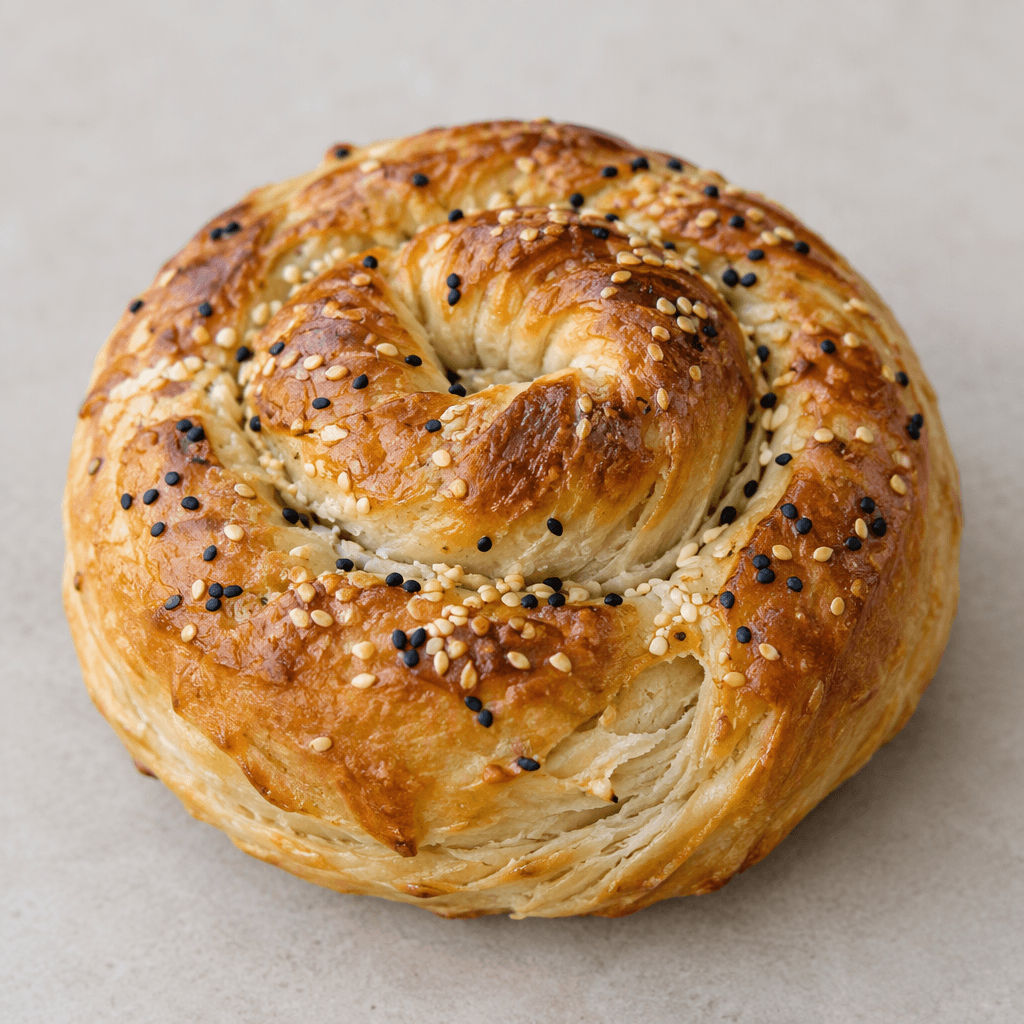
Acma Calories
Soft, yeasted Turkish pastry
In season: Spring · Summer · Autumn · Winter
CALORIES
GI
POTASSIUM
FIBER
Quick answer
1 piece (medium) of Acma (70 g) has 224 calories. That works out to 320 calories per 100 g. It contains 37.8 g of carbs, 4.9 g of protein, 5.6 g of fat and 1.8 g of fiber. Its 0.1 mg of B1 covers 11% of the Daily Value. Its glycemic index is 75 (high), so it raises blood sugar quickly.
What is Acma?
Acma is a soft, yeasted Turkish pastry, usually shaped into a ring or twist. Its dough is enriched with fat, giving the baked roll a tender, slightly layered crumb and a golden, sometimes glossy crust. It may be topped with sesame or nigella seeds.
In Turkey, acma is a familiar bakery choice at breakfast, often eaten with tea, or picked up as a filling snack during the day. It is enjoyable on its own, but also pairs well with cheese, olives or fresh vegetables. It is mainly a source of carbohydrates and provides a substantial amount of energy for its size, so you could balance it with fruit or vegetables for a lighter meal.
Acma Nutrition Facts
Selected: 100 g
320
KCAL / 100G
Carbs
54g
· 20% DV
Protein
7g
· 14% DV
Fat
8g
· 10% DV
Fiber
2.5g
· 9% DV
DV is the share of the daily value covered, on a 2,000 kcal reference diet.
Calories come from: Carbs 68% · Protein 9% · Fat 23%
Acma Vitamins & Minerals
Vitamins
B1
0.18mg · 15% DV
B2
0.12mg · 9% DV
B3
1.4mg · 9% DV
Folate
30µg · 8% DV
Minerals
Sodium
340mg · 15% DV
Selenium
7µg · 13% DV
Phosphorus
70mg · 10% DV
Iron
1mg · 6% DV
How Nutritious Is Acma?
Nutrient density
Low
How many vitamins, minerals and how much fiber this food carries per calorie. A high score means a lot of nutrition for few calories.
Satiety score
Low
An EatBetter score computed from fiber, protein and calorie density. A high score means staying full longer on the same calories.
Both scores are calculated per 100 g and do not change with the selected portion. The satiety score is EatBetter's own calculation, not a clinical measure.
Acma Glycemic Index
GLYCEMIC INDEX
GLYCEMIC LOAD
Accounts for portion size — a more realistic measure than GI alone.
How to Burn Off Acma
To burn the 320 calories in 100 g:
🚶
Walking (5 km/h)
🏃
Running (8 km/h)
🚴
Cycling
🏊
Swimming
Times are calculated with the MET equation for a 70 kg adult. Actual burn varies with your weight, age and pace.
Is Acma Processed?
NOVA 3
Processed
1. Unprocessed
2. Minimally Processed
3. Processed
4. Ultra-Processed
NOVA classifies foods into 4 groups by industrial processing. NOVA 1 (unprocessed) is the healthiest.
Does Acma Contain Allergens?
Contains these allergens:
Which Diets Is Acma Good For?
Vegan
— Not suitable
Vegetarian
✓ Suitable
Gluten-Free
— Not suitable
Dairy-Free
— Not suitable
Mediterranean
✓ Suitable
Paleo
— Not suitable
Whole30
— Not suitable
DASH
— Not suitable
Keto
— Not suitable
Low FODMAP
— Not suitable
Acma Fat Profile
SATURATED
2.1g
MONOUNSATURATED
3.1g
POLYUNSATURATED
1.3g
Omega 6:3 ratio 60:1
Above the ideal 4:1 (60:1).
Compare Acma
Foods Similar to Acma
Frequently Asked Questions About Acma
What is acma?
Acma is a soft, yeasted Turkish pastry, usually shaped into a ring or twist. Its tender, layered crumb is often finished with egg wash and may be topped with sesame seeds or nigella seeds.
How is acma different from simit?
Acma is soft, rich, and often layered, while simit has a firmer, chewier crust and is generously coated in sesame. Simit is typically dipped in molasses water before baking; acma dough usually includes oil, butter, or dairy.
What is acma made of?
Acma dough commonly contains flour, yeast, milk or water, egg, sugar, and oil or butter. Recipes vary, and some use butter between portions of dough to create a more layered texture.
Why did my acma not rise?
Acma may stay dense if the yeast is inactive or the dough has not had enough time to rise. Very hot liquid can damage yeast, while a cool room slows fermentation. Let shaped pieces rise again before baking.
How do you make acma?
To make acma, knead a soft yeasted dough and let it rise, then roll pieces into ropes and twist or shape them into rings. Let the shaped pastries rise again, brush with egg, and bake until golden.
What do you eat with acma?
Acma is commonly eaten at breakfast or with tea, often alongside cheese, olives, or eggs. Plain acma is popular, but bakery versions may include olives or other fillings; its soft texture also works well for sandwiches.
How should you store acma to keep it soft?
Once cool, keep acma in an airtight container or sealed bag at room temperature. Refrigeration can dry out the pastry. If you will not eat it within a few days, freezing it helps preserve its texture.
Can you freeze acma?
Yes, acma freezes well. Let it cool completely, wrap individual pieces, and seal them in a freezer bag. Thaw at room temperature, then warm briefly in the oven to refresh the soft crumb.
How do you reheat acma?
Warm acma briefly in a low-to-moderate oven to revive its crust without drying out the inside. A microwave is quicker, but use short bursts because too much heating can make the pastry chewy.
Is acma suitable for people with diabetes?
Acma is usually made with refined flour, so its carbohydrates can raise blood sugar relatively quickly. People with diabetes can consider portion size and what they eat with it as part of their individual meal plan.
Have another question about Acma?
Ask the AI nutrition coach — calories, portions, alternatives and more, answered in seconds in the app.

Scan calories with your camera
Instant AI nutrition analysis

Nutrition data compiled from USDA FoodData Central and scientific sources.