

Ready & Packaged Foods
All →Vegetables & Legumes
All →Desserts & Confectionery
All →Meat & Protein
All →Grains & Bakery
All →Beverages
All →Milk & Dairy
All →

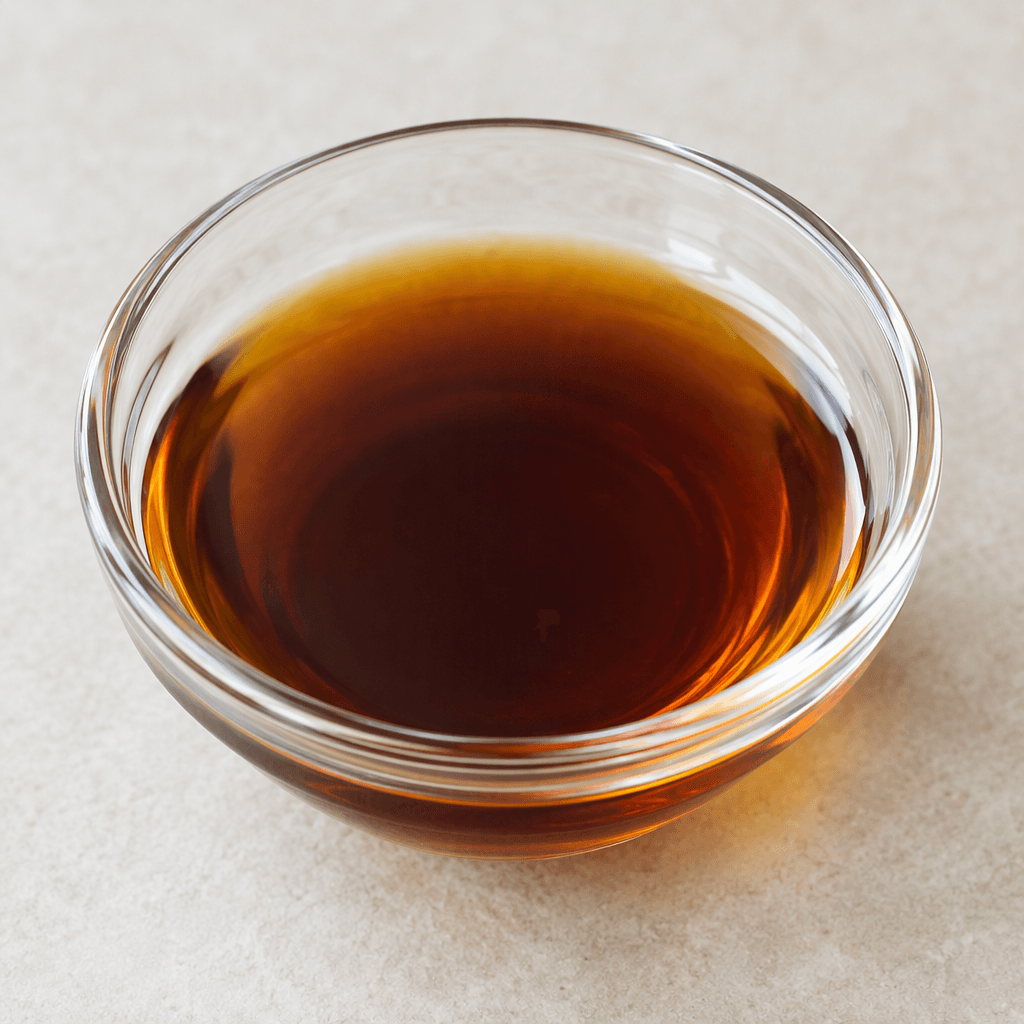
Vanilla extract (unsweetened) Calories
Natural flavor, low calorie, sugar-free
In season: Spring · Summer · Autumn · Winter
CALORIES · 100 G
GI
POTASSIUM · 100 G
FIBER · 100 G
Quick answer
1 teaspoon (medium) of Vanilla extract (unsweetened) (4 g) has 12 calories. That works out to 288 calories per 100 g. It contains 0.5 g of carbs, 0 g of protein, 0 g of fat and 0 g of fiber. Its glycemic index is 10 (low), so it raises blood sugar slowly.
Vanilla extract (unsweetened) Nutrition Facts
Selected: 1 teaspoon (medium) · 4.2 g
12
KCAL / 4.2G
Carbs
0.5g
· 0% DV
Protein
0g
· 0% DV
Fat
0g
· 0% DV
Fiber
0g
· 0% DV
DV is the share of the daily value covered, on a 2,000 kcal reference diet.
Calories come from: Carbs 100% · Protein 0% · Fat 0%
Vanilla extract (unsweetened) nutrition facts table · 1 teaspoon (medium) (4.2 g)
| Nutrient | Amount | % DV |
|---|---|---|
| Calories | 12 kcal | |
| Total fat | 0 g | 0% |
| Saturated fat | 0 g | 0% |
| Trans fat | 0 g | |
| Sodium | 0.21 mg | 0% |
| Total carbohydrate | 0.5 g | 0% |
| Fiber | 0 g | 0% |
| Protein | 0 g | 0% |
Calories: Calories measure energy. Average daily need is 2,000 kcal. Excess calories are stored as fat, too few cause weight loss.
Carbs: Your body's primary energy source. The brain runs exclusively on carbs. Daily need: 275g.
Protein: Essential for muscle repair and cell growth. Daily need: 50g. Keeps you full and boosts metabolism.
Fat: Needed for hormone production and vitamin absorption. Daily need: 78g. Limit saturated fats, choose unsaturated.
Fiber: Critical for digestive health and satiety. Daily need: 28g. Stabilizes blood sugar, lowers cholesterol.

Log this food in EatBetter
100,000+ people use it
- Get your daily calorie target
- Snap your meal, log it in seconds
- See every vitamin and mineral

📸 Scan the code to get the app free.

How Many Calories in 1 Teaspoon of Vanilla extract (unsweetened)?
| Serving | Amount | Calories |
|---|---|---|
| 1 teaspoon (medium) | 4.2 g | 12 kcal |
| 1 pack (mini) | 10 g | 29 kcal |
| 1 tablespoon (large) | 12.6 g | 36 kcal |
| 1 ounce (medium) | 28 g | 81 kcal |
| 1 bottle (small) | 50 g | 144 kcal |
| 100 g | 100 g | 288 kcal |
| 1 bottle (medium) | 100 g | 288 kcal |
| 1 cup (large) | 208 g | 599 kcal |
Calculated from 288 calories per 100 g.
Frequently Asked Questions About Vanilla extract (unsweetened)
What is unsweetened vanilla extract?
Unsweetened vanilla extract is a liquid flavored by soaking vanilla beans, with no sugar added as a sweetener. It is used to add vanilla aroma to baking, desserts, drinks, and other recipes without adding the sweetness of vanilla sugar.
What is the difference between unsweetened vanilla extract and vanilla essence?
Unsweetened vanilla extract is made by extracting flavor from vanilla beans, while vanilla essence often refers to a flavoring made partly or entirely with synthetic vanillin. The terms are not used consistently everywhere, so the ingredient list helps distinguish them.
Can you use unsweetened vanilla extract instead of vanilla bean paste?
Yes, unsweetened vanilla extract can replace vanilla bean paste when you mainly want vanilla flavor. Paste is thicker and usually contains visible vanilla seeds, so extract will not give a dessert the same speckled appearance or texture.
Why does unsweetened vanilla extract contain alcohol?
Many unsweetened vanilla extracts contain alcohol because it efficiently draws flavor compounds from vanilla beans and helps preserve the extract. Alcohol-free versions are also available. Do not assume cooking removes all the alcohol, especially when the extract is added to an uncooked recipe.
Does unsweetened vanilla extract go bad?
Unsweetened vanilla extract usually keeps its quality for a long time, but its aroma can fade with age. Discard it if it develops an unusual smell or appearance, and follow any storage or date guidance printed on the bottle.
How should you store unsweetened vanilla extract?
Store unsweetened vanilla extract tightly closed in a cool, dark cupboard, away from heat and sunlight. Refrigeration is generally unnecessary and can make the extract cloudy; a stable room-temperature spot helps preserve its aroma.
Can you make unsweetened vanilla extract at home?
Yes, you can make unsweetened vanilla extract by steeping split vanilla beans in food-grade alcohol in a clean, sealed jar. Keep the beans submerged and allow time for the flavor to develop; homemade extract made without alcohol is a different preparation.
When should you add unsweetened vanilla extract to a recipe?
Add unsweetened vanilla extract to cake or cookie batter with the wet ingredients so its flavor disperses evenly. For custards and sauces, adding it near the end of cooking helps preserve its aroma, while recipes served cold can take it directly.
Why is unsweetened vanilla extract so expensive?
Unsweetened vanilla extract can be expensive because vanilla beans are labor-intensive to grow and harvest, and their supply is limited. Extract also requires time to draw flavor from the beans, unlike many flavorings made with synthetic vanillin.
Can unsweetened vanilla extract be used in coffee?
Yes, a small splash of unsweetened vanilla extract can flavor coffee without adding the sweetness found in vanilla syrup. Stir it into hot coffee, or blend it with milk first for a more evenly distributed flavor.
Vanilla extract (unsweetened) Vitamins & Minerals
Vitamins
B1
0mg · 0% DV
B2
0mg · 0% DV
Vitamin E
0mg · 0% DV
B6
0mg · 0% DV
Minerals
Manganese
0.01mg · 0% DV
Potassium ⭐
6.22mg · 0% DV
Magnesium
0.5mg · 0% DV
Copper
0mg · 0% DV
Sodium
0.21mg · 0% DV
Vanilla extract (unsweetened) Glycemic Index
GLYCEMIC INDEX
GLYCEMIC LOAD
Accounts for portion size — a more realistic measure than GI alone.
How to Burn Off Vanilla extract (unsweetened)
To burn the 12 calories in 1 teaspoon (medium) (4.2 g):
🚶
Walking (5 km/h)
🏃
Running (8 km/h)
🚴
Cycling
🏊
Swimming
Times are calculated with the MET equation for a 70 kg adult. Actual burn varies with your weight, age and pace.
What is Vanilla extract (unsweetened)?
Vanilla extract (unsweetened) is a concentrated liquid flavouring made by drawing aroma from vanilla pods, commonly using an alcohol-and-water base. It brings vanilla’s fragrance to cakes, biscuits, custards and other sweet dishes without adding sugar for sweetness.
Its aroma is warm and sweet, while the flavour is rounded rather than sugary. In kitchens around the world, it is stirred into baking mixtures, puddings, porridge or coffee; a little goes a long way. Since recipes usually call for only a small amount, it contributes flavour without much energy to a serving, though the nutrition table gives 288 calories per 100 g. Add it gradually, especially to cold mixtures, and check the product label if you need to avoid particular ingredients.
How Nutritious Is Vanilla extract (unsweetened)?
Nutrient density
Low
How many vitamins, minerals and how much fiber this food carries per calorie. A high score means a lot of nutrition for few calories.
Satiety score
Low
An EatBetter score computed from fiber, protein and calorie density. A high score means staying full longer on the same calories.
Both scores are calculated per 100 g and do not change with the selected portion. The satiety score is EatBetter's own calculation, not a clinical measure.
Is Vanilla extract (unsweetened) Processed?
NOVA 3
Processed
1. Unprocessed
2. Minimally Processed
3. Processed
4. Ultra-Processed
NOVA classifies foods into 4 groups by industrial processing. NOVA 1 (unprocessed) is the healthiest.
Does Vanilla extract (unsweetened) Contain Allergens?
No known major allergens
Which Diets Is Vanilla extract (unsweetened) Good For?
Vegan
✓ Suitable
Vegetarian
✓ Suitable
Gluten-Free
✓ Suitable
Dairy-Free
— Not suitable
Mediterranean
✓ Suitable
Paleo
✓ Suitable
Whole30
— Not suitable
DASH
— Not suitable
Keto
✓ Suitable
Low FODMAP
— Not suitable
Vanilla extract (unsweetened) Fat Profile
SATURATED
0g
MONOUNSATURATED
0g
POLYUNSATURATED
0g
Compare Vanilla extract (unsweetened)
Foods Similar to Vanilla extract (unsweetened)
Have another question about Vanilla extract (unsweetened)?
Ask the AI nutrition coach — calories, portions, alternatives and more, answered in seconds in the app.

Scan calories with your camera
Instant AI nutrition analysis

Nutrition data compiled from USDA FoodData Central and scientific sources.