

Ready & Packaged Foods
All →Vegetables & Legumes
All →Desserts & Confectionery
All →Meat & Protein
All →Grains & Bakery
All →Beverages
All →Milk & Dairy
All →

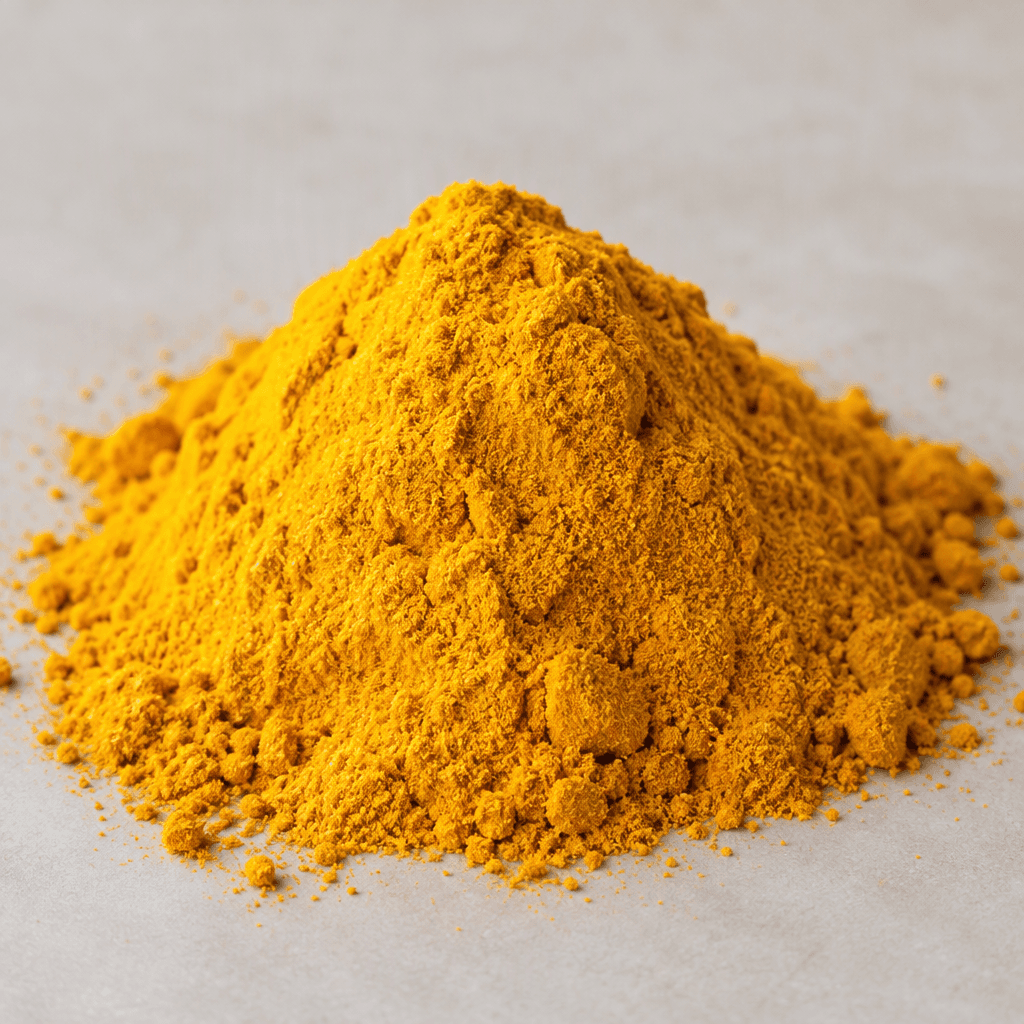
Turmeric powder Calories
Antioxidant, anti-inflammatory, rich in b6 and iron
In season: Spring · Summer · Autumn · Winter
CALORIES
GI
POTASSIUM
FIBER
Quick answer
1 teaspoon (medium) of Turmeric powder (3 g) has 8 calories. That works out to 312 calories per 100 g. It contains 1.7 g of carbs, 0.2 g of protein, 0.1 g of fat and 0.6 g of fiber. Its 0.5 mg of Manganese covers 22% of the Daily Value. Its glycemic index is 5 (low), so it raises blood sugar slowly.
What is Turmeric powder?
Turmeric powder is made by drying and grinding the rhizome of the turmeric plant, a relative of ginger. It is a familiar seasoning in South Asian cooking, valued for its vivid golden colour and gently earthy, slightly bitter flavour.
Across the world, it is used in curries, soups, rice dishes, marinades and warm drinks. A little can tint a whole dish, so start with a modest pinch and add more to taste. Briefly warming it in oil helps bring out its aroma; avoid scorching it, which can make the flavour harsh.
Turmeric powder is usually eaten in small amounts, so it contributes flavour and colour more than bulk to a meal. It contains fibre, but is not a substantial protein source. It pairs well with black pepper, legumes and vegetables, and can be stirred into a stew or lentil soup.
Turmeric powder Nutrition Facts
Selected: 100 g
312
KCAL / 100G
Carbs
67.1g
· 24% DV
Protein
9.7g
· 19% DV
Fat
3.3g
· 4% DV
Fiber
22.7g
· 81% DV
DV is the share of the daily value covered, on a 2,000 kcal reference diet.
Calories come from: Carbs 80% · Protein 12% · Fat 8%
Turmeric powder Vitamins & Minerals
Vitamins
Vitamin E
4.43mg · 30% DV
B3
4.58mg · 29% DV
B5
1.38mg · 28% DV
B2
0.23mg · 18% DV
Minerals
Manganese
20mg · 870% DV
Iron
55mg · 306% DV
Copper
1mg · 111% DV
Potassium ⭐
2525mg · 74% DV
How Nutritious Is Turmeric powder?
Nutrient density
Very high
How many vitamins, minerals and how much fiber this food carries per calorie. A high score means a lot of nutrition for few calories.
Satiety score
Medium
An EatBetter score computed from fiber, protein and calorie density. A high score means staying full longer on the same calories.
Both scores are calculated per 100 g and do not change with the selected portion. The satiety score is EatBetter's own calculation, not a clinical measure.
Turmeric powder Glycemic Index
GLYCEMIC INDEX
GLYCEMIC LOAD
Accounts for portion size — a more realistic measure than GI alone.
How to Burn Off Turmeric powder
To burn the 312 calories in 100 g:
🚶
Walking (5 km/h)
🏃
Running (8 km/h)
🚴
Cycling
🏊
Swimming
Times are calculated with the MET equation for a 70 kg adult. Actual burn varies with your weight, age and pace.
Is Turmeric powder Processed?
NOVA 2
Minimally Processed
1. Unprocessed
2. Minimally Processed
3. Processed
4. Ultra-Processed
NOVA classifies foods into 4 groups by industrial processing. NOVA 1 (unprocessed) is the healthiest.
Does Turmeric powder Contain Allergens?
No known major allergens
Which Diets Is Turmeric powder Good For?
Vegan
✓ Suitable
Vegetarian
✓ Suitable
Gluten-Free
✓ Suitable
Dairy-Free
— Not suitable
Mediterranean
✓ Suitable
Paleo
✓ Suitable
Whole30
— Not suitable
DASH
— Not suitable
Keto
✓ Suitable
Low FODMAP
— Not suitable
Turmeric powder Fat Profile
SATURATED
1.84g
MONOUNSATURATED
0.45g
POLYUNSATURATED
0.69g
Omega 6:3 ratio 6:1
Above the ideal 4:1 (6:1).
Compare Turmeric powder
Foods Similar to Turmeric powder
Frequently Asked Questions About Turmeric powder
What are the benefits of turmeric powder?
Turmeric powder contains curcumin and other compounds with antioxidant activity. It can add flavor and color to meals, but ordinary cooking amounts have not been shown to treat disease or replace prescribed medical care.
How do you use turmeric powder in cooking?
Add turmeric powder to soups, lentils, rice, roasted vegetables, or curries while they cook. Start with a small amount because its earthy, slightly bitter flavor can dominate a dish if you use too much.
Does black pepper make turmeric powder work better?
Black pepper can increase the absorption of curcumin, turmeric powder’s best-known active compound. A pinch in a turmeric-seasoned dish is enough for flavor; it does not turn turmeric into a medicine or guarantee a health effect.
How do you make golden milk with turmeric powder?
Whisk turmeric powder into warm milk to make golden milk, adding cinnamon, ginger, or black pepper if you like. Stir as it heats because the powder settles, and avoid making the drink so concentrated that it tastes bitter.
Can you make tea with turmeric powder?
Yes, stir turmeric powder into hot water for a simple turmeric drink. It may settle rather than dissolve, so stir before sipping; lemon or ginger can improve the flavor, but neither is necessary.
Can turmeric powder replace fresh turmeric in a recipe?
Yes, turmeric powder can replace fresh turmeric, but it has a more concentrated, dry flavor. Add it gradually rather than swapping equal amounts, and remember that fresh turmeric also contributes moisture and texture.
Does turmeric powder stain countertops and clothes?
Yes, turmeric powder can leave stubborn yellow stains on fabric, plastic, and some countertops. Wipe up dry powder without rubbing, then clean the surface promptly; on clothing, rinse with cold water before laundering.
How should you store turmeric powder?
Keep turmeric powder in a tightly sealed container in a cool, dry, dark place. Moisture can make it clump, while heat and light gradually dull its aroma and color; keep it away from steam near the stove.
How much turmeric powder should you add to curry?
Start with a small pinch or about a teaspoon for a family-sized pot, then adjust to taste. A medium teaspoon is about 2.5 g, but the right amount depends on the recipe and how prominent you want its flavor.
Can you take turmeric powder every day?
Using turmeric powder regularly as a food seasoning is different from taking concentrated turmeric supplements. If you use blood-thinning medication or have gallbladder problems, ask your clinician before using large amounts or supplements.
Have another question about Turmeric powder?
Ask the AI nutrition coach — calories, portions, alternatives and more, answered in seconds in the app.

Scan calories with your camera
Instant AI nutrition analysis

Nutrition data compiled from USDA FoodData Central and scientific sources.