

Ready & Packaged Foods
All →Vegetables & Legumes
All →Desserts & Confectionery
All →Meat & Protein
All →Grains & Bakery
All →Beverages
All →Milk & Dairy
All →

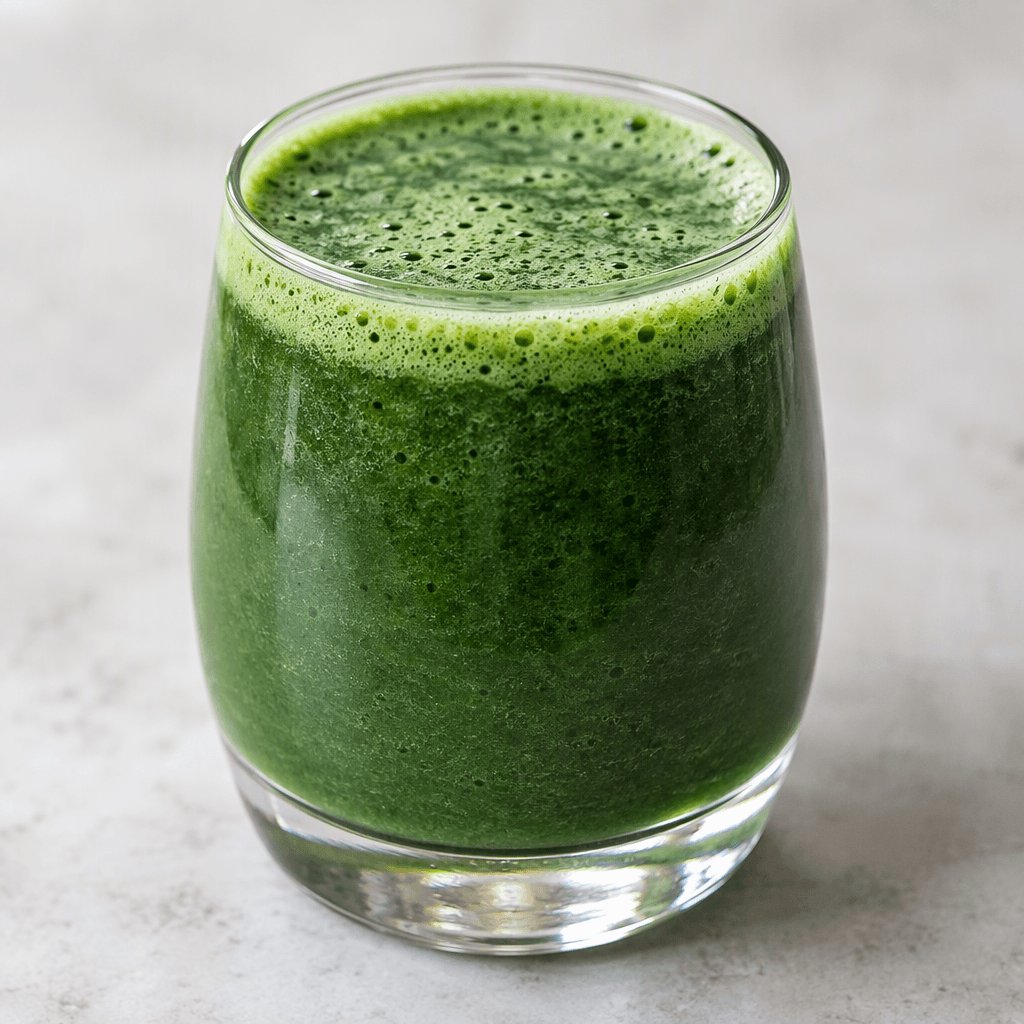
Spirulina drink Calories
Algae-based drink with notable protein
CALORIES
GI
POTASSIUM
FIBER
Quick answer
1 cup (medium) of Spirulina drink (240 g) has 67 calories. That works out to 28 calories per 100 g. It contains 4.3 g of carbs, 8.6 g of protein, 1.7 g of fat and 0.7 g of fiber. Its 0.7 mg of B2 covers 52% of the Daily Value. Its glycemic index is 15 (low), so it raises blood sugar slowly.
What is Spirulina drink?
A Spirulina drink is made by mixing spirulina, a blue-green microalga, into water or another beverage; it is also sold ready to drink. Its vivid green colour and earthy, slightly sea-like flavour are distinctive. It is not a traditional everyday drink in most places, but is commonly blended into smoothies or fruit drinks, often at breakfast or as a snack. Citrus or sweet fruit can soften its pronounced flavour.
It stands out among beverages for its protein content, with 3.6 g per 100 g, though a cup is generally best treated as a drink rather than a meal. For a milder version, blend it with unsweetened liquid and add lemon or fruit instead of extra sweetener.
Spirulina drink Nutrition Facts
Selected: 100 g
28
KCAL / 100G
Carbs
1.8g
· 1% DV
Protein
3.6g
· 7% DV
Fat
0.7g
· 1% DV
Fiber
0.3g
· 1% DV
DV is the share of the daily value covered, on a 2,000 kcal reference diet.
Calories come from: Carbs 26% · Protein 52% · Fat 22%
Spirulina drink Vitamins & Minerals
Vitamins
B2
0.28mg · 22% DV
B1
0.24mg · 20% DV
Vitamin K
11µg · 9% DV
B3
1.1mg · 7% DV
Minerals
Iron
3mg · 17% DV
Phosphorus
65mg · 9% DV
Magnesium
18mg · 4% DV
Potassium ⭐
95mg · 3% DV
How Nutritious Is Spirulina drink?
Nutrient density
High
How many vitamins, minerals and how much fiber this food carries per calorie. A high score means a lot of nutrition for few calories.
Satiety score
Medium
An EatBetter score computed from fiber, protein and calorie density. A high score means staying full longer on the same calories.
Both scores are calculated per 100 g and do not change with the selected portion. The satiety score is EatBetter's own calculation, not a clinical measure.
Spirulina drink Glycemic Index
GLYCEMIC INDEX
GLYCEMIC LOAD
Accounts for portion size — a more realistic measure than GI alone.
How to Burn Off Spirulina drink
To burn the 28 calories in 100 g:
🚶
Walking (5 km/h)
🏃
Running (8 km/h)
🚴
Cycling
🏊
Swimming
Times are calculated with the MET equation for a 70 kg adult. Actual burn varies with your weight, age and pace.
Is Spirulina drink Processed?
NOVA 3
Processed
1. Unprocessed
2. Minimally Processed
3. Processed
4. Ultra-Processed
NOVA classifies foods into 4 groups by industrial processing. NOVA 1 (unprocessed) is the healthiest.
Does Spirulina drink Contain Allergens?
No known major allergens
Which Diets Is Spirulina drink Good For?
Vegan
✓ Suitable
Vegetarian
✓ Suitable
Gluten-Free
✓ Suitable
Dairy-Free
— Not suitable
Mediterranean
✓ Suitable
Paleo
✓ Suitable
Whole30
— Not suitable
DASH
— Not suitable
Keto
— Not suitable
Low FODMAP
— Not suitable
Spirulina drink Fat Profile
SATURATED
0.2g
MONOUNSATURATED
0.05g
POLYUNSATURATED
0.21g
Omega 6:3 ratio 6:1
Above the ideal 4:1 (6:1).
Compare Spirulina drink
Foods Similar to Spirulina drink
Frequently Asked Questions About Spirulina drink
What are the benefits of a spirulina drink?
A spirulina drink can provide protein and some micronutrients, but it has not been shown to prevent or cure disease. Its nutritional contribution varies with the amount of spirulina used and any other ingredients in the drink.
What does a spirulina drink taste like?
A spirulina drink usually tastes earthy, grassy, and somewhat sea-like. Citrus or fruit can balance the strong flavor, while mixing it into a smoothie makes it less pronounced.
How do you make a spirulina drink?
Mix spirulina powder into cold water or another drink until it is evenly dispersed. To avoid clumps, stir the powder into a small amount of liquid first, then add the rest; fruit or citrus can soften its flavor.
Is it safe to drink spirulina every day?
Many people can drink spirulina regularly, but there is no single daily amount that suits everyone. Follow the product directions, and ask a healthcare professional first if you take medication or have a chronic condition.
What are the side effects of a spirulina drink?
A spirulina drink can cause nausea, bloating, or diarrhea in some people, and allergic reactions are possible. Contamination is also a concern with poorly controlled products, so choose spirulina from a reputable manufacturer.
Can a spirulina drink help with weight loss?
A spirulina drink does not cause weight loss on its own. It may contribute protein, but adding it to your usual drinks or meals does not guarantee reduced hunger or a lower overall energy intake.
Does a spirulina drink contain caffeine?
A plain spirulina drink is naturally caffeine-free because spirulina is an algae, not tea or coffee. Bottled blends may contain caffeinated ingredients, so the answer can differ for drinks mixed with tea, coffee, or added caffeine.
Does a spirulina drink detox your body?
No, a spirulina drink has not been shown to detox the body. Your liver and kidneys handle the processing and removal of waste; spirulina cannot replace their work or cleanse the body through a special effect.
Does a spirulina drink need to be refrigerated?
A homemade spirulina drink should be refrigerated if you are not drinking it right away, and it is best consumed fresh. For a bottled drink, follow its storage instructions and refrigerate it after opening if directed.
Can you drink spirulina during pregnancy?
The safety of spirulina drinks during pregnancy is not well established, and some products may contain contaminants. If you are pregnant or breastfeeding, ask your healthcare professional before drinking one rather than starting it on your own.
Have another question about Spirulina drink?
Ask the AI nutrition coach — calories, portions, alternatives and more, answered in seconds in the app.

Scan calories with your camera
Instant AI nutrition analysis

Nutrition data compiled from USDA FoodData Central and scientific sources.