

Ready & Packaged Foods
All →Vegetables & Legumes
All →Desserts & Confectionery
All →Meat & Protein
All →Grains & Bakery
All →Beverages
All →Milk & Dairy
All →

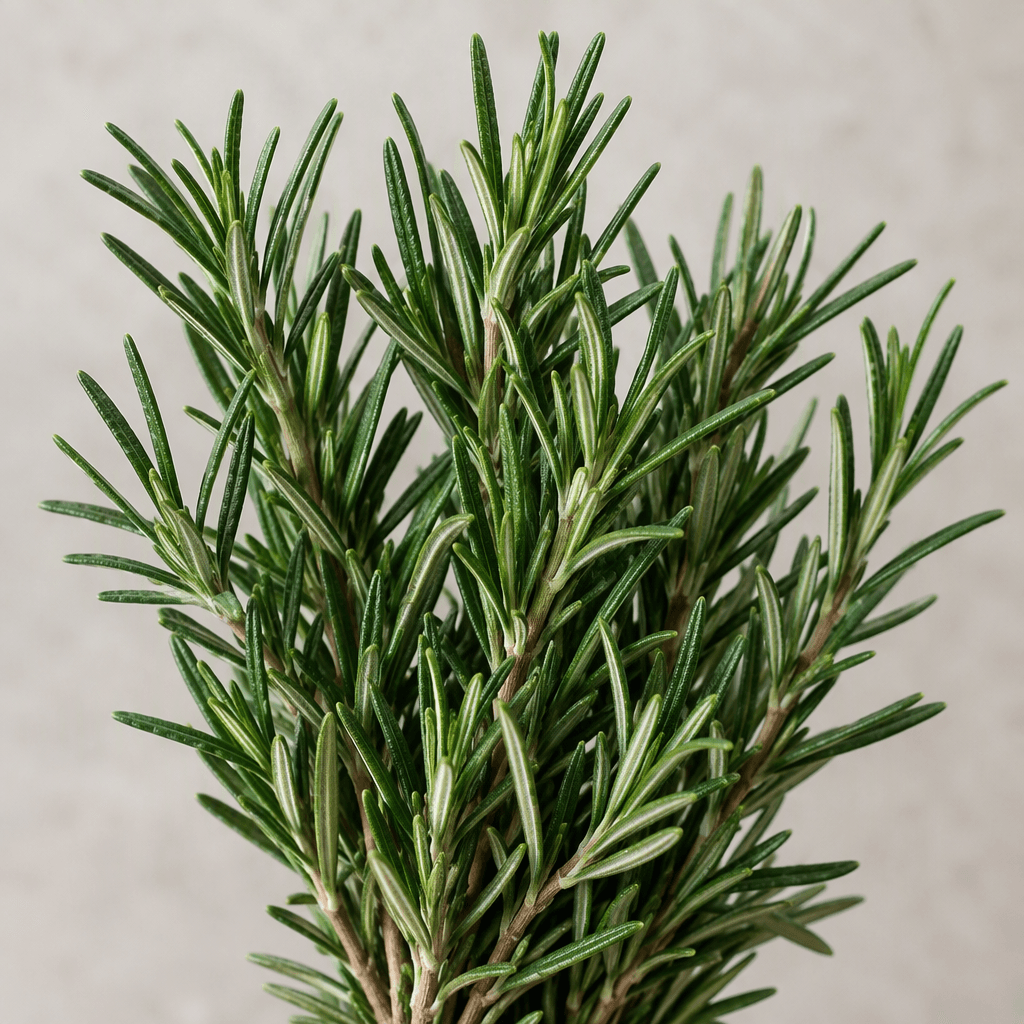
Rosemary Calories
Aromatic herb, antioxidant source, aids digestion
In season: Spring · Summer · Autumn
CALORIES
GI
POTASSIUM
FIBER
Quick answer
1 tablespoon (medium) of Rosemary (2 g) has 3 calories. That works out to 131 calories per 100 g. It contains 0.4 g of carbs, 0.1 g of protein, 0.1 g of fat and 0.3 g of fiber. Its 6.2 µg of Vitamin K covers 5% of the Daily Value. Its glycemic index is 5 (low), so it raises blood sugar slowly.
What is Rosemary?
Rosemary is a fragrant Mediterranean herb with narrow, needle-like leaves on woody sprigs. It is used fresh or dried, and a little goes a long way: its pine-like aroma and savoury, slightly bitter flavour stand up well to cooking.
Across Mediterranean cuisines, rosemary is commonly paired with roast lamb, chicken, fish, potatoes and beans. English-speaking cooks also use it in marinades, soups and bread, or steep a sprig in olive oil for flavour. It is notably high in fibre by weight, though typical servings are small. Add it sparingly at first, then adjust to taste; lemon, garlic and olive oil are natural companions.
Rosemary Nutrition Facts
Selected: 100 g
131
KCAL / 100G
Carbs
20.7g
· 8% DV
Protein
3.3g
· 7% DV
Fat
5.9g
· 8% DV
Fiber
14.1g
· 50% DV
DV is the share of the daily value covered, on a 2,000 kcal reference diet.
Calories come from: Carbs 56% · Protein 9% · Fat 35%
Rosemary Vitamins & Minerals
Vitamins
Vitamin K
310µg · 258% DV
B2
0.43mg · 33% DV
Folate
109µg · 27% DV
Vitamin E
4mg · 27% DV
Minerals
Manganese
2mg · 87% DV
Iron
7mg · 39% DV
Calcium
317mg · 32% DV
Magnesium
91mg · 22% DV
How Nutritious Is Rosemary?
Nutrient density
Very high
How many vitamins, minerals and how much fiber this food carries per calorie. A high score means a lot of nutrition for few calories.
Satiety score
High
An EatBetter score computed from fiber, protein and calorie density. A high score means staying full longer on the same calories.
Both scores are calculated per 100 g and do not change with the selected portion. The satiety score is EatBetter's own calculation, not a clinical measure.
Rosemary Glycemic Index
GLYCEMIC INDEX
GLYCEMIC LOAD
Accounts for portion size — a more realistic measure than GI alone.
How to Burn Off Rosemary
To burn the 131 calories in 100 g:
🚶
Walking (5 km/h)
🏃
Running (8 km/h)
🚴
Cycling
🏊
Swimming
Times are calculated with the MET equation for a 70 kg adult. Actual burn varies with your weight, age and pace.
Is Rosemary Processed?
NOVA 1
Unprocessed
1. Unprocessed
2. Minimally Processed
3. Processed
4. Ultra-Processed
NOVA classifies foods into 4 groups by industrial processing. NOVA 1 (unprocessed) is the healthiest.
Does Rosemary Contain Allergens?
No known major allergens
Which Diets Is Rosemary Good For?
Vegan
✓ Suitable
Vegetarian
✓ Suitable
Gluten-Free
✓ Suitable
Dairy-Free
— Not suitable
Mediterranean
✓ Suitable
Paleo
✓ Suitable
Whole30
— Not suitable
DASH
— Not suitable
Keto
✓ Suitable
Low FODMAP
— Not suitable
Rosemary Fat Profile
SATURATED
2.8g
MONOUNSATURATED
0.87g
POLYUNSATURATED
1.1g
Omega 6:3 ratio 1.4:1
Below the ideal 4:1 — a good omega balance.
Compare Rosemary
Foods Similar to Rosemary
Frequently Asked Questions About Rosemary
What is rosemary used for in cooking?
Rosemary adds a pungent, pine-like flavor to roasted potatoes, vegetables, meat, poultry, fish, soups, and breads. Add a whole sprig during cooking and remove it before serving, or strip and chop the leaves for dishes where you want them to stay in.
How do you make rosemary tea?
To make rosemary tea, steep fresh or dried rosemary leaves in hot water, then strain them out. Start with a small amount because the flavor is strong; a longer steep makes the tea more intense and can bring out a bitter edge.
What are the benefits of rosemary?
Rosemary contains antioxidant compounds and is commonly used to flavor food; it is also traditionally taken to support digestion. These uses do not make rosemary a treatment for illness, and evidence for specific health benefits from rosemary tea is limited.
Can you use dried rosemary instead of fresh rosemary?
Yes. Dried rosemary has a more concentrated flavor, so begin with about one-third as much as the fresh amount in a recipe. Crush or finely chop the dried leaves before adding them, since they can stay tough in cooked food.
How should you store fresh rosemary?
Keep fresh rosemary dry and unwashed, wrapped in a slightly damp paper towel inside a closed container in the refrigerator. Wash it just before using; storing wet sprigs can encourage them to spoil sooner.
Can you freeze rosemary?
Yes, rosemary freezes well. Wash the sprigs if needed and dry them thoroughly, then seal them in a freezer bag or container. You can add the leaves straight to cooking from frozen, though thawed rosemary will not have the same fresh texture.
Can you eat rosemary stems?
Rosemary’s woody stems are usually too tough to eat. Use a whole sprig to flavor a dish and take it out before serving, or slide the leaves off the stem and chop them for recipes where the leaves are meant to be eaten.
How do you dry fresh rosemary at home?
Tie clean, fully dry rosemary sprigs into small bunches and hang them in a dry, well-ventilated place away from direct sunlight. Once the leaves crumble easily, strip them from the stems and store them in an airtight container.
Is rosemary safe during pregnancy?
Rosemary used in ordinary amounts to season food is different from concentrated supplements, extracts, or medicinal doses. Avoid using rosemary medicinally during pregnancy unless your healthcare professional says it is appropriate.
What can you use instead of rosemary?
Thyme is a practical substitute for rosemary in roasted vegetables, meat, and soups, though its flavor is less pine-like. Start with a similar amount and adjust to taste; sage can also work in some rich or roasted dishes.
Have another question about Rosemary?
Ask the AI nutrition coach — calories, portions, alternatives and more, answered in seconds in the app.

Scan calories with your camera
Instant AI nutrition analysis

Nutrition data compiled from USDA FoodData Central and scientific sources.