

Ready & Packaged Foods
All →Vegetables & Legumes
All →Desserts & Confectionery
All →Meat & Protein
All →Grains & Bakery
All →Beverages
All →Milk & Dairy
All →

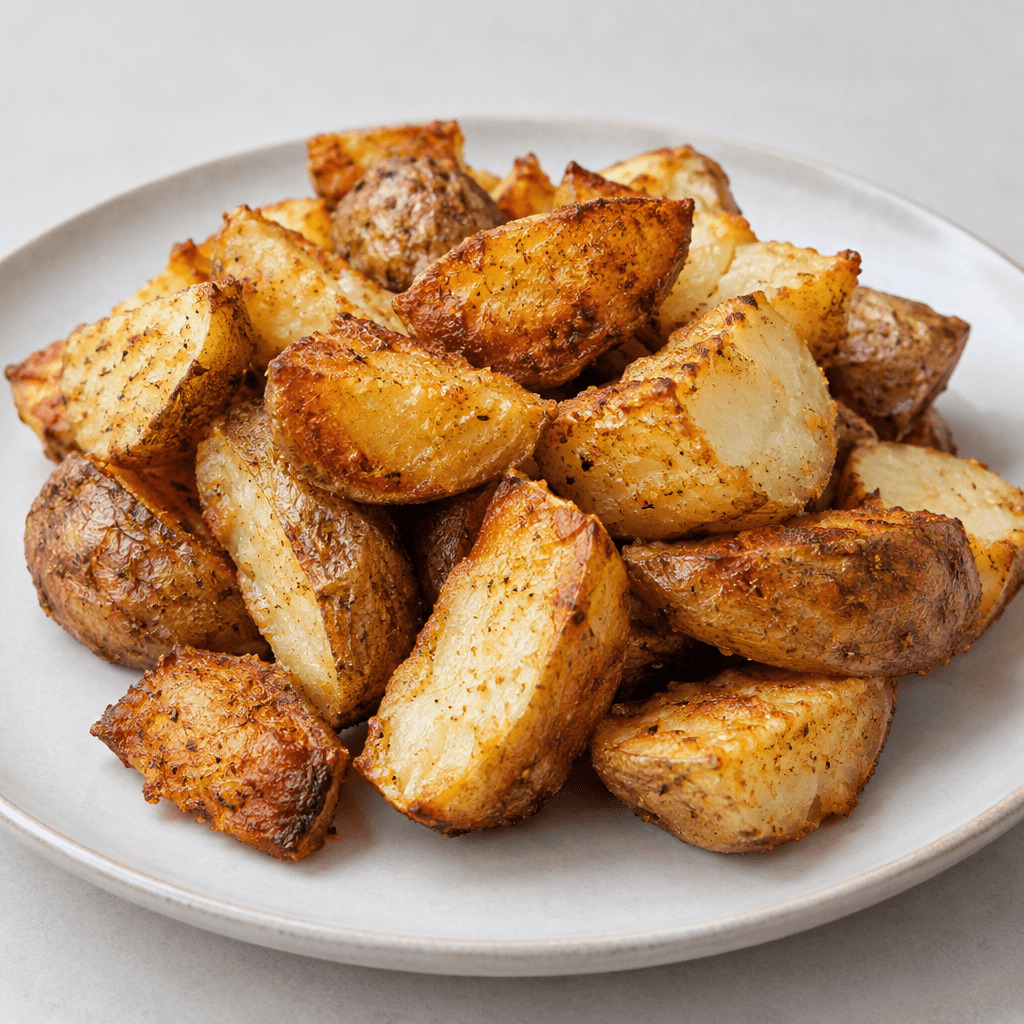
Roasted potato Calories
Roasted potato, source of fiber and potassium
In season: Autumn · Winter · Spring
CALORIES
GI
POTASSIUM
FIBER
Quick answer
1 piece (medium) of Roasted potato (150 g) has 165 calories. That works out to 110 calories per 100 g. It contains 36 g of carbs, 3.8 g of protein, 0.3 g of fat and 3.3 g of fiber. Its 0.5 mg of B6 covers 26% of the Daily Value. Its glycemic index is 85 (high), so it raises blood sugar quickly.
What is Roasted potato?
A roasted potato is cooked until its skin is browned and the inside turns tender and fluffy. It may be roasted whole or cut into wedges and chunks, over a fire or in an oven; the method and seasonings vary widely. In many places, it is served hot alongside grilled food or a main meal, and works just as well with a simple topping of herbs, pepper or a little butter.
It is mostly a carbohydrate-rich side, with some fibre and potassium, and stays low in fat when cooked without much added oil. Pair it with vegetables or a yoghurt-based dip for a more balanced plate, or keep the seasoning simple to let its toasted, earthy flavour come through.
Roasted potato Nutrition Facts
Selected: 100 g
110
KCAL / 100G
Carbs
24g
· 9% DV
Protein
2.5g
· 5% DV
Fat
0.2g
· 0% DV
Fiber
2.2g
· 8% DV
DV is the share of the daily value covered, on a 2,000 kcal reference diet.
Calories come from: Carbs 89% · Protein 9% · Fat 2%
Roasted potato Vitamins & Minerals
Vitamins
B6
0.3mg · 18% DV
Vitamin C
8mg · 9% DV
B3
1.3mg · 8% DV
B1
0.08mg · 7% DV
Minerals
Potassium ⭐
480mg · 14% DV
Phosphorus
44mg · 6% DV
Magnesium
23mg · 5% DV
Calcium
10mg · 1% DV
How Nutritious Is Roasted potato?
Nutrient density
Medium
How many vitamins, minerals and how much fiber this food carries per calorie. A high score means a lot of nutrition for few calories.
Satiety score
Medium
An EatBetter score computed from fiber, protein and calorie density. A high score means staying full longer on the same calories.
Both scores are calculated per 100 g and do not change with the selected portion. The satiety score is EatBetter's own calculation, not a clinical measure.
Roasted potato Glycemic Index
GLYCEMIC INDEX
GLYCEMIC LOAD
Accounts for portion size — a more realistic measure than GI alone.
How to Burn Off Roasted potato
To burn the 110 calories in 100 g:
🚶
Walking (5 km/h)
🏃
Running (8 km/h)
🚴
Cycling
🏊
Swimming
Times are calculated with the MET equation for a 70 kg adult. Actual burn varies with your weight, age and pace.
Is Roasted potato Processed?
NOVA 2
Minimally Processed
1. Unprocessed
2. Minimally Processed
3. Processed
4. Ultra-Processed
NOVA classifies foods into 4 groups by industrial processing. NOVA 1 (unprocessed) is the healthiest.
Does Roasted potato Contain Allergens?
No known major allergens
Which Diets Is Roasted potato Good For?
Vegan
✓ Suitable
Vegetarian
✓ Suitable
Gluten-Free
✓ Suitable
Dairy-Free
— Not suitable
Mediterranean
✓ Suitable
Paleo
✓ Suitable
Whole30
— Not suitable
DASH
— Not suitable
Keto
— Not suitable
Low FODMAP
— Not suitable
Roasted potato Fat Profile
SATURATED
0.04g
MONOUNSATURATED
0.01g
POLYUNSATURATED
0.03g
Omega 6:3 ratio 2:1
Below the ideal 4:1 — a good omega balance.
Compare Roasted potato
Foods Similar to Roasted potato
Frequently Asked Questions About Roasted potato
How do you make roasted potato wedges crispy?
For crispy roasted potato wedges, dry the cut potatoes thoroughly and spread them in a single layer with space between pieces. A hot oven and a light coating of oil help brown the surfaces. Turn the wedges once so they crisp more evenly.
Should you parboil potatoes before roasting them?
Parboiling roasted potato pieces is optional, but it can make their edges fluffier and more likely to crisp in the oven. Drain them well and let excess steam escape before adding oil and seasoning. Skip this step when roasting small chunks or when you prefer a firmer texture.
Which potatoes are best for roasted potato wedges?
Starchy or all-purpose potatoes usually make good roasted potato wedges because their interiors turn fluffy while their cut surfaces brown. Waxy potatoes hold their shape better and tend to have a firmer, creamier bite. Choose potatoes of similar size so they cook at roughly the same pace.
Why do roasted potatoes stick to the baking tray?
Roasted potatoes often stick because the tray is crowded, insufficiently heated, or the pieces are turned before their crust forms. Use a lightly oiled tray or baking paper, leave space between the pieces, and wait until the browned underside releases more easily before flipping.
Can you roast potatoes without oil?
Yes, you can roast potatoes without oil, though they are less likely to develop the same rich, crisp surface. Arrange dry pieces on baking paper and turn them during cooking. For more browning without much oil, avoid crowding the tray and use a well-heated oven.
What seasonings go well with roasted potato?
Garlic, rosemary, smoked paprika, black pepper, and thyme all work well with roasted potato. Add delicate herbs near the end so they do not burn, and use salt to taste. For a tangy finish, toss the cooked pieces with lemon juice or chopped parsley.
Can roasted potato be reheated in an air fryer?
Yes, an air fryer reheats roasted potato while restoring some of its crispness. Arrange the pieces in a loose layer and heat until hot, shaking or turning them partway through. Microwaving is quicker, but it usually leaves the outside soft rather than crisp.
Can you freeze roasted potato?
Yes, roasted potato can be frozen, but thawed pieces may be softer and less crisp than freshly cooked ones. Cool them completely, freeze in a sealed container, and reheat from frozen in an oven or air fryer. Avoid freezing potatoes that have already been reheated.
Is roasted potato a good choice for weight loss?
Roasted potato can fit into a weight-loss meal, especially when prepared with little oil and served with a protein-rich food and vegetables. Its fibre can help make a meal satisfying. Large portions or generous toppings such as cheese and creamy sauces can add considerably more energy.
Can people with diabetes eat roasted potato?
Yes, people with diabetes can eat roasted potato, but potatoes can raise blood glucose noticeably. A moderate portion alongside protein and non-starchy vegetables may help make the meal more balanced. If you use glucose-lowering medication, ask your clinician or dietitian how to fit it into your plan.
Have another question about Roasted potato?
Ask the AI nutrition coach — calories, portions, alternatives and more, answered in seconds in the app.

Scan calories with your camera
Instant AI nutrition analysis

Nutrition data compiled from USDA FoodData Central and scientific sources.