

Ready & Packaged Foods
All →Vegetables & Legumes
All →Desserts & Confectionery
All →Meat & Protein
All →Grains & Bakery
All →Beverages
All →Milk & Dairy
All →

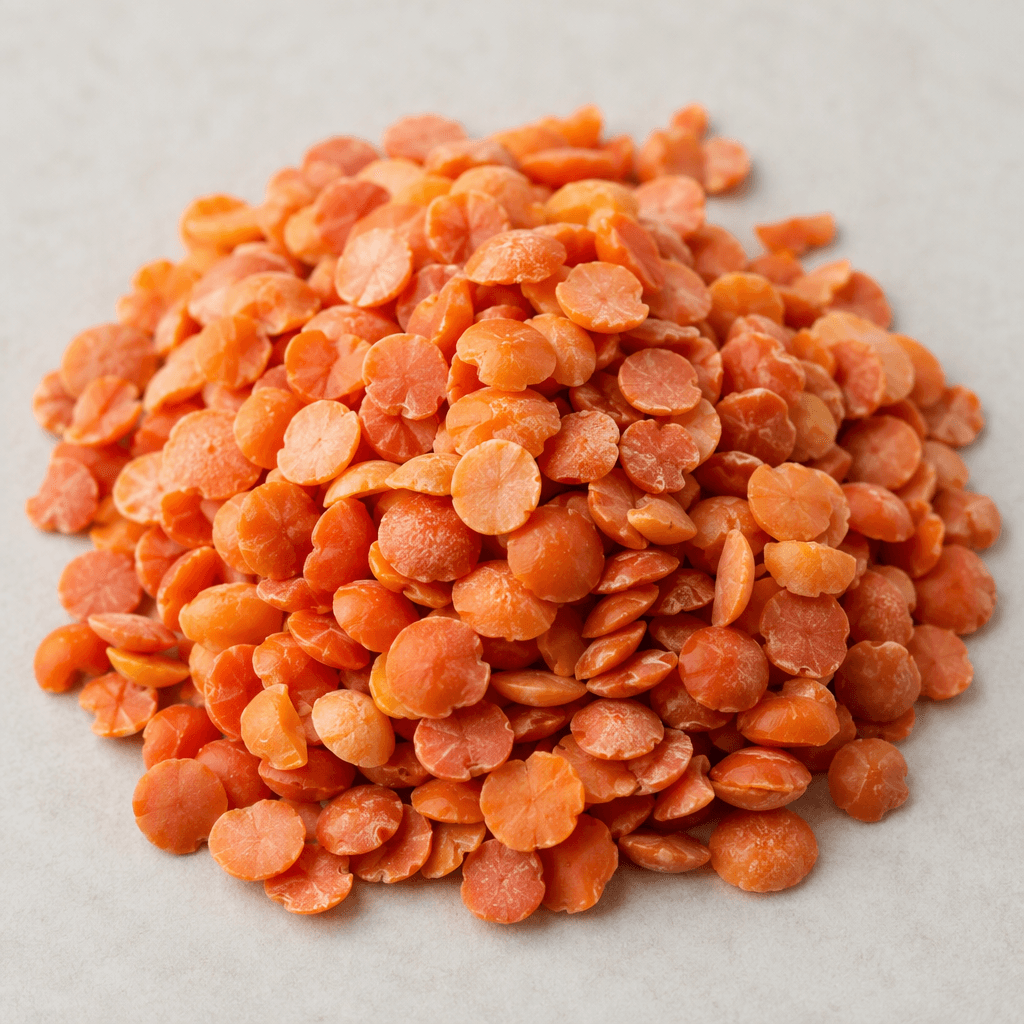
Red Lentils Calories
Rich in protein and fiber, source of iron and folate
In season: Spring · Summer · Autumn · Winter
CALORIES
GI
POTASSIUM
FIBER
Quick answer
1 cup (medium) of Red Lentils (200 g) has 686 calories. That works out to 343 calories per 100 g. It contains 119.2 g of carbs, 51.6 g of protein, 2.2 g of fat and 21.4 g of fiber. Its 958 µg of Folate covers 240% of the Daily Value. Its glycemic index is 21 (low), so it raises blood sugar slowly.
What is Red Lentils?
Red lentils are the hulled, split seeds of the lentil plant, grown and eaten across regions including the Middle East and South Asia. Because they cook quickly and soften into a smooth texture, they are a convenient staple in many home kitchens.
Their mild, gently earthy flavour works well in soups, dals, and spiced stews; in Turkey, they are especially familiar in lentil soup, often served with lemon and bread. They provide plant protein and fibre while being naturally low in fat. Pair them with whole grains and vegetables for a filling meal, or simmer them with extra liquid for a lighter soup.
Red Lentils Nutrition Facts
Selected: 100 g
343
KCAL / 100G
Carbs
59.6g
· 22% DV
Protein
25.8g
· 52% DV
Fat
1.1g
· 1% DV
Fiber
10.7g
· 38% DV
DV is the share of the daily value covered, on a 2,000 kcal reference diet.
Calories come from: Carbs 68% · Protein 29% · Fat 3%
Red Lentils Vitamins & Minerals
Vitamins
Folate
479µg · 120% DV
B1
0.87mg · 73% DV
B6
0.54mg · 32% DV
B5
1.2mg · 24% DV
Minerals
Copper
1mg · 111% DV
Manganese
1mg · 43% DV
Phosphorus
281mg · 40% DV
Iron
7mg · 39% DV
How Nutritious Is Red Lentils?
Nutrient density
Very high
How many vitamins, minerals and how much fiber this food carries per calorie. A high score means a lot of nutrition for few calories.
Satiety score
High
An EatBetter score computed from fiber, protein and calorie density. A high score means staying full longer on the same calories.
Both scores are calculated per 100 g and do not change with the selected portion. The satiety score is EatBetter's own calculation, not a clinical measure.
Red Lentils Glycemic Index
GLYCEMIC INDEX
GLYCEMIC LOAD
Accounts for portion size — a more realistic measure than GI alone.
How to Burn Off Red Lentils
To burn the 343 calories in 100 g:
🚶
Walking (5 km/h)
🏃
Running (8 km/h)
🚴
Cycling
🏊
Swimming
Times are calculated with the MET equation for a 70 kg adult. Actual burn varies with your weight, age and pace.
Is Red Lentils Processed?
NOVA 1
Unprocessed
1. Unprocessed
2. Minimally Processed
3. Processed
4. Ultra-Processed
NOVA classifies foods into 4 groups by industrial processing. NOVA 1 (unprocessed) is the healthiest.
Does Red Lentils Contain Allergens?
No known major allergens
Which Diets Is Red Lentils Good For?
Vegan
✓ Suitable
Vegetarian
✓ Suitable
Gluten-Free
✓ Suitable
Dairy-Free
— Not suitable
Mediterranean
✓ Suitable
Paleo
✓ Suitable
Whole30
— Not suitable
DASH
— Not suitable
Keto
— Not suitable
Low FODMAP
— Not suitable
Red Lentils Fat Profile
SATURATED
0.16g
MONOUNSATURATED
0.16g
POLYUNSATURATED
0.52g
Omega 6:3 ratio 4.6:1
Above the ideal 4:1 (4.6:1).
Compare Red Lentils
Foods Similar to Red Lentils
Frequently Asked Questions About Red Lentils
How do you cook red lentils?
Rinse red lentils, then simmer them in water or stock until tender. They cook down quickly, making them a good choice for soups, dals, and purées; add spices or aromatics while they simmer for more flavor.
Do red lentils need to be soaked before cooking?
No, red lentils do not need soaking. They are usually split and hulled, so they soften much faster than whole lentils; rinse them before cooking and add them straight to the pot.
How long do red lentils take to cook?
Red lentils usually become tender after about 15–20 minutes of simmering, though age and the cooking method can affect the timing. Cook them longer if you want them to break down completely for a thick soup or dal.
What is the difference between red and green lentils?
Red lentils are typically hulled and split, so they cook faster and turn soft and creamy. Green lentils hold their shape better after cooking, which makes them more suitable for salads and dishes where you want distinct lentils.
Why do red lentils turn mushy when cooked?
Red lentils are usually split and have their outer skins removed, so they naturally break down as they cook. That creamy texture works well in soups and dals; for a firmer result, choose whole green or brown lentils instead.
What is the right water-to-red-lentil ratio?
For stovetop cooking, start with about three parts water to one part red lentils, then adjust for the dish. Use less liquid for a thicker dal and more for soup; red lentils absorb liquid and soften as they cook.
Should you rinse red lentils before cooking?
Yes, rinse red lentils in a fine-mesh sieve under cool running water. This removes dust and small debris from handling; you do not need to soak them or wait for the water to run completely clear.
Can you substitute red lentils for green lentils?
Usually, but the finished dish will be softer. Red lentils break down during cooking, while green lentils stay more intact, so red lentils work best in soups and stews rather than salads or recipes that rely on firm lentils.
Can you freeze cooked red lentils?
Yes, cooked red lentils freeze well in airtight, freezer-safe containers. Cool them before packing, and freeze in portions for easier use; after thawing and reheating, stir in water or stock if they have become too thick.
Do red lentils cause gas or bloating?
They can cause gas or bloating for some people because lentils contain fermentable carbohydrates and fiber. Cook red lentils until soft and try a smaller serving if they bother you; persistent or severe symptoms deserve individual medical advice.
Have another question about Red Lentils?
Ask the AI nutrition coach — calories, portions, alternatives and more, answered in seconds in the app.

Scan calories with your camera
Instant AI nutrition analysis

Nutrition data compiled from USDA FoodData Central and scientific sources.