

Ready & Packaged Foods
All →Vegetables & Legumes
All →Desserts & Confectionery
All →Meat & Protein
All →Grains & Bakery
All →Beverages
All →Milk & Dairy
All →

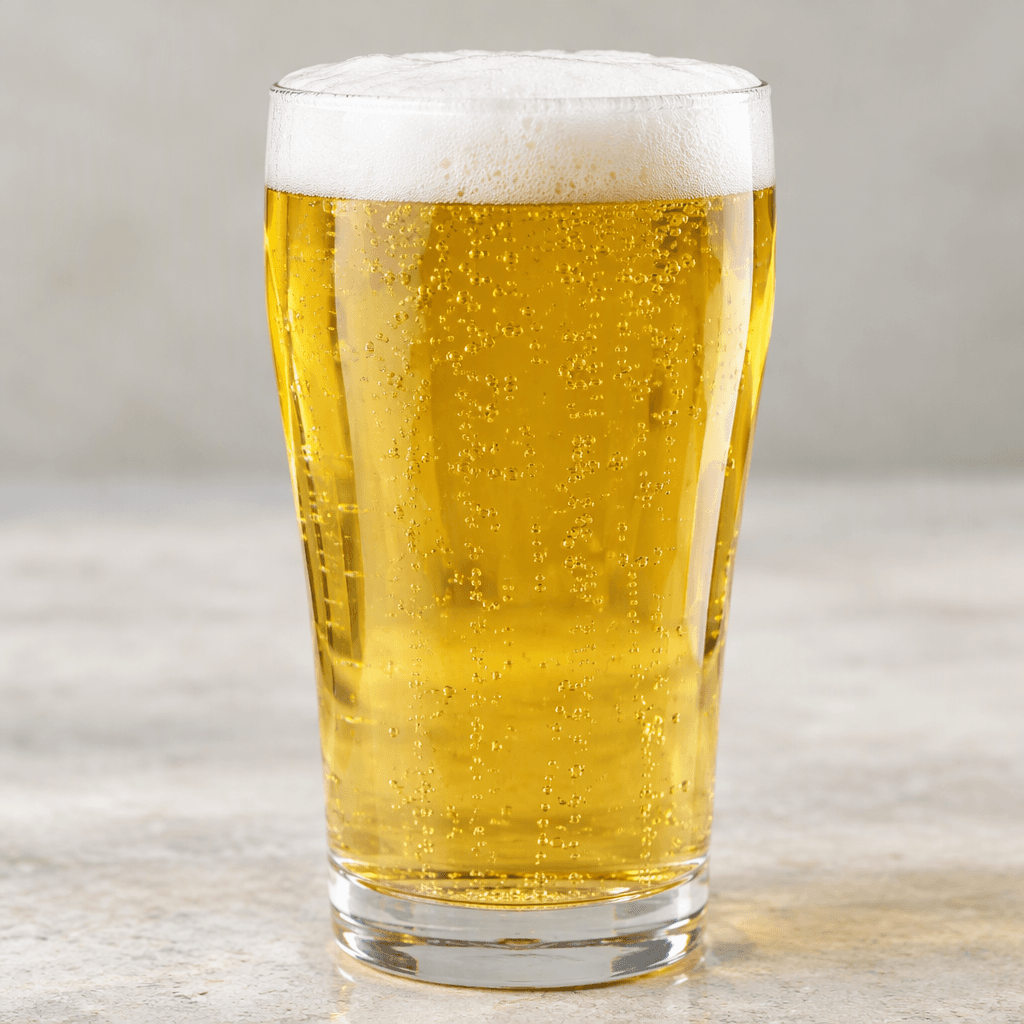
Light beer Calories
Lower-calorie alcoholic beverage
CALORIES
GI
POTASSIUM
FIBER
Quick answer
1 bottle (medium) of Light beer (355 g) has 103 calories. That works out to 29 calories per 100 g. It contains 4.6 g of carbs, 0.9 g of protein, 0 g of fat and 0 g of fiber. Its 1.2 mg of B3 covers 8% of the Daily Value. Its glycemic index is 89 (medium), so it raises blood sugar at a moderate pace.
What is Light beer?
Light beer is brewed beer made to contain fewer calories than a standard version, often by using a lighter-bodied recipe or reducing some of its residual carbohydrates. The term does not necessarily mean that the beer is low in alcohol, and strength and flavour vary by brand and brewing tradition.
Usually pale, crisp and relatively mild, it is served chilled, whether alongside casual meals, at a barbecue or in a pub. It pairs easily with grilled food, burgers and salty snacks without overwhelming them. At 29 calories per 100 g, it can suit someone looking for a lower-calorie beer, though it remains an alcoholic drink. Choose a smaller serving and alternate with water if you want to keep the occasion lighter.
Light beer Nutrition Facts
Selected: 100 g
29
KCAL / 100G
Carbs
1.3g
· 0% DV
Protein
0.2g
· 0% DV
Fat
0g
· 0% DV
Fiber
0g
· 0% DV
DV is the share of the daily value covered, on a 2,000 kcal reference diet.
Calories come from: Carbs 87% · Protein 13% · Fat 0%
Light beer Vitamins & Minerals
Vitamins
B2
0.03mg · 2% DV
B3
0.35mg · 2% DV
Folate
6µg · 2% DV
B1
0.01mg · 1% DV
Minerals
Phosphorus
12mg · 2% DV
Magnesium
6mg · 1% DV
Selenium
0.3µg · 1% DV
Potassium ⭐
27mg · 1% DV
How Nutritious Is Light beer?
Nutrient density
Low
How many vitamins, minerals and how much fiber this food carries per calorie. A high score means a lot of nutrition for few calories.
Satiety score
Medium
An EatBetter score computed from fiber, protein and calorie density. A high score means staying full longer on the same calories.
Both scores are calculated per 100 g and do not change with the selected portion. The satiety score is EatBetter's own calculation, not a clinical measure.
Light beer Glycemic Index
GLYCEMIC INDEX
GLYCEMIC LOAD
Accounts for portion size — a more realistic measure than GI alone.
How to Burn Off Light beer
To burn the 29 calories in 100 g:
🚶
Walking (5 km/h)
🏃
Running (8 km/h)
🚴
Cycling
🏊
Swimming
Times are calculated with the MET equation for a 70 kg adult. Actual burn varies with your weight, age and pace.
Is Light beer Processed?
NOVA 3
Processed
1. Unprocessed
2. Minimally Processed
3. Processed
4. Ultra-Processed
NOVA classifies foods into 4 groups by industrial processing. NOVA 1 (unprocessed) is the healthiest.
Does Light beer Contain Allergens?
Contains these allergens:
Which Diets Is Light beer Good For?
Vegan
✓ Suitable
Vegetarian
✓ Suitable
Gluten-Free
— Not suitable
Dairy-Free
— Not suitable
Mediterranean
✓ Suitable
Paleo
— Not suitable
Whole30
— Not suitable
DASH
— Not suitable
Keto
— Not suitable
Low FODMAP
— Not suitable
Light beer Fat Profile
SATURATED
0g
MONOUNSATURATED
0g
POLYUNSATURATED
0g
Compare Light beer
Foods Similar to Light beer
Frequently Asked Questions About Light beer
What does light beer mean?
Light beer is generally made to have fewer calories or less carbohydrate than a comparable regular beer. The term does not always mean lower alcohol; its exact meaning varies by market and brand.
Does light beer taste watered down?
Not necessarily. Light beer is often less full-bodied than regular beer, but its flavor depends on the malt, hops, yeast, and brewing method. Some styles are crisp and mild rather than simply diluted.
Can light beer cause a hangover?
Yes. Light beer still contains alcohol, so drinking enough of it can cause a hangover. The risk is more closely related to how much alcohol you drink and how quickly than to the word “light” on the label.
Can you drink light beer while pregnant?
No. Light beer is still alcoholic, and no amount of alcohol is known to be safe during pregnancy. Choose a genuinely alcohol-free option instead, and check that it is labeled alcohol-free rather than merely light.
Is light beer better for weight loss?
It may be a lower-energy choice than some regular beers, but it does not cause weight loss. Light beer still contains alcohol, and drinking it can also make it harder to stick to food choices that support your goals.
Does light beer hydrate you?
No. Light beer is not a good way to rehydrate because it contains alcohol, which can affect fluid balance. Drink water to quench your thirst rather than treating beer as a substitute for it.
How is light beer brewed?
Light beer is brewed by fermenting a malt-based wort, as other beers are. Brewers adjust ingredients or the brewing process to make a lighter-bodied beer or one with less carbohydrate or alcohol; methods differ by brand.
Can you cook with light beer?
Yes, you can use light beer in batters, marinades, or stews. Its mild flavor works best when you do not want a strong malty taste, but cooking does not always remove all the alcohol.
How should you store light beer after opening it?
Keep opened light beer covered in the refrigerator and drink it soon. It loses carbonation and freshness once exposed to air, so it will not taste like a newly opened bottle or can.
Can light beer freeze?
Yes. Light beer can freeze if left in a freezer or cold enough conditions, and the expanding liquid may crack or burst its container. Chill it in the refrigerator instead of using the freezer for prolonged storage.
Have another question about Light beer?
Ask the AI nutrition coach — calories, portions, alternatives and more, answered in seconds in the app.

Scan calories with your camera
Instant AI nutrition analysis

Nutrition data compiled from USDA FoodData Central and scientific sources.