

Ready & Packaged Foods
All →Vegetables & Legumes
All →Desserts & Confectionery
All →Meat & Protein
All →Grains & Bakery
All →Beverages
All →Milk & Dairy
All →

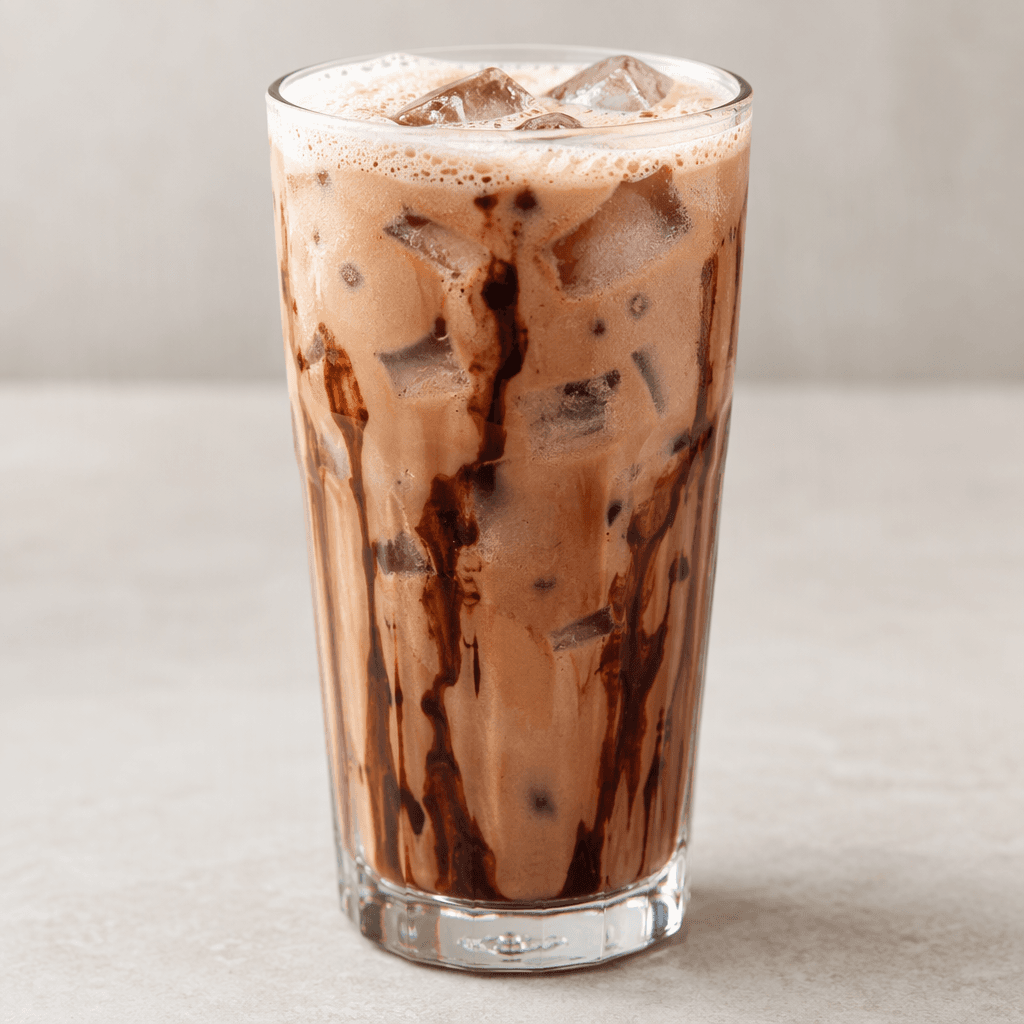
Iced chocolate latte Calories
Cold coffee drink with milk and chocolate
In season: Spring · Summer · Autumn · Winter
CALORIES
GI
POTASSIUM
FIBER
Quick answer
1 cup (medium) of Iced chocolate latte (350 g) has 221 calories. That works out to 63 calories per 100 g. It contains 30.4 g of carbs, 8 g of protein, 8 g of fat and 1.4 g of fiber. Its 1.1 µg of B12 covers 47% of the Daily Value. Its glycemic index is 41 (low), so it raises blood sugar slowly.
What is Iced chocolate latte?
An Iced chocolate latte combines coffee, milk and chocolate, served over ice. Cafés often make it with espresso, though strong brewed coffee works well at home too. The chocolate softens the coffee’s bitterness, giving the drink a cool, creamy texture and a gently sweet taste.
It is a familiar café order in warm weather and can be enjoyed as an afternoon pick-me-up or alongside a small pastry. Its nutritional profile reflects the milk and chocolate, with carbohydrates as well as some protein and fat; it provides 63 calories per 100 g. For a less sweet version, use less chocolate syrup or choose unsweetened cocoa, and pair it with fruit rather than a rich dessert.
Iced chocolate latte Nutrition Facts
Selected: 100 g
63
KCAL / 100G
Carbs
8.7g
· 3% DV
Protein
2.3g
· 5% DV
Fat
2.3g
· 3% DV
Fiber
0.4g
· 1% DV
DV is the share of the daily value covered, on a 2,000 kcal reference diet.
Calories come from: Carbs 54% · Protein 14% · Fat 32%
Iced chocolate latte Vitamins & Minerals
Vitamins
B12
0.32µg · 13% DV
B2
0.11mg · 8% DV
B5
0.28mg · 6% DV
Biotin
1.2µg · 4% DV
Minerals
Phosphorus
72mg · 10% DV
Calcium
84mg · 8% DV
Iodine
8µg · 5% DV
Magnesium
16mg · 4% DV
How Nutritious Is Iced chocolate latte?
Nutrient density
Low
How many vitamins, minerals and how much fiber this food carries per calorie. A high score means a lot of nutrition for few calories.
Satiety score
Medium
An EatBetter score computed from fiber, protein and calorie density. A high score means staying full longer on the same calories.
Both scores are calculated per 100 g and do not change with the selected portion. The satiety score is EatBetter's own calculation, not a clinical measure.
Iced chocolate latte Glycemic Index
GLYCEMIC INDEX
GLYCEMIC LOAD
Accounts for portion size — a more realistic measure than GI alone.
How to Burn Off Iced chocolate latte
To burn the 63 calories in 100 g:
🚶
Walking (5 km/h)
🏃
Running (8 km/h)
🚴
Cycling
🏊
Swimming
Times are calculated with the MET equation for a 70 kg adult. Actual burn varies with your weight, age and pace.
Is Iced chocolate latte Processed?
NOVA 3
Processed
1. Unprocessed
2. Minimally Processed
3. Processed
4. Ultra-Processed
NOVA classifies foods into 4 groups by industrial processing. NOVA 1 (unprocessed) is the healthiest.
Does Iced chocolate latte Contain Allergens?
Contains these allergens:
Which Diets Is Iced chocolate latte Good For?
Vegan
— Not suitable
Vegetarian
✓ Suitable
Gluten-Free
✓ Suitable
Dairy-Free
— Not suitable
Mediterranean
✓ Suitable
Paleo
— Not suitable
Whole30
— Not suitable
DASH
— Not suitable
Keto
— Not suitable
Low FODMAP
— Not suitable
Iced chocolate latte Fat Profile
SATURATED
1.4g
MONOUNSATURATED
0.6g
POLYUNSATURATED
0.1g
Omega 6:3 ratio 4:1
Below the ideal 4:1 — a good omega balance.
Compare Iced chocolate latte
Foods Similar to Iced chocolate latte
Frequently Asked Questions About Iced chocolate latte
What is an iced chocolate latte?
An iced chocolate latte is a cold drink made with coffee, milk, chocolate and ice. It combines the creamy texture of a latte with chocolate flavor; recipes vary in the kind and amount of chocolate used.
How do you make an iced chocolate latte at home?
To make an iced chocolate latte, stir chocolate sauce or melted chocolate into espresso or strong coffee, add cold milk, and pour it over ice. Mixing the chocolate with a little warm coffee first helps it blend smoothly.
Does an iced chocolate latte have caffeine?
Yes, an iced chocolate latte made with espresso or regular coffee contains caffeine. The amount varies with the coffee and number of espresso shots; you can order or make it with decaffeinated coffee instead.
What is the difference between an iced chocolate latte and an iced mocha?
An iced chocolate latte is a latte-style cold coffee flavored with chocolate, while an iced mocha is a coffee-and-chocolate drink served over ice. In practice, recipes often overlap, and café names may depend on how much chocolate they use.
Can you get an iced chocolate latte with decaf coffee?
Yes, an iced chocolate latte can be made with decaffeinated espresso or coffee. It keeps the coffee-and-chocolate taste while reducing caffeine from the coffee; chocolate itself can also contribute a small amount.
What chocolate is best for an iced chocolate latte?
Cocoa powder, chocolate syrup, or melted chocolate can all work in an iced chocolate latte. Cocoa gives a stronger, less sweet chocolate flavor, while milk chocolate and many syrups make the drink sweeter and creamier.
Is an iced chocolate latte sweet?
Usually, an iced chocolate latte is sweet if it contains sweetened chocolate sauce or syrup. For a less sweet version, use unsweetened cocoa or dark chocolate and ask for no added syrup.
Why does an iced chocolate latte taste watery?
An iced chocolate latte can taste watery when melting ice dilutes the coffee, milk, and chocolate. Drink it soon after serving, or use frozen coffee cubes instead of plain ice to keep the flavor fuller.
Can you make an iced chocolate latte ahead of time?
Yes, you can mix the coffee, milk, and chocolate ahead and keep the mixture covered in the refrigerator. Add ice just before serving; storing it with ice makes the drink dilute as the cubes melt.
Can you drink an iced chocolate latte at night?
You can drink an iced chocolate latte at night, but its coffee caffeine may make it harder to fall asleep, especially if you are sensitive to caffeine. Choose decaf if you want the chocolate-coffee flavor later in the day.
Have another question about Iced chocolate latte?
Ask the AI nutrition coach — calories, portions, alternatives and more, answered in seconds in the app.

Scan calories with your camera
Instant AI nutrition analysis

Nutrition data compiled from USDA FoodData Central and scientific sources.