

Ready & Packaged Foods
All →Vegetables & Legumes
All →Desserts & Confectionery
All →Meat & Protein
All →Grains & Bakery
All →Beverages
All →Milk & Dairy
All →

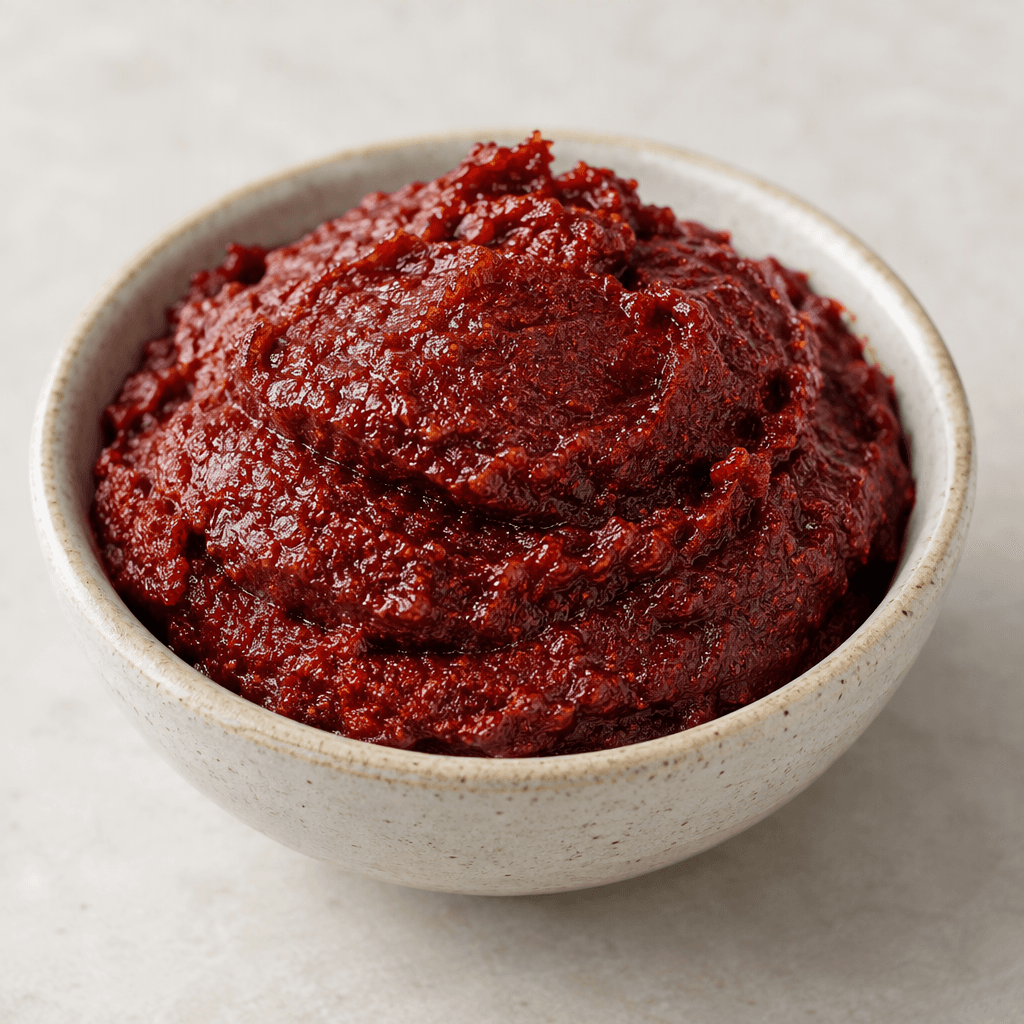
Hot Pepper Paste Calories
Spicy, rich in vitamin C, adds flavor to dishes
In season: Summer · Autumn
CALORIES
GI
POTASSIUM
FIBER
Quick answer
1 tablespoon (medium) of Hot Pepper Paste (20 g) has 18 calories. That works out to 90 calories per 100 g. It contains 3.4 g of carbs, 0.7 g of protein, 0.2 g of fat and 1.1 g of fiber. Its 22 mg of Vitamin C covers 24% of the Daily Value. Its glycemic index is 35 (low), so it raises blood sugar slowly.
What is Hot Pepper Paste?
Hot pepper paste is a staple seasoning in Turkish cooking, made by crushing hot red peppers and concentrating them by drying or cooking them into a dense paste. Its colour, heat and texture vary with the peppers and the maker.
Bold, slightly fruity and often faintly coarse, it brings warmth to soups, beans, stews, bulgur dishes and marinades. In Turkey it may also be spread on bread at breakfast or served with olive oil; cooks elsewhere can stir a little into sauces, eggs or roasted vegetables. It has some fibre and relatively little fat, while its concentrated flavour means a small amount goes a long way. For a gentler result, blend it with sweet pepper paste or add it gradually.
Hot Pepper Paste Nutrition Facts
Selected: 100 g
90
KCAL / 100G
Carbs
17g
· 6% DV
Protein
3.5g
· 7% DV
Fat
1.2g
· 2% DV
Fiber
5.5g
· 20% DV
DV is the share of the daily value covered, on a 2,000 kcal reference diet.
Calories come from: Carbs 73% · Protein 15% · Fat 12%
Hot Pepper Paste Vitamins & Minerals
Vitamins
Vitamin C
110mg · 122% DV
Vitamin A
950µg · 106% DV
B6
0.35mg · 21% DV
Vitamin E
2.2mg · 15% DV
Minerals
Sodium
1200mg · 52% DV
Potassium ⭐
320mg · 9% DV
Iron
1mg · 6% DV
Magnesium
22mg · 5% DV
How Nutritious Is Hot Pepper Paste?
Nutrient density
High
How many vitamins, minerals and how much fiber this food carries per calorie. A high score means a lot of nutrition for few calories.
Satiety score
High
An EatBetter score computed from fiber, protein and calorie density. A high score means staying full longer on the same calories.
Both scores are calculated per 100 g and do not change with the selected portion. The satiety score is EatBetter's own calculation, not a clinical measure.
Hot Pepper Paste Glycemic Index
GLYCEMIC INDEX
GLYCEMIC LOAD
Accounts for portion size — a more realistic measure than GI alone.
How to Burn Off Hot Pepper Paste
To burn the 90 calories in 100 g:
🚶
Walking (5 km/h)
🏃
Running (8 km/h)
🚴
Cycling
🏊
Swimming
Times are calculated with the MET equation for a 70 kg adult. Actual burn varies with your weight, age and pace.
Is Hot Pepper Paste Processed?
NOVA 3
Processed
1. Unprocessed
2. Minimally Processed
3. Processed
4. Ultra-Processed
NOVA classifies foods into 4 groups by industrial processing. NOVA 1 (unprocessed) is the healthiest.
Does Hot Pepper Paste Contain Allergens?
No known major allergens
Which Diets Is Hot Pepper Paste Good For?
Vegan
✓ Suitable
Vegetarian
✓ Suitable
Gluten-Free
✓ Suitable
Dairy-Free
— Not suitable
Mediterranean
✓ Suitable
Paleo
✓ Suitable
Whole30
— Not suitable
DASH
— Not suitable
Keto
— Not suitable
Low FODMAP
— Not suitable
Hot Pepper Paste Fat Profile
SATURATED
0.22g
MONOUNSATURATED
0.18g
POLYUNSATURATED
0.32g
Omega 6:3 ratio 4:1
Below the ideal 4:1 — a good omega balance.
Compare Hot Pepper Paste
Foods Similar to Hot Pepper Paste
Frequently Asked Questions About Hot Pepper Paste
What is Hot Pepper Paste?
Hot Pepper Paste is a thick condiment made from ground peppers, commonly used in Turkish cooking to add concentrated pepper flavor and heat. Turkish versions are often made by salting and drying crushed peppers before reducing them to a dense paste.
How do you use Hot Pepper Paste in cooking?
Add Hot Pepper Paste to soups, stews, sauces, rice dishes, or marinades for a deeper pepper flavor. Briefly frying it in oil with aromatics before adding liquids helps disperse its flavor through the dish.
How is Hot Pepper Paste different from tomato paste?
Hot Pepper Paste is made primarily from peppers, while tomato paste is made from tomatoes, so they bring different flavors and levels of heat. You can replace some tomato paste with it, but a full swap may make a dish much spicier and less tomato-forward.
Can Hot Pepper Paste replace harissa?
Hot Pepper Paste can replace harissa when you want chili heat, but it will not taste exactly the same. Harissa commonly includes spices such as cumin and coriander, so add those separately if you want a closer match.
How should you store Hot Pepper Paste after opening?
Keep Hot Pepper Paste refrigerated after opening, with the lid tightly closed. Use a clean, dry spoon each time and avoid leaving paste on the jar rim; discard it if you see mold or notice an unusual smell.
Can you freeze Hot Pepper Paste?
Yes, Hot Pepper Paste freezes well. Freeze it in small portions in an airtight container or an ice-cube tray, then transfer the portions to a sealed freezer bag so you can thaw only what a recipe needs.
Can you make Hot Pepper Paste at home?
Yes, you can make Hot Pepper Paste at home by blending fresh hot peppers with salt and slowly cooking or drying the mixture until it becomes thick. Use clean equipment and refrigerate the finished paste; traditional methods often rely on sun-drying.
How can you make a dish less spicy after adding Hot Pepper Paste?
To soften the heat from Hot Pepper Paste, add more of the dish’s main ingredients or balance it with a creamy ingredient such as yogurt or cream. A little acidity can also round out the flavor, but adding water alone may dilute the whole dish.
Can Hot Pepper Paste be used as a marinade?
Yes, Hot Pepper Paste works in marinades for vegetables, tofu, or meat. Mix a small amount with oil, garlic, and an acidic ingredient such as lemon juice, then coat the food evenly; its concentrated flavor means a little can go a long way.
Why does Hot Pepper Paste sometimes taste bitter?
Hot Pepper Paste can taste bitter if it has been scorched while cooking or if its peppers and seeds were especially bitter. Fry it briefly over moderate heat, stirring constantly, and add it to the pan before it starts to darken.
Have another question about Hot Pepper Paste?
Ask the AI nutrition coach — calories, portions, alternatives and more, answered in seconds in the app.

Scan calories with your camera
Instant AI nutrition analysis

Nutrition data compiled from USDA FoodData Central and scientific sources.