

Ready & Packaged Foods
All →Vegetables & Legumes
All →Desserts & Confectionery
All →Meat & Protein
All →Grains & Bakery
All →Beverages
All →Milk & Dairy
All →

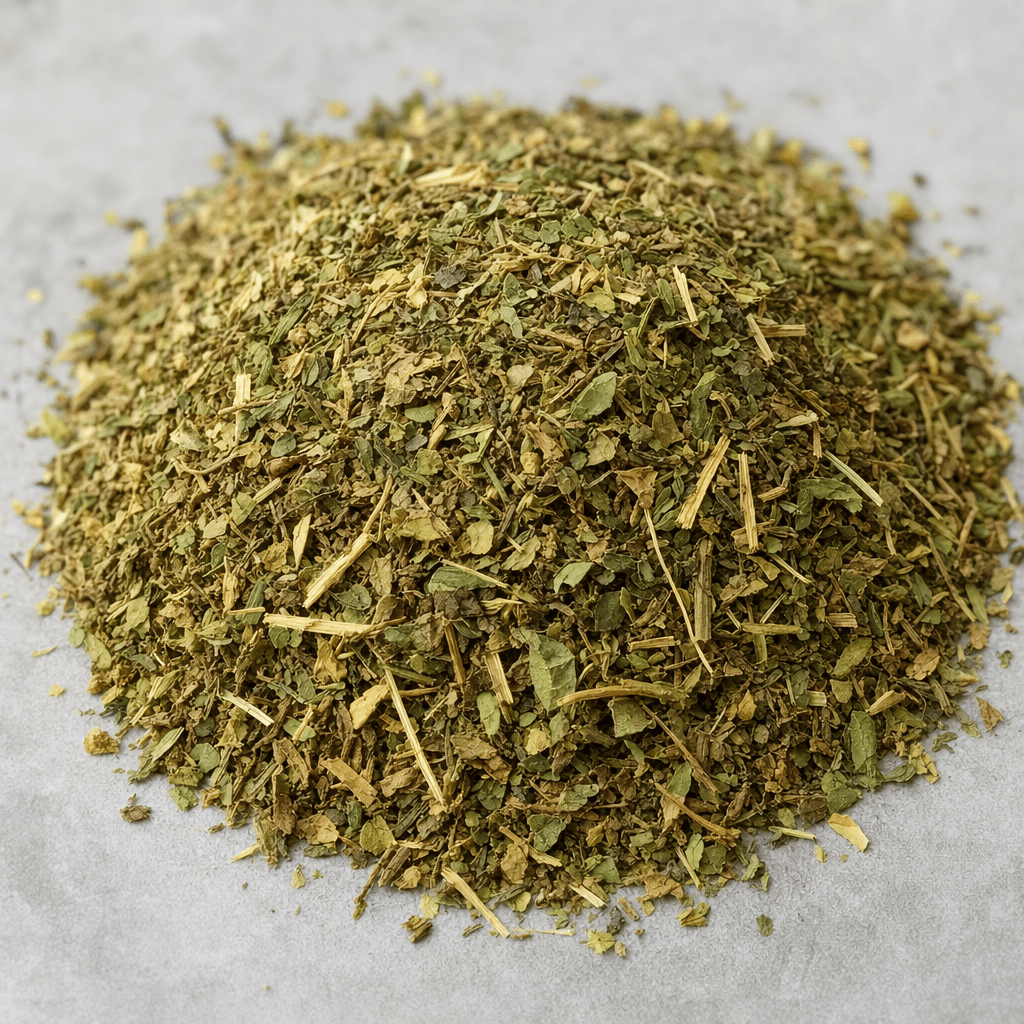
Herb Mix Calories
Blend of various fresh or dried herbs, aromatic and vitamin-rich
In season: Spring · Summer · Autumn · Winter
CALORIES · 100 G
GI
POTASSIUM · 100 G
FIBER · 100 G
Quick answer
1 tablespoon (medium) of Herb Mix (5 g) has 14 calories. That works out to 270 calories per 100 g. It contains 2 g of carbs, 1 g of protein, 0.2 g of fat and 1.5 g of fiber. Its 60 µg of Vitamin K covers 50% of the Daily Value. Its glycemic index is 10 (low), so it raises blood sugar slowly.
Herb Mix Nutrition Facts
Selected: 1 tablespoon (medium) · 5 g
14
KCAL / 5G
Carbs
2g
· 1% DV
Protein
1g
· 2% DV
Fat
0.2g
· 0% DV
Fiber
1.5g
· 5% DV
DV is the share of the daily value covered, on a 2,000 kcal reference diet.
Calories come from: Carbs 58% · Protein 29% · Fat 13%
Herb Mix nutrition facts table · 1 tablespoon (medium) (5 g)
| Nutrient | Amount | % DV |
|---|---|---|
| Calories | 14 kcal | |
| Total fat | 0.2 g | 0% |
| Saturated fat | 0.03 g | 0% |
| Trans fat | 0 g | |
| Sodium | 4 mg | 0% |
| Total carbohydrate | 2 g | 1% |
| Fiber | 1.5 g | 5% |
| Protein | 1 g | 2% |
Calories: Calories measure energy. Average daily need is 2,000 kcal. Excess calories are stored as fat, too few cause weight loss.
Carbs: Your body's primary energy source. The brain runs exclusively on carbs. Daily need: 275g.
Protein: Essential for muscle repair and cell growth. Daily need: 50g. Keeps you full and boosts metabolism.
Fat: Needed for hormone production and vitamin absorption. Daily need: 78g. Limit saturated fats, choose unsaturated.
Fiber: Critical for digestive health and satiety. Daily need: 28g. Stabilizes blood sugar, lowers cholesterol.

Log this food in EatBetter
100,000+ people use it
- Get your daily calorie target
- Snap your meal, log it in seconds
- See every vitamin and mineral

📸 Scan the code to get the app free.

How Many Calories in 1 Tablespoon of Herb Mix?
| Serving | Amount | Calories |
|---|---|---|
| 1 tablespoon (medium) | 5 g | 14 kcal |
| 1 g | 1 g | 3 kcal |
| 1 teaspoon (small) | 1.5 g | 4 kcal |
| 1 serving (medium) | 7 g | 19 kcal |
| 1 piece (jumbo) | 8 g | 22 kcal |
| 2 tablespoon (large) | 10 g | 27 kcal |
| 1 pack (whole) | 20 g | 54 kcal |
| 1 cup (chopped) | 25 g | 68 kcal |
| 100 g | 100 g | 270 kcal |
Calculated from 270 calories per 100 g.
Frequently Asked Questions About Herb Mix
What is herb mix made of?
Herb mix has no single fixed recipe. It can contain herbs such as oregano, basil, thyme, rosemary, parsley, or dill, either fresh or dried. The exact ingredients determine its flavor, so check the blend’s description when choosing one for a particular dish.
How do you use herb mix in cooking?
Use herb mix to season soups, roasted vegetables, meat, poultry, pasta sauces, or salad dressings. Start with a small amount and taste as you go, since blends vary in strength and some may also contain salt or other seasonings.
How do you make herb mix at home?
To make herb mix at home, combine herbs that suit the dishes you cook, such as oregano, basil, and thyme. Crumble dried herbs together, or finely chop fresh ones. Keep a fresh blend refrigerated and use it promptly.
When should you add herb mix to a dish?
Add dried herb mix while a dish is cooking so its flavors have time to spread through the food. For a fresher, more noticeable aroma, add fresh herbs or a little extra mix near the end of cooking or just before serving.
Is fresh herb mix different from dried herb mix?
Yes. Fresh herb mix tends to have a brighter, greener flavor and is often added near the end of cooking. Dried herb mix is more concentrated and stores longer; adding it earlier gives its flavors time to infuse the dish.
How should you store herb mix?
Store dried herb mix in an airtight container away from heat, moisture, and direct light to help preserve its aroma. Keep fresh herb mix refrigerated, and discard it if it becomes slimy, moldy, or develops an off smell.
What can you use instead of herb mix?
You can replace herb mix with a single herb or a combination suited to the recipe. Oregano or thyme works well in tomato sauces, while parsley or dill suits salads and yogurt-based dips. Adjust the amount to taste.
Is herb mix the same as Italian seasoning?
Not necessarily. Italian seasoning is a particular style of dried herb blend, commonly featuring herbs such as oregano, basil, rosemary, and thyme. Herb mix is a broader term, and its ingredients can vary by recipe or product.
Can you put herb mix in bread dough?
Yes, herb mix can be kneaded into bread dough or sprinkled over the top before baking. Dried blends are especially convenient for even distribution; use a modest amount so the herbs complement the bread rather than overpower it.
Can you make tea with herb mix?
Only use herb mix for tea if every herb in it is suitable for brewing and drinking. Culinary blends are made to season food, and their ingredients may not be intended as an infusion, so use a blend specifically meant for tea instead.
Herb Mix Vitamins & Minerals
Vitamins
Vitamin K
60µg · 50% DV
Vitamin A
175µg · 19% DV
B2
0.06mg · 5% DV
Vitamin C
4mg · 4% DV
Minerals
Manganese
0.28mg · 12% DV
Iron
2mg · 11% DV
Copper
0.06mg · 7% DV
Calcium
60mg · 6% DV
Potassium ⭐
90mg · 3% DV
Sodium
4mg · 0% DV
Herb Mix Glycemic Index
GLYCEMIC INDEX
GLYCEMIC LOAD
Accounts for portion size — a more realistic measure than GI alone.
How to Burn Off Herb Mix
To burn the 14 calories in 1 tablespoon (medium) (5 g):
🚶
Walking (5 km/h)
🏃
Running (8 km/h)
🚴
Cycling
🏊
Swimming
Times are calculated with the MET equation for a 70 kg adult. Actual burn varies with your weight, age and pace.
What is Herb Mix?
Herb mix brings together a selection of fresh or dried herbs to add fragrance and flavour. There is no single standard recipe or fixed place of origin: the blend can vary by maker, so its aroma may be delicate, grassy or more savoury depending on what goes into it.
Use it in soups, roasted vegetables, eggs, salad dressings or marinades; adding it near the end of cooking can help keep its aroma vivid. It contributes fibre and other plant nutrients, though portions are usually small, so it is best thought of as a seasoning rather than a major source of nourishment. If the blend contains salt, taste your dish before adding extra.
How Nutritious Is Herb Mix?
Nutrient density
Very high
How many vitamins, minerals and how much fiber this food carries per calorie. A high score means a lot of nutrition for few calories.
Satiety score
High
An EatBetter score computed from fiber, protein and calorie density. A high score means staying full longer on the same calories.
Both scores are calculated per 100 g and do not change with the selected portion. The satiety score is EatBetter's own calculation, not a clinical measure.
Is Herb Mix Processed?
NOVA 2
Minimally Processed
1. Unprocessed
2. Minimally Processed
3. Processed
4. Ultra-Processed
NOVA classifies foods into 4 groups by industrial processing. NOVA 1 (unprocessed) is the healthiest.
Does Herb Mix Contain Allergens?
No known major allergens
Which Diets Is Herb Mix Good For?
Vegan
✓ Suitable
Vegetarian
✓ Suitable
Gluten-Free
✓ Suitable
Dairy-Free
— Not suitable
Mediterranean
✓ Suitable
Paleo
✓ Suitable
Whole30
— Not suitable
DASH
— Not suitable
Keto
✓ Suitable
Low FODMAP
— Not suitable
Herb Mix Fat Profile
SATURATED
0.03g
MONOUNSATURATED
0.06g
POLYUNSATURATED
0.09g
Omega 6:3 ratio 0.5:1
Below the ideal 4:1 — a good omega balance.
Compare Herb Mix
Foods Similar to Herb Mix
Have another question about Herb Mix?
Ask the AI nutrition coach — calories, portions, alternatives and more, answered in seconds in the app.

Scan calories with your camera
Instant AI nutrition analysis

Nutrition data compiled from USDA FoodData Central and scientific sources.