

Ready & Packaged Foods
All →Vegetables & Legumes
All →Desserts & Confectionery
All →Meat & Protein
All →Grains & Bakery
All →Beverages
All →Milk & Dairy
All →

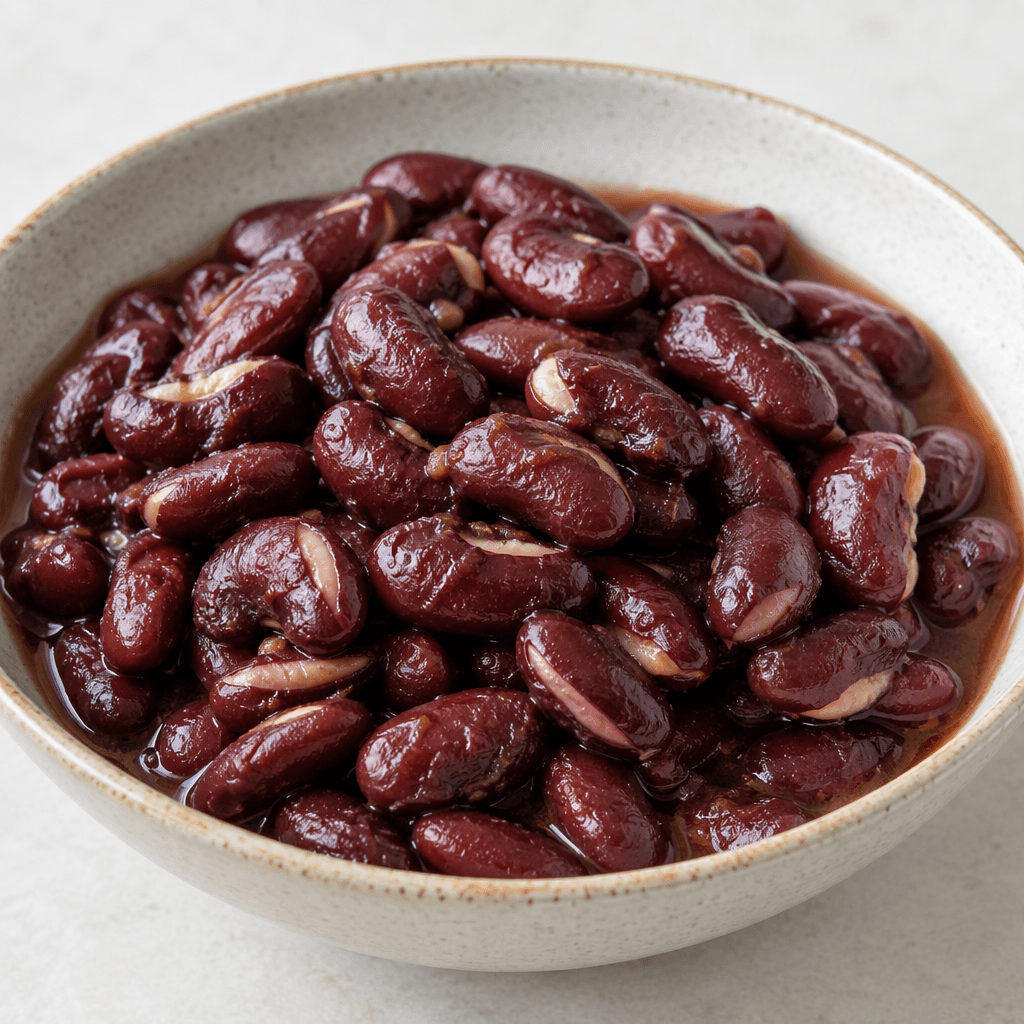
Boiled Kidney Beans Calories
Plant protein and fiber source, rich in iron and folate
In season: Spring · Summer · Autumn · Winter
CALORIES
GI
POTASSIUM
FIBER
Quick answer
1 cup (medium) of Boiled Kidney Beans (170 g) has 216 calories. That works out to 127 calories per 100 g. It contains 38.8 g of carbs, 14.8 g of protein, 0.9 g of fat and 10.9 g of fiber. Its 0.4 mg of Copper covers 42% of the Daily Value. Its glycemic index is 29 (low), so it raises blood sugar slowly.
What is Boiled Kidney Beans?
The English label says “Boiled Kidney Beans,” but the Turkish name refers to haşlanmış kuru fasulye: boiled dried beans, usually white beans in Turkish cooking. They are simmered until tender and may be eaten as they are or used as the base for a saucy bean dish.
The beans have a mild, earthy flavour and a soft, substantial texture. In Turkey, kuru fasulye is often served with rice, pickles and onion; the plain boiled beans also work well in salads or soups. They provide plant protein and fibre, with 6.4 g of fibre per 100 g. For a lighter meal, toss them with chopped vegetables, herbs and lemon rather than adding a rich sauce.
Boiled Kidney Beans Nutrition Facts
Selected: 100 g
127
KCAL / 100G
Carbs
22.8g
· 8% DV
Protein
8.7g
· 17% DV
Fat
0.5g
· 1% DV
Fiber
6.4g
· 23% DV
DV is the share of the daily value covered, on a 2,000 kcal reference diet.
Calories come from: Carbs 70% · Protein 27% · Fat 3%
Boiled Kidney Beans Vitamins & Minerals
Vitamins
B1
0.21mg · 18% DV
B6
0.13mg · 8% DV
Folate
33µg · 8% DV
Biotin
2.1µg · 7% DV
Minerals
Phosphorus
142mg · 20% DV
Iron
3mg · 17% DV
Potassium ⭐
403mg · 12% DV
Magnesium
45mg · 11% DV
How Nutritious Is Boiled Kidney Beans?
Nutrient density
Very high
How many vitamins, minerals and how much fiber this food carries per calorie. A high score means a lot of nutrition for few calories.
Satiety score
High
An EatBetter score computed from fiber, protein and calorie density. A high score means staying full longer on the same calories.
Both scores are calculated per 100 g and do not change with the selected portion. The satiety score is EatBetter's own calculation, not a clinical measure.
Boiled Kidney Beans Glycemic Index
GLYCEMIC INDEX
GLYCEMIC LOAD
Accounts for portion size — a more realistic measure than GI alone.
How to Burn Off Boiled Kidney Beans
To burn the 127 calories in 100 g:
🚶
Walking (5 km/h)
🏃
Running (8 km/h)
🚴
Cycling
🏊
Swimming
Times are calculated with the MET equation for a 70 kg adult. Actual burn varies with your weight, age and pace.
Is Boiled Kidney Beans Processed?
NOVA 2
Minimally Processed
1. Unprocessed
2. Minimally Processed
3. Processed
4. Ultra-Processed
NOVA classifies foods into 4 groups by industrial processing. NOVA 1 (unprocessed) is the healthiest.
Does Boiled Kidney Beans Contain Allergens?
No known major allergens
Which Diets Is Boiled Kidney Beans Good For?
Vegan
✓ Suitable
Vegetarian
✓ Suitable
Gluten-Free
✓ Suitable
Dairy-Free
— Not suitable
Mediterranean
✓ Suitable
Paleo
✓ Suitable
Whole30
— Not suitable
DASH
— Not suitable
Keto
— Not suitable
Low FODMAP
— Not suitable
Boiled Kidney Beans Fat Profile
SATURATED
0.12g
MONOUNSATURATED
0.03g
POLYUNSATURATED
0.18g
Omega 6:3 ratio 4.3:1
Above the ideal 4:1 (4.3:1).
Compare Boiled Kidney Beans
Foods Similar to Boiled Kidney Beans
Frequently Asked Questions About Boiled Kidney Beans
Are boiled kidney beans safe to eat?
Yes, boiled kidney beans are safe when they have been thoroughly cooked. Raw or undercooked kidney beans can contain a toxin that causes severe nausea and vomiting, so never rely on soaking alone; cook them fully before eating.
How long should kidney beans be boiled after soaking?
Soaked kidney beans should be boiled vigorously first, then simmered until completely tender; the exact time varies with the beans’ age and soaking. Do not taste them while they are still firm, and follow package directions when available.
Why do boiled kidney beans split or turn mushy?
Boiled kidney beans split when they are cooked too aggressively or for too long. Keep them at a gentle simmer once they begin to soften, avoid frequent stirring, and add acidic ingredients such as tomatoes only after the beans are tender.
Do boiled kidney beans need to be rinsed?
Rinsing boiled kidney beans is optional if you cooked them from dry, but it removes loose starch and some of the cooking liquid. Rinse them for a salad or a cleaner-tasting dish; keep the liquid when you want a thicker stew.
How should you store boiled kidney beans?
Store boiled kidney beans in a covered container in the refrigerator and use them within three to four days. Cool them promptly rather than leaving them out for hours, and discard them if they develop an off smell, sliminess, or visible mold.
Can you freeze boiled kidney beans?
Yes, boiled kidney beans freeze well. Cool them first, divide them into meal-sized portions, and add a little cooking liquid to help prevent them from drying out. Thaw them in the refrigerator or add them frozen to a simmering dish.
How can you reduce gas from boiled kidney beans?
To reduce gas from boiled kidney beans, soak dried beans, discard the soaking water, rinse them, and cook them until fully tender. A smaller serving may also be easier to tolerate, especially if beans are not a regular part of your meals.
Can you use the liquid from boiled kidney beans?
Yes, the cooking liquid from boiled kidney beans can be used to thicken soups, stews, and sauces. Use it only when the beans have been thoroughly cooked, and taste before adding salt because the liquid may already be seasoned.
Are boiled kidney beans the same as canned kidney beans?
They are similar, but boiled kidney beans made from dried beans may have a firmer texture and less added salt than canned beans. Canned kidney beans are already cooked; drain and rinse them if you want to reduce their salty, starchy packing liquid.
Can boiled kidney beans be eaten cold in salads?
Yes, boiled kidney beans can be eaten cold in salads once they have been thoroughly cooked and cooled safely. Pair them with crunchy vegetables, herbs, and a tangy dressing, and refrigerate leftovers promptly rather than leaving the salad at room temperature.
Have another question about Boiled Kidney Beans?
Ask the AI nutrition coach — calories, portions, alternatives and more, answered in seconds in the app.

Scan calories with your camera
Instant AI nutrition analysis

Nutrition data compiled from USDA FoodData Central and scientific sources.