

Ready & Packaged Foods
All →Vegetables & Legumes
All →Desserts & Confectionery
All →Meat & Protein
All →Grains & Bakery
All →Beverages
All →Milk & Dairy
All →

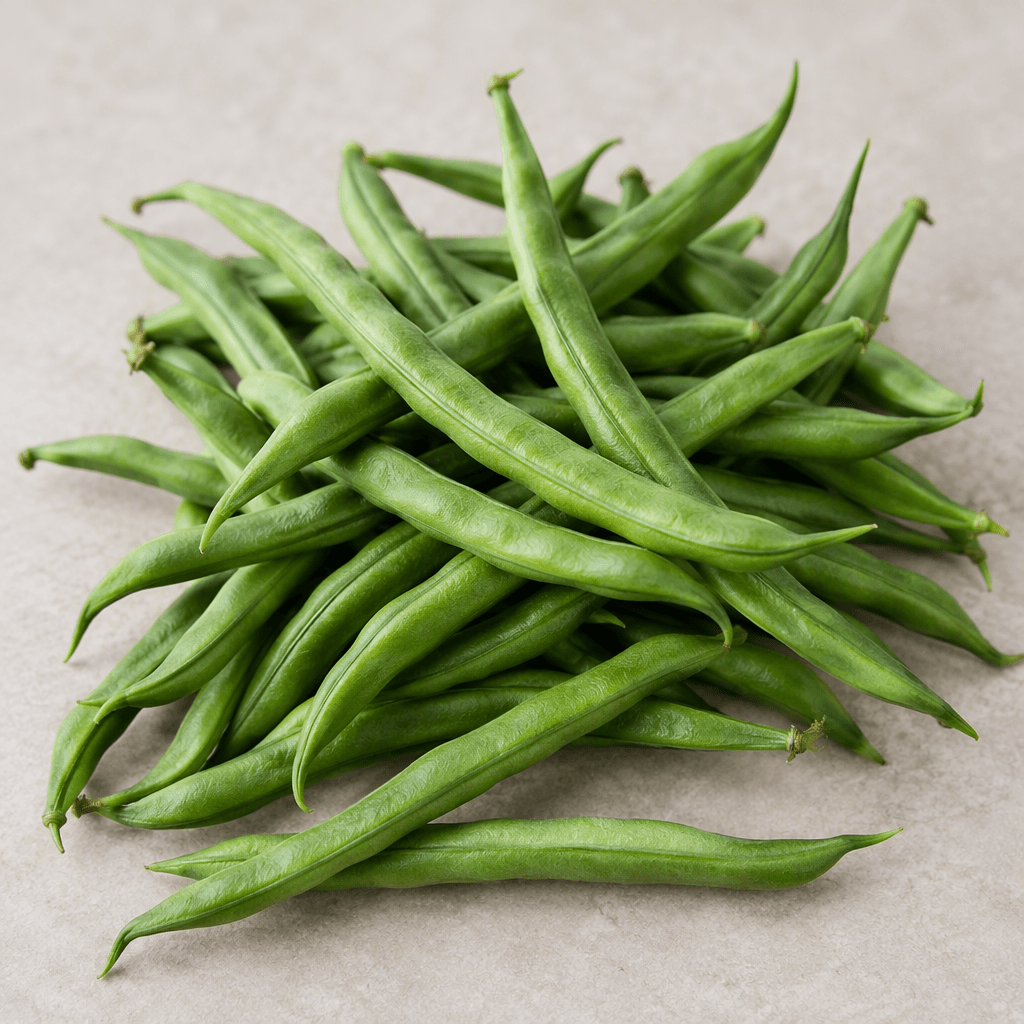
Green Beans Calories
Low calorie, source of fiber and vitamin C
In season: Spring · Summer · Autumn
CALORIES
GI
POTASSIUM
FIBER
Quick answer
1 cup (medium) of Green Beans (125 g) has 39 calories. That works out to 31 calories per 100 g. It contains 8.9 g of carbs, 2.3 g of protein, 0.3 g of fat and 4.3 g of fiber. Its 53.8 µg of Vitamin K covers 45% of the Daily Value. Its glycemic index is 15 (low), so it raises blood sugar slowly.
What is Green Beans?
Green beans are the tender, edible pods of the bean plant, picked before the beans inside mature. In Turkish home cooking, taze fasulye usually means a gently simmered dish of the pods with onion, tomato and olive oil; some cooks add meat. The beans become soft while keeping their shape, with a mild, slightly sweet flavour that takes on the tomato-rich cooking juices.
Serve the olive-oil version warm or chilled, as a side or part of a spread; the meat version is often eaten with rice and yoghurt. Green beans are light and provide fibre, with about 31 calories per 100 g. For a simple meal, pair them with grains or grilled fish, or use less oil when cooking.
Green Beans Nutrition Facts
Selected: 100 g
31
KCAL / 100G
Carbs
7.1g
· 3% DV
Protein
1.8g
· 4% DV
Fat
0.2g
· 0% DV
Fiber
3.4g
· 12% DV
DV is the share of the daily value covered, on a 2,000 kcal reference diet.
Calories come from: Carbs 76% · Protein 19% · Fat 5%
Green Beans Vitamins & Minerals
Vitamins
Vitamin K
43µg · 36% DV
Vitamin C
12mg · 13% DV
B2
0.1mg · 8% DV
B6
0.14mg · 8% DV
Minerals
Iron
1mg · 6% DV
Magnesium
25mg · 6% DV
Potassium ⭐
209mg · 6% DV
Phosphorus
38mg · 5% DV
How Nutritious Is Green Beans?
Nutrient density
Very high
How many vitamins, minerals and how much fiber this food carries per calorie. A high score means a lot of nutrition for few calories.
Satiety score
Medium
An EatBetter score computed from fiber, protein and calorie density. A high score means staying full longer on the same calories.
Both scores are calculated per 100 g and do not change with the selected portion. The satiety score is EatBetter's own calculation, not a clinical measure.
Green Beans Glycemic Index
GLYCEMIC INDEX
GLYCEMIC LOAD
Accounts for portion size — a more realistic measure than GI alone.
How to Burn Off Green Beans
To burn the 31 calories in 100 g:
🚶
Walking (5 km/h)
🏃
Running (8 km/h)
🚴
Cycling
🏊
Swimming
Times are calculated with the MET equation for a 70 kg adult. Actual burn varies with your weight, age and pace.
Is Green Beans Processed?
NOVA 1
Unprocessed
1. Unprocessed
2. Minimally Processed
3. Processed
4. Ultra-Processed
NOVA classifies foods into 4 groups by industrial processing. NOVA 1 (unprocessed) is the healthiest.
Does Green Beans Contain Allergens?
No known major allergens
Which Diets Is Green Beans Good For?
Vegan
✓ Suitable
Vegetarian
✓ Suitable
Gluten-Free
✓ Suitable
Dairy-Free
— Not suitable
Mediterranean
✓ Suitable
Paleo
✓ Suitable
Whole30
— Not suitable
DASH
— Not suitable
Keto
— Not suitable
Low FODMAP
— Not suitable
Green Beans Fat Profile
SATURATED
0.05g
MONOUNSATURATED
0.01g
POLYUNSATURATED
0.05g
Omega 6:3 ratio 0.3:1
Below the ideal 4:1 — a good omega balance.
Compare Green Beans
Foods Similar to Green Beans
Frequently Asked Questions About Green Beans
How do you cook green beans so they stay crisp?
Cook green beans briefly and stop as soon as they are tender-crisp. Boil or steam them, then drain promptly; for an especially crisp texture and bright color, cool them in ice water. Add butter, olive oil, lemon, or seasoning just before serving.
How long should you boil green beans?
Green beans usually take about 4–6 minutes to boil until tender-crisp, or longer if you prefer them soft. Start checking early because thin beans cook quickly. Drain them as soon as they reach the texture you want.
Do you need to remove the strings from green beans?
Usually, no: most green beans sold today are stringless. Snap off the stem ends and pull away any tough string you notice running along the seam. Older or oversized beans are more likely to have noticeable strings.
Why are my green beans tough or stringy?
Green beans can turn out tough or stringy when they are old, oversized, or from a stringier variety. Choose slim, firm pods that snap easily, and remove any tough seam strings before cooking. Older beans may need more cooking time to soften.
Can you eat green beans raw?
Yes, green beans can be eaten raw after washing and trimming, though they are firmer and less tender than cooked beans. Slice them thinly for salads or serve them as a crunchy snack. Cook them if you prefer a softer texture.
Can you freeze fresh green beans?
Yes, green beans freeze well. Trim and wash them, blanch briefly in boiling water, then cool them quickly in ice water and drain thoroughly. Pack them airtight and freeze; you can add them directly to soups or stews without thawing.
How can you tell if green beans have gone bad?
Green beans that are slimy, moldy, unusually soft, or smell unpleasant should be discarded. Fresh pods are firm and crisp, with an even green color. A few surface blemishes alone do not necessarily mean the beans are spoiled.
How should you store fresh green beans?
Store unwashed green beans in a breathable bag in the refrigerator’s crisper drawer, and wash them just before cooking. Keeping them dry helps them stay crisp. Use them within a few days for the best texture.
Are green beans safe for dogs to eat?
Yes, plain green beans are generally safe for dogs in small pieces. Serve them raw, steamed, or boiled without salt, butter, oil, garlic, or onion, and cut them to reduce choking risk. Avoid seasoned green-bean dishes.
Should you blanch green beans before roasting them?
No, you do not need to blanch green beans before roasting. Dry the trimmed beans well, toss them with a little oil, and roast until tender and browned. Blanching first can make them softer, so it is useful only if you prefer that texture.
Have another question about Green Beans?
Ask the AI nutrition coach — calories, portions, alternatives and more, answered in seconds in the app.

Scan calories with your camera
Instant AI nutrition analysis

Nutrition data compiled from USDA FoodData Central and scientific sources.