

Ready & Packaged Foods
All →Vegetables & Legumes
All →Desserts & Confectionery
All →Meat & Protein
All →Grains & Bakery
All →Beverages
All →Milk & Dairy
All →

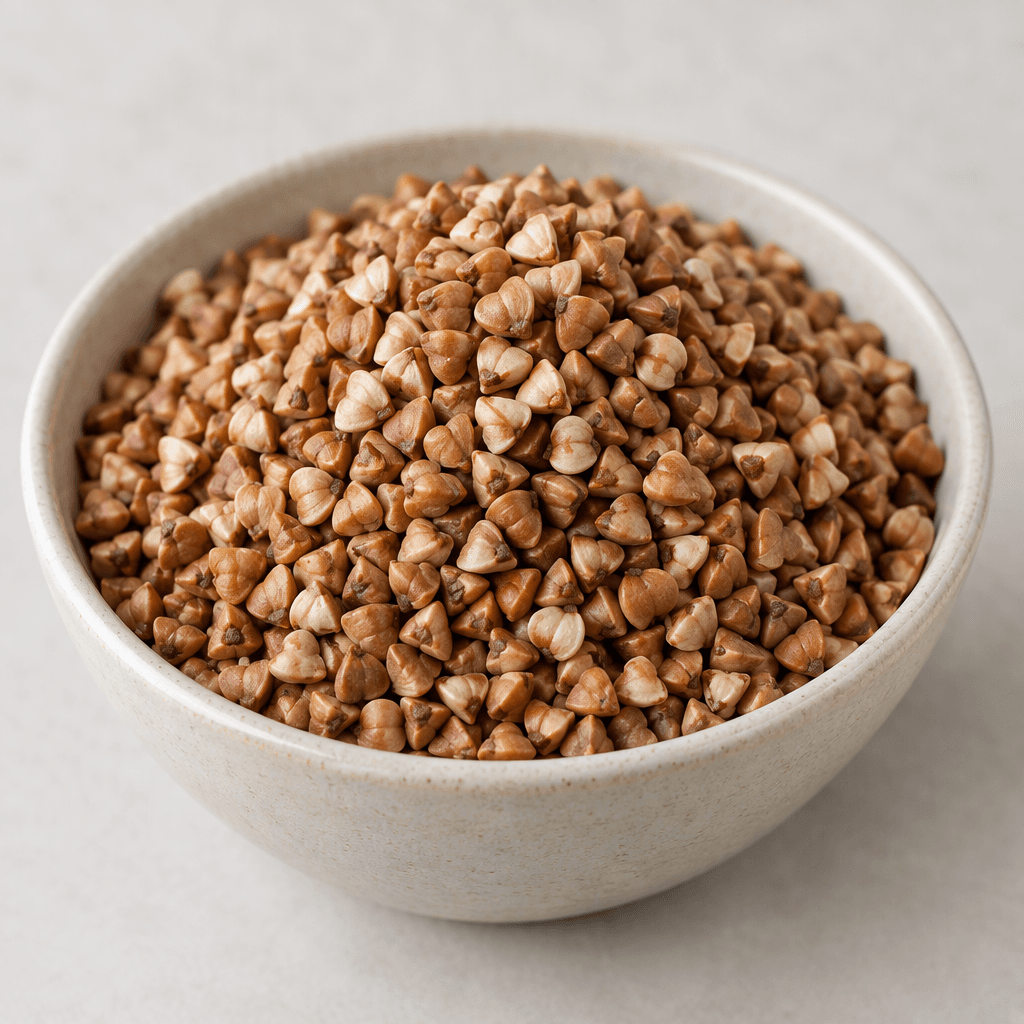
Grecka Calories
Vegetable, olive oil, Mediterranean-style legume dish
In season: Spring · Summer · Autumn · Winter
CALORIES
GI
POTASSIUM
FIBER
Quick answer
1 serving (medium) of Grecka (200 g) has 220 calories. That works out to 110 calories per 100 g. It contains 32 g of carbs, 9 g of protein, 6.4 g of fat and 9.6 g of fiber. Its 0.3 mg of Copper covers 29% of the Daily Value. Its glycemic index is 38 (low), so it raises blood sugar slowly.
What is Grecka?
Grecka is a Mediterranean-style dish of buckwheat groats cooked with vegetables and olive oil. Despite being used like a grain, buckwheat is a seed, and its groats turn tender while keeping a pleasantly distinct, slightly nutty bite. The vegetables add freshness and softness, while olive oil gives the dish a rounded, savoury flavour.
Serve it warm as a side or let it cool for a hearty salad; it also works as a light plant-based meal. With 4.8 g of fibre per 100 g, Grecka is a satisfying choice for vegetarian and vegan menus. For a lighter version, go easy on the oil and add lemon, herbs or crisp seasonal vegetables.
Grecka Nutrition Facts
Selected: 100 g
110
KCAL / 100G
Carbs
16g
· 6% DV
Protein
4.5g
· 9% DV
Fat
3.2g
· 4% DV
Fiber
4.8g
· 17% DV
DV is the share of the daily value covered, on a 2,000 kcal reference diet.
Calories come from: Carbs 58% · Protein 16% · Fat 26%
Grecka Vitamins & Minerals
Vitamins
B1
0.09mg · 8% DV
Folate
32µg · 8% DV
Vitamin K
9µg · 8% DV
B6
0.09mg · 5% DV
Minerals
Zinc
1mg · 9% DV
Sodium
210mg · 9% DV
Phosphorus
62mg · 9% DV
Iron
1mg · 6% DV
How Nutritious Is Grecka?
Nutrient density
High
How many vitamins, minerals and how much fiber this food carries per calorie. A high score means a lot of nutrition for few calories.
Satiety score
High
An EatBetter score computed from fiber, protein and calorie density. A high score means staying full longer on the same calories.
Both scores are calculated per 100 g and do not change with the selected portion. The satiety score is EatBetter's own calculation, not a clinical measure.
Grecka Glycemic Index
GLYCEMIC INDEX
GLYCEMIC LOAD
Accounts for portion size — a more realistic measure than GI alone.
How to Burn Off Grecka
To burn the 110 calories in 100 g:
🚶
Walking (5 km/h)
🏃
Running (8 km/h)
🚴
Cycling
🏊
Swimming
Times are calculated with the MET equation for a 70 kg adult. Actual burn varies with your weight, age and pace.
Is Grecka Processed?
NOVA 2
Minimally Processed
1. Unprocessed
2. Minimally Processed
3. Processed
4. Ultra-Processed
NOVA classifies foods into 4 groups by industrial processing. NOVA 1 (unprocessed) is the healthiest.
Does Grecka Contain Allergens?
No known major allergens
Which Diets Is Grecka Good For?
Vegan
✓ Suitable
Vegetarian
✓ Suitable
Gluten-Free
✓ Suitable
Dairy-Free
— Not suitable
Mediterranean
✓ Suitable
Paleo
— Not suitable
Whole30
— Not suitable
DASH
— Not suitable
Keto
— Not suitable
Low FODMAP
— Not suitable
Grecka Fat Profile
SATURATED
0.5g
MONOUNSATURATED
2g
POLYUNSATURATED
0.7g
Omega 6:3 ratio 8:1
Above the ideal 4:1 (8:1).
Compare Grecka
Foods Similar to Grecka
Frequently Asked Questions About Grecka
What is Grecka, and is it the same as buckwheat?
Yes. Grecka is buckwheat groats—the whole edible seeds of buckwheat. Despite the name, buckwheat is not wheat; it is a pseudocereal, and the small angular pieces shown are its groats.
Does Grecka need to be soaked before cooking?
No, Grecka usually does not need soaking; rinsing it is enough before cooking. Soaking can shorten cooking time, but it may also make the groats softer, so skip it if you want a firmer texture.
How can I stop Grecka from turning mushy?
Use only enough cooking liquid for the groats to absorb, keep the heat gentle, and avoid frequent stirring. Once tender, take Grecka off the heat and let it stand briefly before fluffing with a fork.
Is Grecka a grain or a legume?
Grecka is neither a true cereal grain nor a legume: it is buckwheat, a pseudocereal. Its seeds are cooked like grains, which is why it is commonly used in grain-style bowls, porridges, and side dishes.
Can you eat Grecka raw?
Dry, uncooked Grecka is hard and not usually eaten as is. It can be soaked or sprouted for some recipes, but ordinary groats are generally cooked first; follow safe handling instructions for any sprouting method.
What does Grecka taste like?
Grecka has an earthy, mildly nutty flavor, especially when the groats are roasted. Its taste pairs well with mushrooms, onions, herbs, and savory broths, while unroasted groats tend to have a gentler flavor.
What is the difference between Grecka and kasha?
Kasha usually means roasted buckwheat groats, particularly in Eastern European cooking; Grecka refers to buckwheat groats more broadly. Roasting gives kasha a darker color and stronger toasted flavor than unroasted groats.
Can Grecka replace rice in a meal?
Yes, cooked Grecka can stand in for rice as a savory side or bowl base, though its flavor is nuttier and its texture is distinct. It also works in soups and salads, where rice may become softer.
How should uncooked Grecka be stored?
Keep uncooked Grecka in a sealed container in a cool, dry, dark cupboard. Protecting it from moisture and heat helps preserve its flavor; discard it if you notice insects, dampness, or a rancid smell.
Can Grecka be eaten for breakfast?
Yes, Grecka can be served as a warm breakfast porridge. Cook the groats until tender and add milk or a plant-based drink, then finish with fruit, nuts, or spices for a sweet version.
Have another question about Grecka?
Ask the AI nutrition coach — calories, portions, alternatives and more, answered in seconds in the app.

Scan calories with your camera
Instant AI nutrition analysis

Nutrition data compiled from USDA FoodData Central and scientific sources.