

Ready & Packaged Foods
All →Vegetables & Legumes
All →Desserts & Confectionery
All →Meat & Protein
All →Grains & Bakery
All →Beverages
All →Milk & Dairy
All →

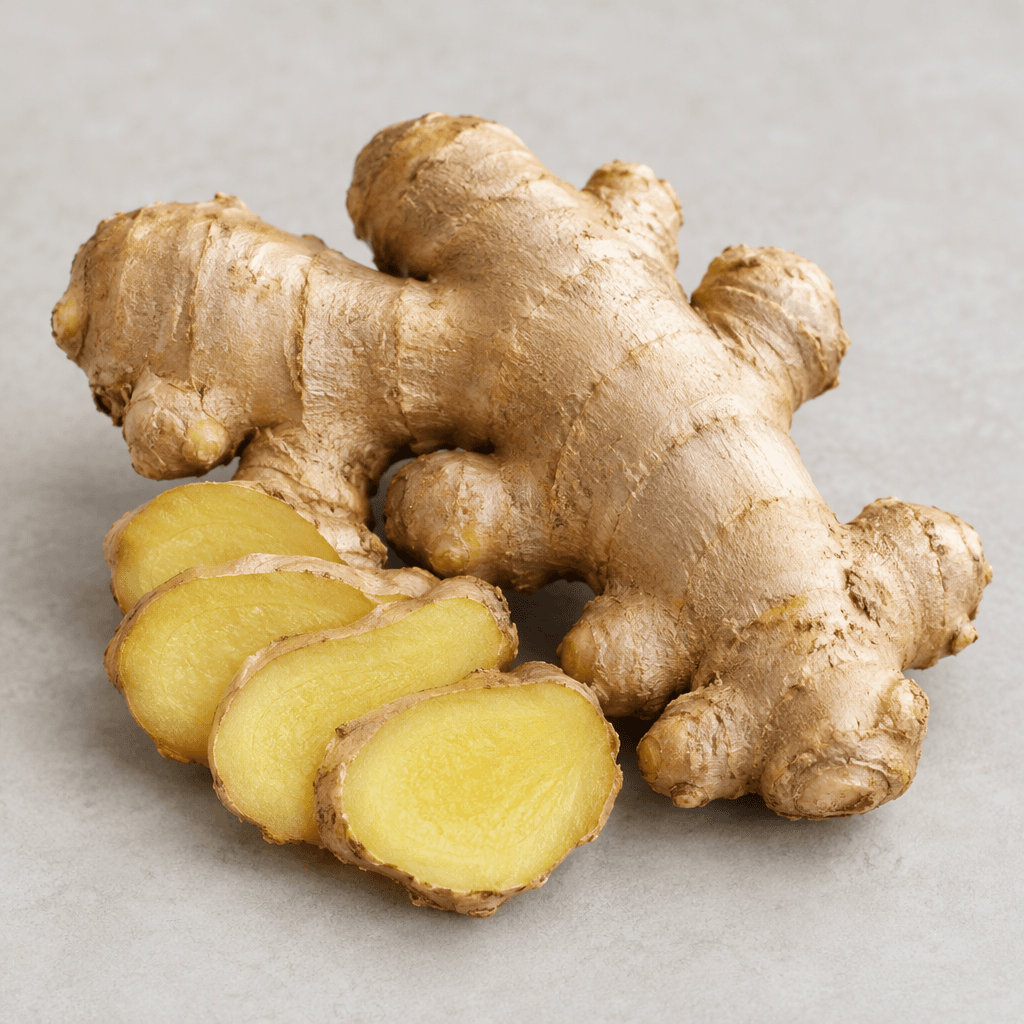
Ginger Calories
Antioxidant, aids digestion, immune booster
In season: Spring · Summer · Autumn · Winter
CALORIES
GI
POTASSIUM
FIBER
Quick answer
1 piece (small) of Ginger (15 g) has 12 calories. That works out to 80 calories per 100 g. It contains 2.7 g of carbs, 0.3 g of protein, 0.1 g of fat and 0.3 g of fiber. Its glycemic index is 15 (low), so it raises blood sugar slowly.
What is Ginger?
Ginger is the fragrant underground rhizome of a tropical flowering plant, used fresh, dried or ground as a spice. The fresh root has thin tan skin and pale yellow flesh. Its flavour is peppery, warm and slightly citrusy; fresh ginger is juicy and fibrous, while cooking softens its bite.
It is used widely in Asian cooking, from stir-fries and soups to marinades, and is also steeped in tea or added to baked goods and drinks. In many English-speaking kitchens, grated fresh ginger adds brightness to sauces, while ground ginger is common in biscuits and cakes. A little goes a long way, so ginger contributes more aroma and a small amount of fibre than substantial protein or energy to a meal. Pair it with garlic and soy in savoury dishes, or lemon and honey in a warming drink; start with a small amount if you prefer a milder flavour.
Ginger Nutrition Facts
Selected: 100 g
80
KCAL / 100G
Carbs
17.8g
· 6% DV
Protein
1.8g
· 4% DV
Fat
0.8g
· 1% DV
Fiber
2g
· 7% DV
DV is the share of the daily value covered, on a 2,000 kcal reference diet.
Calories come from: Carbs 83% · Protein 8% · Fat 9%
Ginger Vitamins & Minerals
Vitamins
B6
0.16mg · 9% DV
Vitamin C
5mg · 6% DV
B3
0.75mg · 5% DV
B5
0.2mg · 4% DV
Minerals
Potassium ⭐
415mg · 12% DV
Magnesium
43mg · 10% DV
Iron
1mg · 6% DV
Phosphorus
34mg · 5% DV
How Nutritious Is Ginger?
Nutrient density
High
How many vitamins, minerals and how much fiber this food carries per calorie. A high score means a lot of nutrition for few calories.
Satiety score
Medium
An EatBetter score computed from fiber, protein and calorie density. A high score means staying full longer on the same calories.
Both scores are calculated per 100 g and do not change with the selected portion. The satiety score is EatBetter's own calculation, not a clinical measure.
Ginger Glycemic Index
GLYCEMIC INDEX
GLYCEMIC LOAD
Accounts for portion size — a more realistic measure than GI alone.
How to Burn Off Ginger
To burn the 80 calories in 100 g:
🚶
Walking (5 km/h)
🏃
Running (8 km/h)
🚴
Cycling
🏊
Swimming
Times are calculated with the MET equation for a 70 kg adult. Actual burn varies with your weight, age and pace.
Is Ginger Processed?
NOVA 1
Unprocessed
1. Unprocessed
2. Minimally Processed
3. Processed
4. Ultra-Processed
NOVA classifies foods into 4 groups by industrial processing. NOVA 1 (unprocessed) is the healthiest.
Does Ginger Contain Allergens?
No known major allergens
Which Diets Is Ginger Good For?
Vegan
✓ Suitable
Vegetarian
✓ Suitable
Gluten-Free
✓ Suitable
Dairy-Free
— Not suitable
Mediterranean
✓ Suitable
Paleo
✓ Suitable
Whole30
— Not suitable
DASH
— Not suitable
Keto
✓ Suitable
Low FODMAP
— Not suitable
Ginger Fat Profile
SATURATED
0.2g
MONOUNSATURATED
0.2g
POLYUNSATURATED
0.2g
Omega 6:3 ratio 3.5:1
Below the ideal 4:1 — a good omega balance.
Compare Ginger
Foods Similar to Ginger
Frequently Asked Questions About Ginger
What is ginger used for?
Ginger is used to add a warm, pungent flavor to dishes, drinks, marinades, and baked goods. Fresh ginger tastes brighter and juicier, while dried ground ginger is more concentrated and works especially well in spice mixes and baking.
Can you freeze fresh ginger?
Yes, fresh ginger freezes well. Freeze the whole root or cut it into smaller pieces, then grate or slice it straight from frozen; this also makes the skin easier to manage. Keep it sealed to protect its aroma.
How do you make ginger tea?
To make ginger tea, slice or grate fresh ginger, cover it with hot water, and let it steep before straining. Add lemon or honey if you like. The longer it steeps, the stronger and more pungent the drink becomes.
Can you eat ginger skin?
Yes, ginger skin is edible when the root is clean and in good condition. Scrub it under running water and leave it on for grating or slicing; peel it if the skin is tough or the recipe calls for a smoother texture.
Does ginger help with nausea?
Ginger may ease some kinds of nausea, and research supports its use particularly for pregnancy-related nausea. It is not a substitute for medical care when symptoms are severe or persistent, and concentrated supplements may not suit everyone.
What is the difference between ginger and turmeric?
Ginger and turmeric are different rhizomes, although both are used as spices. Ginger has a sharp, warming taste and is common in teas and stir-fries; turmeric is more earthy and is often used for its golden color in curries.
Does ginger cause heartburn?
It can. Ginger may trigger heartburn or stomach discomfort in some people, especially when eaten in large amounts or taken as a concentrated supplement. If it consistently bothers you, use less or avoid it rather than taking it on an empty stomach.
How do you use fresh ginger in cooking?
Fresh ginger can be grated, minced, or sliced into soups, stir-fries, sauces, marinades, and drinks. Add it early for a mellower flavor or near the end for a brighter, sharper ginger taste.
Does ginger tea cure a cold or sore throat?
No, ginger tea does not cure a cold or treat the virus causing it. A warm drink may temporarily soothe an irritated throat and help you stay hydrated, but ginger has not been shown to reliably shorten a cold.
Can ginger interact with blood thinners?
Possibly, particularly when ginger is taken in large amounts or as a concentrated supplement; ordinary culinary use is different. If you take blood-thinning medication, ask your doctor or pharmacist before adding ginger supplements to your routine.
Have another question about Ginger?
Ask the AI nutrition coach — calories, portions, alternatives and more, answered in seconds in the app.

Scan calories with your camera
Instant AI nutrition analysis

Nutrition data compiled from USDA FoodData Central and scientific sources.