

Ready & Packaged Foods
All →Vegetables & Legumes
All →Desserts & Confectionery
All →Meat & Protein
All →Grains & Bakery
All →Beverages
All →Milk & Dairy
All →

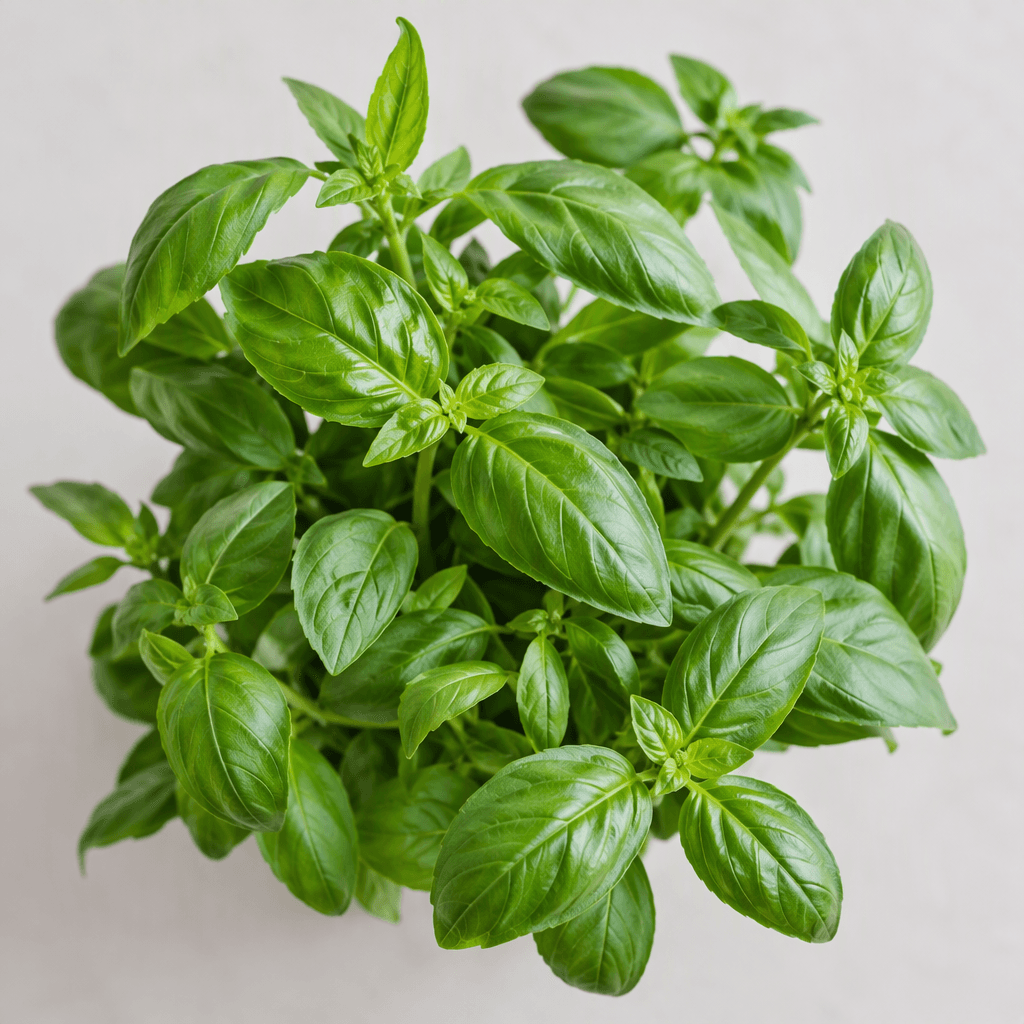
Fresh basil Calories
Antioxidant, rich in vitamin K and A, fresh aroma
In season: Spring · Summer · Autumn
CALORIES
GI
POTASSIUM
FIBER
Quick answer
1 tablespoon (chopped) of Fresh basil (3 g) has 1 calories. That works out to 23 calories per 100 g. It contains 0.1 g of carbs, 0.1 g of protein, 0 g of fat and 0 g of fiber. Its 10.4 µg of Vitamin K covers 9% of the Daily Value. Its glycemic index is 5 (low), so it raises blood sugar slowly.
What is Fresh basil?
Fresh basil is an aromatic herb whose tender leaves are used fresh or added near the end of cooking. Though strongly associated with Mediterranean food, basil has roots in Asia and is now grown and enjoyed around the world. Its soft leaves have a sweet, peppery fragrance that pairs especially well with tomatoes, olive oil and cheese. Use it in salads, sandwiches, pasta and soups; in Italian cooking, it is the key herb in pesto and often accompanies tomato and mozzarella. Basil is light in nutritional terms, but typical servings are small, so it mainly contributes flavour. Tear or slice the leaves just before serving, or stir them in off the heat to keep their aroma bright.
Fresh basil Nutrition Facts
Selected: 100 g
23
KCAL / 100G
Carbs
2.7g
· 1% DV
Protein
3.2g
· 6% DV
Fat
0.6g
· 1% DV
Fiber
1.6g
· 6% DV
DV is the share of the daily value covered, on a 2,000 kcal reference diet.
Calories come from: Carbs 37% · Protein 44% · Fat 19%
Fresh basil Vitamins & Minerals
Vitamins
Vitamin K
414µg · 345% DV
Vitamin A
264µg · 29% DV
Vitamin C
18mg · 20% DV
Folate
68µg · 17% DV
Minerals
Manganese
1mg · 43% DV
Calcium
177mg · 18% DV
Iron
3mg · 17% DV
Magnesium
64mg · 15% DV
How Nutritious Is Fresh basil?
Nutrient density
Very high
How many vitamins, minerals and how much fiber this food carries per calorie. A high score means a lot of nutrition for few calories.
Satiety score
Medium
An EatBetter score computed from fiber, protein and calorie density. A high score means staying full longer on the same calories.
Both scores are calculated per 100 g and do not change with the selected portion. The satiety score is EatBetter's own calculation, not a clinical measure.
Fresh basil Glycemic Index
GLYCEMIC INDEX
GLYCEMIC LOAD
Accounts for portion size — a more realistic measure than GI alone.
How to Burn Off Fresh basil
To burn the 23 calories in 100 g:
🚶
Walking (5 km/h)
🏃
Running (8 km/h)
🚴
Cycling
🏊
Swimming
Times are calculated with the MET equation for a 70 kg adult. Actual burn varies with your weight, age and pace.
Is Fresh basil Processed?
NOVA 1
Unprocessed
1. Unprocessed
2. Minimally Processed
3. Processed
4. Ultra-Processed
NOVA classifies foods into 4 groups by industrial processing. NOVA 1 (unprocessed) is the healthiest.
Does Fresh basil Contain Allergens?
No known major allergens
Which Diets Is Fresh basil Good For?
Vegan
✓ Suitable
Vegetarian
✓ Suitable
Gluten-Free
✓ Suitable
Dairy-Free
— Not suitable
Mediterranean
✓ Suitable
Paleo
✓ Suitable
Whole30
— Not suitable
DASH
— Not suitable
Keto
✓ Suitable
Low FODMAP
— Not suitable
Fresh basil Fat Profile
SATURATED
0.04g
MONOUNSATURATED
0.01g
POLYUNSATURATED
0.05g
Omega 6:3 ratio 0.7:1
Below the ideal 4:1 — a good omega balance.
Compare Fresh basil
Foods Similar to Fresh basil
Frequently Asked Questions About Fresh basil
How should you store fresh basil?
Store fresh basil like a bouquet: stand the stems in a glass of water at room temperature and keep the leaves out of direct sun. Basil is sensitive to cold, so refrigeration can make the leaves dark and limp.
Can you freeze fresh basil?
Yes, you can freeze fresh basil, but thawed leaves become soft and are best used in cooked dishes or sauces. Chop the leaves and freeze them with a little olive oil in an ice-cube tray for convenient portions.
What is fresh basil used for?
Fresh basil is used in pesto, salads, tomato dishes, pasta, and sandwiches. Its fragrant leaves are often added near the end of cooking or scattered over a dish just before serving so their aroma stays noticeable.
Should you wash fresh basil before using it?
Yes, rinse fresh basil gently under cool running water before eating it. Avoid rubbing or crushing the leaves, then pat them completely dry; excess water can dilute a dressing and make the delicate leaves spoil faster.
Can you eat fresh basil raw?
Yes, fresh basil is commonly eaten raw in salads, sandwiches, and tomato dishes. Rinse and dry the leaves first, then tear or slice them shortly before serving to preserve their aroma and limit browning.
What is the difference between fresh basil and dried basil?
Fresh basil has a bright, leafy aroma and adds freshness to salads and finished dishes, while dried basil tastes more concentrated and suits longer cooking. They are not always interchangeable in equal amounts, so adjust the amount to taste.
Can you eat the stems of fresh basil?
Yes, the tender upper stems of fresh basil are edible and can be chopped into pesto, sauces, or cooked dishes. Remove thick, woody lower stems, which are tougher and less pleasant to eat than the leaves.
Can you make pesto with fresh basil?
Yes, fresh basil is the main herb in classic pesto. Blend or pound the leaves with olive oil, garlic, hard cheese, and pine nuts; use the sauce soon after making it, since cut basil can darken in contact with air.
When should you add fresh basil to a hot dish?
Add fresh basil near the end of cooking or after taking the dish off the heat. Prolonged high heat dulls its delicate aroma, so whole or torn leaves work especially well as a final topping.
Can fresh basil grow indoors?
Yes, fresh basil can grow indoors in a warm, bright spot, ideally near a sunny window. Use a pot with drainage, water when the soil begins to dry, and pinch the growing tips to encourage a fuller plant.
Have another question about Fresh basil?
Ask the AI nutrition coach — calories, portions, alternatives and more, answered in seconds in the app.

Scan calories with your camera
Instant AI nutrition analysis

Nutrition data compiled from USDA FoodData Central and scientific sources.