

Ready & Packaged Foods
All →Vegetables & Legumes
All →Desserts & Confectionery
All →Meat & Protein
All →Grains & Bakery
All →Beverages
All →Milk & Dairy
All →

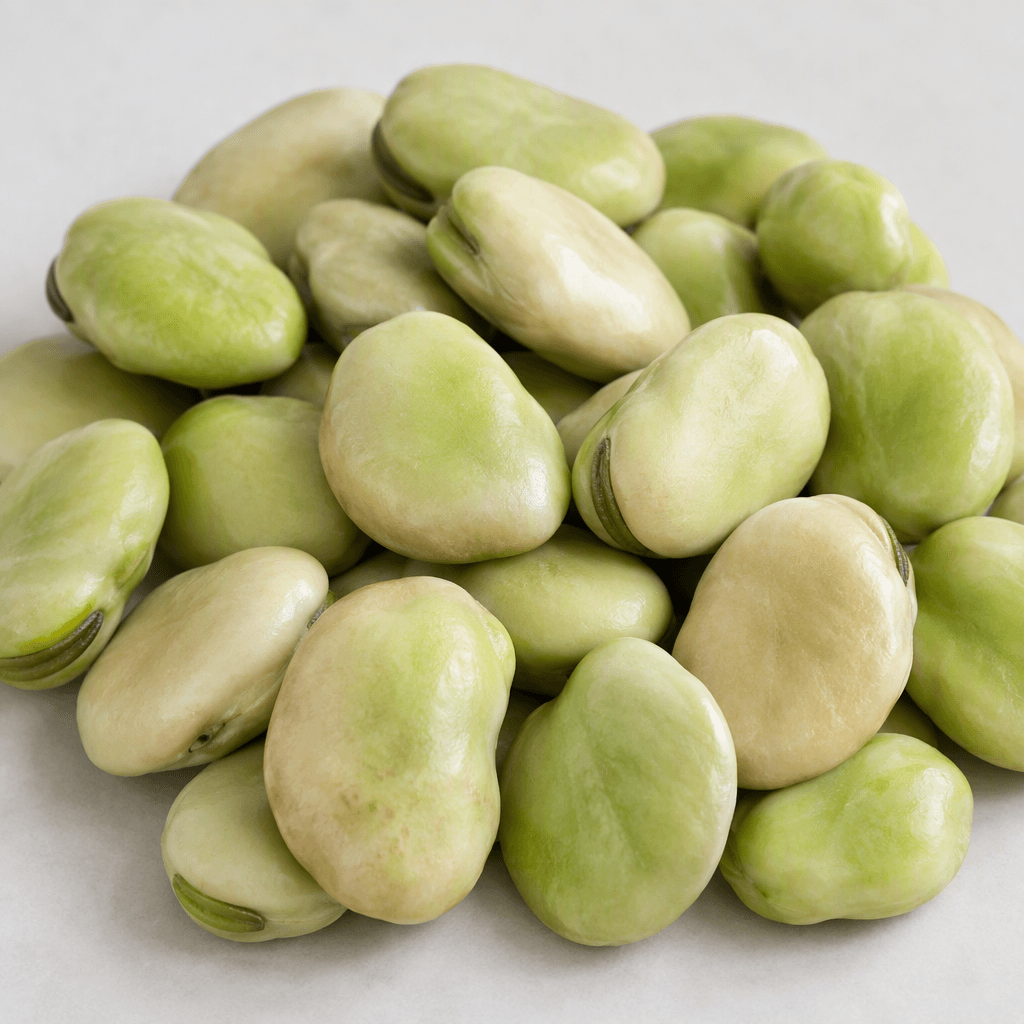
Fava Calories
Rich in protein and fiber, source of iron and folate
In season: Spring · Summer
CALORIES
GI
POTASSIUM
FIBER
Quick answer
100 g of Fava has 88 calories. It contains 18.1 g of carbs, 7.6 g of protein, 0.5 g of fat and 7.5 g of fiber. Its 180 µg of Folate covers 45% of the Daily Value. Its glycemic index is 40 (low), so it raises blood sugar slowly.
What is Fava?
Fava is a Turkish-style broad-bean purée, usually made by simmering dried split fava beans with onion and olive oil, then mashing them until smooth. It belongs to the wider eastern Mediterranean tradition of bean dishes, though ingredients and seasoning vary from kitchen to kitchen.
Served chilled, it has a mild, slightly sweet flavour and a soft, creamy texture. A drizzle of olive oil, dill and lemon are common finishes; it works well as a meze, alongside grilled fish, or spread on bread. As a legume-based dish, it provides plant protein and fibre; the listed serving has 7.5 g of fibre per 100 g. For a lighter version, use a modest amount of oil and serve with fresh vegetables.
Fava Nutrition Facts
Selected: 100 g
88
KCAL / 100G
Carbs
18.1g
· 7% DV
Protein
7.6g
· 15% DV
Fat
0.5g
· 1% DV
Fiber
7.5g
· 27% DV
DV is the share of the daily value covered, on a 2,000 kcal reference diet.
Calories come from: Carbs 67% · Protein 28% · Fat 5%
Fava Vitamins & Minerals
Vitamins
Folate
180µg · 45% DV
B1
0.3mg · 25% DV
B2
0.1mg · 8% DV
Biotin
2µg · 7% DV
Minerals
Phosphorus
120mg · 17% DV
Iron
2mg · 11% DV
Potassium ⭐
332mg · 10% DV
Zinc
1mg · 9% DV
How Nutritious Is Fava?
Nutrient density
Very high
How many vitamins, minerals and how much fiber this food carries per calorie. A high score means a lot of nutrition for few calories.
Satiety score
High
An EatBetter score computed from fiber, protein and calorie density. A high score means staying full longer on the same calories.
Both scores are calculated per 100 g and do not change with the selected portion. The satiety score is EatBetter's own calculation, not a clinical measure.
Fava Glycemic Index
GLYCEMIC INDEX
GLYCEMIC LOAD
Accounts for portion size — a more realistic measure than GI alone.
How to Burn Off Fava
To burn the 88 calories in 100 g:
🚶
Walking (5 km/h)
🏃
Running (8 km/h)
🚴
Cycling
🏊
Swimming
Times are calculated with the MET equation for a 70 kg adult. Actual burn varies with your weight, age and pace.
Is Fava Processed?
NOVA 1
Unprocessed
1. Unprocessed
2. Minimally Processed
3. Processed
4. Ultra-Processed
NOVA classifies foods into 4 groups by industrial processing. NOVA 1 (unprocessed) is the healthiest.
Does Fava Contain Allergens?
No known major allergens
Which Diets Is Fava Good For?
Vegan
✓ Suitable
Vegetarian
✓ Suitable
Gluten-Free
✓ Suitable
Dairy-Free
— Not suitable
Mediterranean
✓ Suitable
Paleo
✓ Suitable
Whole30
— Not suitable
DASH
— Not suitable
Keto
— Not suitable
Low FODMAP
— Not suitable
Fava Fat Profile
SATURATED
0.1g
MONOUNSATURATED
0.03g
POLYUNSATURATED
0.13g
Omega 6:3 ratio 4.3:1
Above the ideal 4:1 (4.3:1).
Compare Fava
Foods Similar to Fava
Frequently Asked Questions About Fava
How do you cook fava beans?
For dried fava beans, soak them first, then simmer until tender; fresh beans cook much faster. Use cooked fava in soups, salads, and stews, or mash it into a smooth purée.
Do you need to soak fava beans before cooking?
Soak dried fava beans before cooking to shorten their cooking time and help them soften evenly. Fresh fava beans do not need soaking; simply shell and rinse them before cooking.
Are fava beans the same as broad beans?
Yes. Fava beans and broad beans are two common names for the same legume, also known botanically as Vicia faba. The term “fava” is especially common in American English, while “broad bean” is widely used elsewhere.
Can you eat fava beans raw?
Dried fava beans should not be eaten raw; cook them until tender first. Very young fresh fava beans are sometimes eaten raw, but cooking makes them softer and is the better choice for mature beans.
Do you have to peel fava beans?
No, peeling fava beans is optional. The thin skin on fresh beans is edible, though it can feel tough on large, mature beans; removing the skins after cooking gives purées a smoother texture.
What is the difference between fresh and dried fava beans?
Fresh fava beans are tender, immature beans that cook quickly, while dried fava beans are mature beans with their moisture removed. Dried beans need soaking and longer cooking; both can be used in soups, salads, or purées.
How should you store fava beans?
Keep fresh fava beans in their pods in the refrigerator and use them soon for the best texture. Store dried fava beans in an airtight container in a cool, dry, dark place; refrigerate cooked beans.
Can you freeze fava beans?
Yes, fava beans freeze well. Shell fresh beans, briefly blanch them, cool and drain them, then pack them in freezer-safe containers. Cooked fava beans can also be frozen once cooled.
Do fava beans cause gas?
They can. Like other legumes, fava beans contain carbohydrates that may ferment in the gut and cause gas or bloating. Soaking dried beans and starting with a modest portion may help reduce discomfort.
Can people with favism eat fava beans?
No. People with G6PD deficiency, sometimes called favism, should avoid fava beans because they can trigger the breakdown of red blood cells. If you have G6PD deficiency, ask your clinician about avoiding fava-containing foods.
Have another question about Fava?
Ask the AI nutrition coach — calories, portions, alternatives and more, answered in seconds in the app.

Scan calories with your camera
Instant AI nutrition analysis

Nutrition data compiled from USDA FoodData Central and scientific sources.