

Ready & Packaged Foods
All →Vegetables & Legumes
All →Desserts & Confectionery
All →Meat & Protein
All →Grains & Bakery
All →Beverages
All →Milk & Dairy
All →

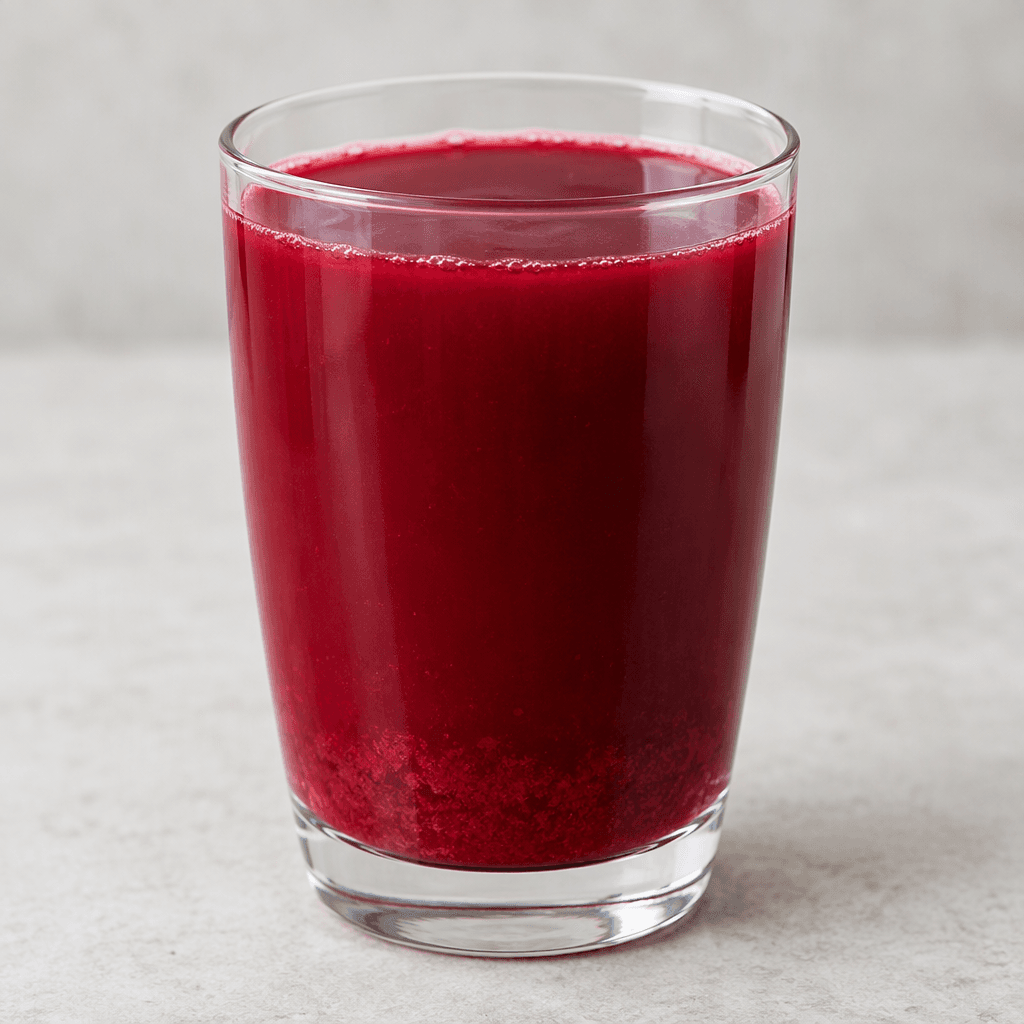
Doğanay Kvass fermented beetroot drink Calories
Fermented beetroot, probiotic, low calorie, antioxidant
In season: Spring · Summer · Autumn · Winter
CALORIES
GI
POTASSIUM
FIBER
Quick answer
1 cup (medium) of Doğanay Kvass fermented beetroot drink (200 g) has 36 calories. That works out to 18 calories per 100 g. It contains 8.4 g of carbs, 0.6 g of protein, 0 g of fat and 1 g of fiber. Its 0.1 mg of Copper covers 7% of the Daily Value. Its glycemic index is 40 (low), so it raises blood sugar slowly.
What is Doğanay Kvass fermented beetroot drink?
Doğanay Kvass fermented beetroot drink is a bottled beverage made by fermenting beetroot. Although the name evokes the Eastern European drink kvass, this version is beet-based rather than the bread-based style familiar in some countries.
It has an earthy beet flavour with a tangy, slightly sharp edge from fermentation, and is usually most refreshing served chilled. In Turkey, you can drink it alongside a meal, particularly with savoury or spicy dishes, or choose it when you want something different from a fizzy soft drink. At 18 calories per 100 g, it is a light option; its modest sweetness and acidity also make it easy to serve in a small glass as a first taste.
Doğanay Kvass fermented beetroot drink Nutrition Facts
Selected: 100 g
18
KCAL / 100G
Carbs
4.2g
· 2% DV
Protein
0.3g
· 1% DV
Fat
0g
· 0% DV
Fiber
0.5g
· 2% DV
DV is the share of the daily value covered, on a 2,000 kcal reference diet.
Calories come from: Carbs 93% · Protein 7% · Fat 0%
Doğanay Kvass fermented beetroot drink Vitamins & Minerals
Vitamins
B6
0.03mg · 2% DV
Folate
6µg · 2% DV
Vitamin C
1.5mg · 2% DV
B1
0.01mg · 1% DV
Minerals
Sodium
40mg · 2% DV
Phosphorus
12mg · 2% DV
Potassium ⭐
60mg · 2% DV
Calcium
8mg · 1% DV
How Nutritious Is Doğanay Kvass fermented beetroot drink?
Nutrient density
Medium
How many vitamins, minerals and how much fiber this food carries per calorie. A high score means a lot of nutrition for few calories.
Satiety score
Medium
An EatBetter score computed from fiber, protein and calorie density. A high score means staying full longer on the same calories.
Both scores are calculated per 100 g and do not change with the selected portion. The satiety score is EatBetter's own calculation, not a clinical measure.
Doğanay Kvass fermented beetroot drink Glycemic Index
GLYCEMIC INDEX
GLYCEMIC LOAD
Accounts for portion size — a more realistic measure than GI alone.
How to Burn Off Doğanay Kvass fermented beetroot drink
To burn the 18 calories in 100 g:
🚶
Walking (5 km/h)
🏃
Running (8 km/h)
🚴
Cycling
🏊
Swimming
Times are calculated with the MET equation for a 70 kg adult. Actual burn varies with your weight, age and pace.
Is Doğanay Kvass fermented beetroot drink Processed?
NOVA 2
Minimally Processed
1. Unprocessed
2. Minimally Processed
3. Processed
4. Ultra-Processed
NOVA classifies foods into 4 groups by industrial processing. NOVA 1 (unprocessed) is the healthiest.
Does Doğanay Kvass fermented beetroot drink Contain Allergens?
No known major allergens
Which Diets Is Doğanay Kvass fermented beetroot drink Good For?
Vegan
✓ Suitable
Vegetarian
✓ Suitable
Gluten-Free
✓ Suitable
Dairy-Free
— Not suitable
Mediterranean
✓ Suitable
Paleo
— Not suitable
Whole30
— Not suitable
DASH
— Not suitable
Keto
— Not suitable
Low FODMAP
— Not suitable
Doğanay Kvass fermented beetroot drink Fat Profile
SATURATED
0g
MONOUNSATURATED
0g
POLYUNSATURATED
0g
Compare Doğanay Kvass fermented beetroot drink
Foods Similar to Doğanay Kvass fermented beetroot drink
Frequently Asked Questions About Doğanay Kvass fermented beetroot drink
What is Doğanay Kvass fermented beetroot drink?
Doğanay Kvass fermented beetroot drink is a beet-based fermented beverage with a tangy, earthy character. It is different from ordinary beet juice because fermentation gives it a sharper, more complex flavour.
Is Doğanay Kvass fermented beetroot drink the same as Russian kvass?
No. Doğanay Kvass fermented beetroot drink is made with beetroot, while traditional Russian kvass is commonly fermented from bread or grains. They share the name “kvass,” but their main ingredients and flavours differ.
What does Doğanay Kvass fermented beetroot drink taste like?
Doğanay Kvass fermented beetroot drink has an earthy beet flavour balanced by a fermented tang. Its acidity may taste sharper than plain beet juice, so try it chilled and in a small pour if you are new to it.
How do you drink Doğanay Kvass fermented beetroot drink?
Drink Doğanay Kvass fermented beetroot drink chilled, either on its own or alongside a meal. Its distinctive sourness is easiest to judge before mixing it into a cocktail or using it as a base for other drinks.
Is Doğanay Kvass fermented beetroot drink really probiotic?
Fermentation does not by itself confirm that Doğanay Kvass fermented beetroot drink contains live probiotic cultures when you drink it. Whether live microbes remain depends on how the product is made and stored, so avoid assuming a specific gut-health effect.
Does Doğanay Kvass fermented beetroot drink contain alcohol?
Fermentation can produce small amounts of alcohol in Doğanay Kvass fermented beetroot drink. The exact amount is product-specific; if you need to avoid alcohol, rely on the alcohol declaration on the package rather than the word “kvass.”
Does Doğanay Kvass fermented beetroot drink need refrigeration after opening?
Yes, refrigerate Doğanay Kvass fermented beetroot drink after opening and keep the container sealed. Follow the package instructions for how soon to finish it, since the safe post-opening period is specific to the product.
What foods go well with Doğanay Kvass fermented beetroot drink?
Doğanay Kvass fermented beetroot drink pairs well with grilled foods, roasted vegetables, and substantial savoury meals. Its tangy beet flavour can cut through rich dishes, though it does not have one universally traditional food pairing.
Can you cook with Doğanay Kvass fermented beetroot drink?
Yes, you can use Doğanay Kvass fermented beetroot drink in cold dressings or as a tangy addition to soups and marinades. Heating it may soften its fresh fermented character, so add it near the end when you want to retain more of that taste.
Is Doğanay Kvass fermented beetroot drink a good alternative to beet juice?
Doğanay Kvass fermented beetroot drink can be an alternative if you want a fermented, tangier beet drink rather than the straightforward sweetness of beet juice. The two are made differently and should not be expected to taste or behave identically.
Have another question about Doğanay Kvass fermented beetroot drink?
Ask the AI nutrition coach — calories, portions, alternatives and more, answered in seconds in the app.

Scan calories with your camera
Instant AI nutrition analysis

Nutrition data compiled from USDA FoodData Central and scientific sources.