

Ready & Packaged Foods
All →Vegetables & Legumes
All →Desserts & Confectionery
All →Meat & Protein
All →Grains & Bakery
All →Beverages
All →Milk & Dairy
All →

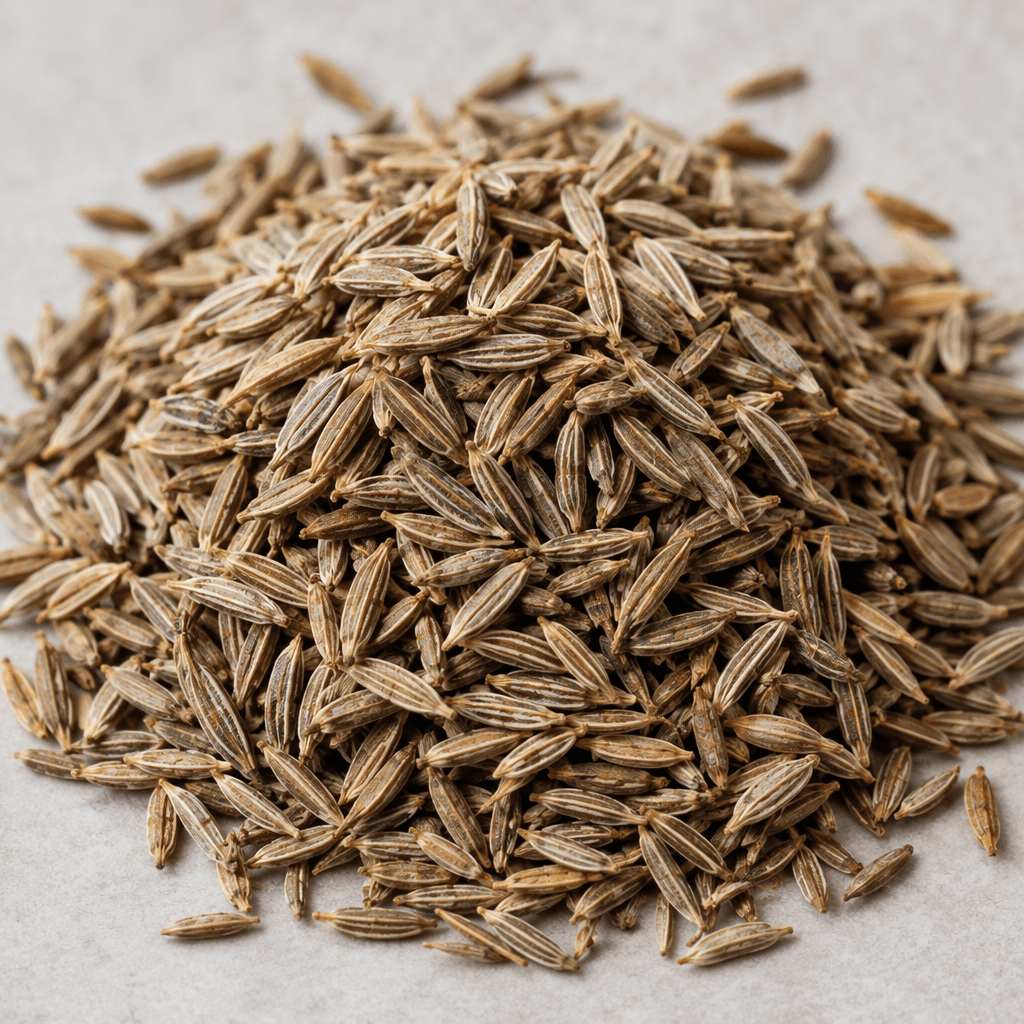
Cumin Calories
Aromatic spice, rich in iron and antioxidants
In season: Spring · Summer · Autumn · Winter
CALORIES
GI
POTASSIUM
FIBER
Quick answer
1 teaspoon (medium) of Cumin (2 g) has 8 calories. That works out to 375 calories per 100 g. It contains 0.9 g of carbs, 0.4 g of protein, 0.4 g of fat and 0.2 g of fiber. Its 1.3 mg of Iron covers 7% of the Daily Value. Its glycemic index is 5 (low), so it raises blood sugar slowly.
What is Cumin?
Cumin is the dried seed of a flowering plant in the parsley family. The slender, ridged seeds are used whole or ground, and the spice is common in South Asian, Middle Eastern, North African and Latin American cooking.
Its warm, earthy aroma is especially familiar in dishes such as curries, chilli, stews, roasted vegetables and bean dishes. In many kitchens, whole seeds are briefly toasted in oil to release their fragrance; ground cumin is often stirred into a seasoning blend or added during cooking. A little goes a long way, so start modestly and adjust to taste.
Cumin is a concentrated seasoning with fibre, iron and antioxidants, rather than something usually eaten in portions large enough to shape a meal’s nutrition. It pairs well with lentils, chickpeas and vegetables, and can bring depth to a lighter dish without relying on extra salt.
Cumin Nutrition Facts
Selected: 100 g
375
KCAL / 100G
Carbs
44.2g
· 16% DV
Protein
17.8g
· 36% DV
Fat
22.3g
· 29% DV
Fiber
10.5g
· 38% DV
DV is the share of the daily value covered, on a 2,000 kcal reference diet.
Calories come from: Carbs 39% · Protein 16% · Fat 45%
Cumin Vitamins & Minerals
Vitamins
Vitamin A
762µg · 85% DV
B1
0.63mg · 53% DV
B3
4.58mg · 29% DV
B6
0.44mg · 26% DV
Minerals
Iron
66mg · 367% DV
Manganese
3mg · 130% DV
Copper
1mg · 111% DV
Calcium
931mg · 93% DV
How Nutritious Is Cumin?
Nutrient density
Very high
How many vitamins, minerals and how much fiber this food carries per calorie. A high score means a lot of nutrition for few calories.
Satiety score
Medium
An EatBetter score computed from fiber, protein and calorie density. A high score means staying full longer on the same calories.
Both scores are calculated per 100 g and do not change with the selected portion. The satiety score is EatBetter's own calculation, not a clinical measure.
Cumin Glycemic Index
GLYCEMIC INDEX
GLYCEMIC LOAD
Accounts for portion size — a more realistic measure than GI alone.
How to Burn Off Cumin
To burn the 375 calories in 100 g:
🚶
Walking (5 km/h)
🏃
Running (8 km/h)
🚴
Cycling
🏊
Swimming
Times are calculated with the MET equation for a 70 kg adult. Actual burn varies with your weight, age and pace.
Is Cumin Processed?
NOVA 2
Minimally Processed
1. Unprocessed
2. Minimally Processed
3. Processed
4. Ultra-Processed
NOVA classifies foods into 4 groups by industrial processing. NOVA 1 (unprocessed) is the healthiest.
Does Cumin Contain Allergens?
No known major allergens
Which Diets Is Cumin Good For?
Vegan
✓ Suitable
Vegetarian
✓ Suitable
Gluten-Free
✓ Suitable
Dairy-Free
— Not suitable
Mediterranean
✓ Suitable
Paleo
✓ Suitable
Whole30
— Not suitable
DASH
— Not suitable
Keto
✓ Suitable
Low FODMAP
— Not suitable
Cumin Fat Profile
SATURATED
1.5g
MONOUNSATURATED
14g
POLYUNSATURATED
3.5g
Omega 6:3 ratio 18.8:1
Above the ideal 4:1 (18.8:1).
Compare Cumin
Foods Similar to Cumin
Frequently Asked Questions About Cumin
What does cumin taste like?
Cumin has a warm, earthy, slightly bitter flavor with a distinctive savory aroma. Toasting the seeds deepens that aroma, which is why even a small amount can stand out in dishes such as chili, curries, and roasted vegetables.
What is cumin used for?
Cumin is used to season curries, chili, beans, soups, and roasted vegetables, as well as meat rubs and spice blends. Whole seeds can flavor hot oil, while ground cumin mixes easily into sauces, marinades, and doughs.
Is cumin the same as coriander?
No, cumin and coriander are different spices from different plants. Cumin tastes warm and earthy, while coriander seed is milder, citrusy, and slightly sweet; they can appear together in recipes but are not interchangeable flavor-wise.
Is cumin the same as caraway?
No, cumin and caraway are separate spices, though their elongated seeds can look similar. Cumin has a warm, earthy flavor, while caraway is sharper and more anise-like, so swapping them noticeably changes a dish.
How do you toast cumin seeds?
Toast cumin seeds in a dry skillet over medium heat, stirring or shaking the pan until fragrant. Take them off the heat promptly so they do not scorch, then use them whole or crush them for a stronger aroma.
Should I use whole cumin seeds or ground cumin?
Use whole cumin seeds when you want bursts of aroma or plan to toast them in oil; use ground cumin when you want the flavor evenly spread through a dish. Ground cumin is convenient, but its aroma fades faster after opening.
What can I use instead of cumin?
Coriander seed can replace cumin when a milder, citrusy flavor will work, but it will not taste the same. For a warmer flavor, a small amount of chili powder or garam masala may suit the dish, though both add other spices too.
Does cumin water help with weight loss?
No, cumin water has not been shown to cause weight loss on its own or to burn body fat. It can be a flavorful drink, but replacing meals with it or relying on it for weight loss is not supported.
Does cumin help with digestion?
Cumin is traditionally used in foods believed to support digestion, but strong evidence that it reliably relieves gas or bloating is limited. Using it as a seasoning is reasonable; persistent digestive symptoms need a closer look at their cause.
How should you store cumin?
Store cumin in a tightly sealed container in a cool, dry, dark place, away from the stove and sunlight. Whole seeds generally keep their aroma longer than ground cumin; grinding seeds just before use gives a fresher flavor.
Have another question about Cumin?
Ask the AI nutrition coach — calories, portions, alternatives and more, answered in seconds in the app.

Scan calories with your camera
Instant AI nutrition analysis

Nutrition data compiled from USDA FoodData Central and scientific sources.