

Ready & Packaged Foods
All →Vegetables & Legumes
All →Desserts & Confectionery
All →Meat & Protein
All →Grains & Bakery
All →Beverages
All →Milk & Dairy
All →

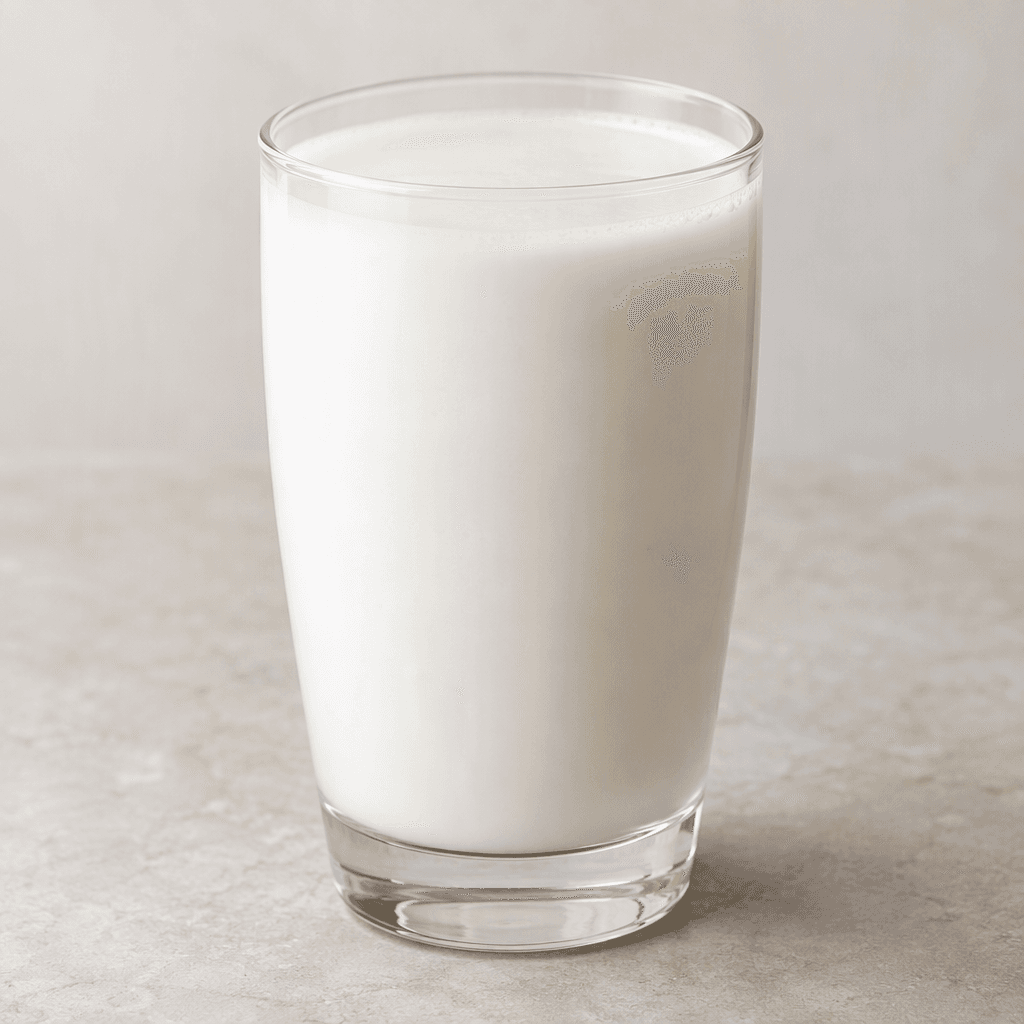
Coconut plant-based drink Calories
Milk alternative, low in protein, coconut-flavored plant-based drink
CALORIES
GI
POTASSIUM
FIBER
Quick answer
1 cup (medium) of Coconut plant-based drink (240 g) has 48 calories. That works out to 20 calories per 100 g. It contains 3.8 g of carbs, 0.5 g of protein, 3.1 g of fat and 0.5 g of fiber. Its 0.3 mg of Manganese covers 13% of the Daily Value. Its glycemic index is 30 (low), so it raises blood sugar slowly.
What is Coconut plant-based drink?
Coconut plant-based drink is a milk alternative made by combining coconut extract or coconut pulp with water. Its coconut aroma is distinctive, while the consistency ranges from light and pourable to creamier depending on the product; packaged versions may also differ in their ingredients.
It is used in smoothies, coffee, porridge and cereal, or simply served chilled. In places where dairy-free drinks are common, it can be poured over breakfast cereal or used in recipes, though its flavour may show through in savoury dishes. It is low in protein, with 0.2 g per 100 g. Choose an unsweetened version if you want to avoid added sweetness, and pair it with fruit or coffee.
Coconut plant-based drink Nutrition Facts
Selected: 100 g
20
KCAL / 100G
Carbs
1.6g
· 1% DV
Protein
0.2g
· 0% DV
Fat
1.3g
· 2% DV
Fiber
0.2g
· 1% DV
DV is the share of the daily value covered, on a 2,000 kcal reference diet.
Calories come from: Carbs 34% · Protein 4% · Fat 62%
Coconut plant-based drink Vitamins & Minerals
Vitamins
B2
0.02mg · 2% DV
B1
0.01mg · 1% DV
B3
0.1mg · 1% DV
B5
0.03mg · 1% DV
Minerals
Calcium
16mg · 2% DV
Magnesium
7mg · 2% DV
Sodium
18mg · 1% DV
Selenium
0.5µg · 1% DV
How Nutritious Is Coconut plant-based drink?
Nutrient density
Low
How many vitamins, minerals and how much fiber this food carries per calorie. A high score means a lot of nutrition for few calories.
Satiety score
Medium
An EatBetter score computed from fiber, protein and calorie density. A high score means staying full longer on the same calories.
Both scores are calculated per 100 g and do not change with the selected portion. The satiety score is EatBetter's own calculation, not a clinical measure.
Coconut plant-based drink Glycemic Index
GLYCEMIC INDEX
GLYCEMIC LOAD
Accounts for portion size — a more realistic measure than GI alone.
How to Burn Off Coconut plant-based drink
To burn the 20 calories in 100 g:
🚶
Walking (5 km/h)
🏃
Running (8 km/h)
🚴
Cycling
🏊
Swimming
Times are calculated with the MET equation for a 70 kg adult. Actual burn varies with your weight, age and pace.
Is Coconut plant-based drink Processed?
NOVA 3
Processed
1. Unprocessed
2. Minimally Processed
3. Processed
4. Ultra-Processed
NOVA classifies foods into 4 groups by industrial processing. NOVA 1 (unprocessed) is the healthiest.
Does Coconut plant-based drink Contain Allergens?
No known major allergens
Which Diets Is Coconut plant-based drink Good For?
Vegan
✓ Suitable
Vegetarian
✓ Suitable
Gluten-Free
✓ Suitable
Dairy-Free
— Not suitable
Mediterranean
✓ Suitable
Paleo
— Not suitable
Whole30
— Not suitable
DASH
— Not suitable
Keto
— Not suitable
Low FODMAP
— Not suitable
Coconut plant-based drink Fat Profile
SATURATED
1g
MONOUNSATURATED
0.12g
POLYUNSATURATED
0.06g
Omega 6:3 ratio 5:1
Above the ideal 4:1 (5:1).
Compare Coconut plant-based drink
Foods Similar to Coconut plant-based drink
Frequently Asked Questions About Coconut plant-based drink
Is coconut plant-based drink the same as coconut milk?
No. Coconut plant-based drink is usually a lighter, ready-to-drink product, while canned coconut milk is thicker and richer, and is commonly used in cooking. They do not always work as direct substitutes in recipes.
Can you use coconut plant-based drink in coffee?
Yes. It adds a mild coconut flavor and can replace dairy milk in coffee. For a creamier result, choose a version made for coffee; regular varieties may not froth as well.
Why does coconut plant-based drink curdle in coffee?
Coconut plant-based drink can separate when it meets very hot or acidic coffee, especially if the temperature difference is large. Warm it gently and pour it in slowly to reduce the chance of curdling.
Does coconut plant-based drink froth for lattes?
Some varieties do, but the foam may be less stable than dairy-milk foam. A barista-style coconut plant-based drink is designed to froth more reliably; avoid overheating it, which can affect the texture.
Can coconut plant-based drink be used in curry?
Yes, but it gives curry a lighter, less creamy result than canned coconut milk. Add it toward the end of cooking and avoid boiling it hard, as high heat can make the texture less smooth.
Can coconut plant-based drink replace milk in baking?
Yes, in many cakes, muffins, and pancakes, coconut plant-based drink can replace dairy milk in a similar amount. Its coconut flavor may come through, so it is less suitable when you want a neutral taste.
How should you store coconut plant-based drink after opening?
Keep it sealed in the refrigerator and follow the package instructions for how soon to use it. Do not leave an opened carton out for extended periods, and discard it if its smell, appearance, or texture changes.
Can you freeze coconut plant-based drink?
Yes, but it may separate or become grainy after thawing. Freeze it in a sealed container, then shake or blend it well once thawed. The changed texture may be noticeable in coffee or other drinks.
Is coconut plant-based drink sweetened?
Some versions contain added sugar and others do not. Coconut flavor alone does not tell you whether a product is sweetened, so compare the ingredient list and choose a version that suits your recipe or drink.
Does coconut plant-based drink provide enough protein to replace cow's milk?
No. Coconut plant-based drink is low in protein, so it does not provide the same protein contribution as cow's milk. If you use it as a regular milk substitute, include other protein-rich foods in your meals.
Have another question about Coconut plant-based drink?
Ask the AI nutrition coach — calories, portions, alternatives and more, answered in seconds in the app.

Scan calories with your camera
Instant AI nutrition analysis

Nutrition data compiled from USDA FoodData Central and scientific sources.