

Ready & Packaged Foods
All →Vegetables & Legumes
All →Desserts & Confectionery
All →Meat & Protein
All →Grains & Bakery
All →Beverages
All →Milk & Dairy
All →

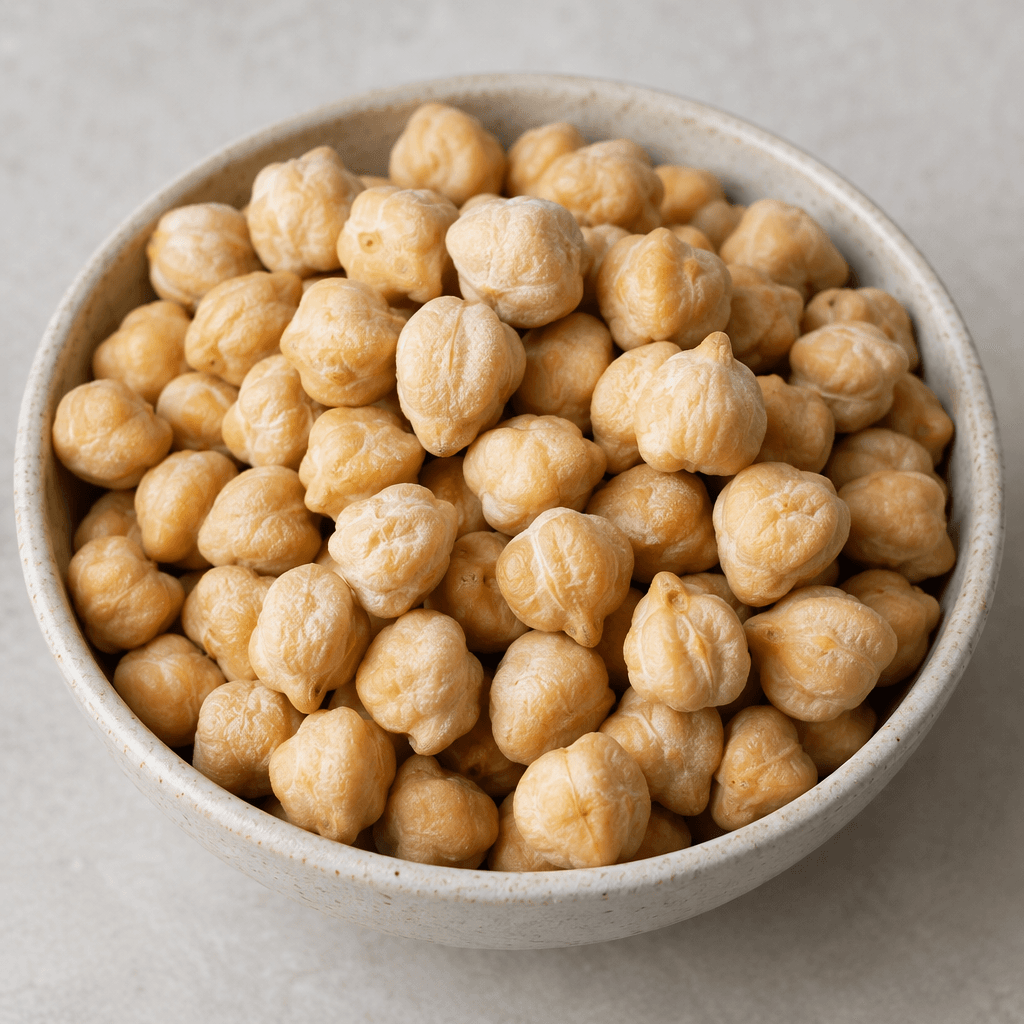
Chickpeas Calories
Plant protein, fiber, iron and folate source
In season: Autumn · Winter · Spring
CALORIES
GI
POTASSIUM
FIBER
Quick answer
1 cup (medium) of Chickpeas (165 g) has 271 calories. That works out to 164 calories per 100 g. It contains 45.2 g of carbs, 14.7 g of protein, 4.3 g of fat and 12.5 g of fiber. Its 31.4 µg of Biotin covers 105% of the Daily Value. Its glycemic index is 28 (low), so it raises blood sugar slowly.
What is Chickpeas?
Chickpeas are round, beige legumes with a mild, nutty flavour and a creamy centre beneath their firm skin. They have long been grown across the Middle East and Mediterranean and are now used in kitchens around the world. Dried chickpeas are usually soaked and simmered until tender; canned ones are ready to use after draining and rinsing.
They appear in hummus and falafel, South Asian chana curries, soups, salads and roasted snacks, making them easy to work into many kinds of meals. Their fibre and plant protein make them a filling pantry staple. Pair them with lemon, herbs or vegetables, or use them in place of some meat in a stew for a lighter meal.
Chickpeas Nutrition Facts
Selected: 100 g
164
KCAL / 100G
Carbs
27.4g
· 10% DV
Protein
8.9g
· 18% DV
Fat
2.6g
· 3% DV
Fiber
7.6g
· 27% DV
DV is the share of the daily value covered, on a 2,000 kcal reference diet.
Calories come from: Carbs 65% · Protein 21% · Fat 14%
Chickpeas Vitamins & Minerals
Vitamins
Biotin
19µg · 63% DV
Folate
172µg · 43% DV
B1
0.12mg · 10% DV
B6
0.14mg · 8% DV
Minerals
Manganese
1mg · 43% DV
Phosphorus
168mg · 24% DV
Zinc
2mg · 18% DV
Iron
3mg · 17% DV
How Nutritious Is Chickpeas?
Nutrient density
Very high
How many vitamins, minerals and how much fiber this food carries per calorie. A high score means a lot of nutrition for few calories.
Satiety score
High
An EatBetter score computed from fiber, protein and calorie density. A high score means staying full longer on the same calories.
Both scores are calculated per 100 g and do not change with the selected portion. The satiety score is EatBetter's own calculation, not a clinical measure.
Chickpeas Glycemic Index
GLYCEMIC INDEX
GLYCEMIC LOAD
Accounts for portion size — a more realistic measure than GI alone.
How to Burn Off Chickpeas
To burn the 164 calories in 100 g:
🚶
Walking (5 km/h)
🏃
Running (8 km/h)
🚴
Cycling
🏊
Swimming
Times are calculated with the MET equation for a 70 kg adult. Actual burn varies with your weight, age and pace.
Is Chickpeas Processed?
NOVA 1
Unprocessed
1. Unprocessed
2. Minimally Processed
3. Processed
4. Ultra-Processed
NOVA classifies foods into 4 groups by industrial processing. NOVA 1 (unprocessed) is the healthiest.
Does Chickpeas Contain Allergens?
No known major allergens
Which Diets Is Chickpeas Good For?
Vegan
✓ Suitable
Vegetarian
✓ Suitable
Gluten-Free
✓ Suitable
Dairy-Free
— Not suitable
Mediterranean
✓ Suitable
Paleo
✓ Suitable
Whole30
— Not suitable
DASH
— Not suitable
Keto
— Not suitable
Low FODMAP
— Not suitable
Chickpeas Fat Profile
SATURATED
0.27g
MONOUNSATURATED
0.58g
POLYUNSATURATED
0.61g
Omega 6:3 ratio 19:1
Above the ideal 4:1 (19:1).
Compare Chickpeas
Foods Similar to Chickpeas
Frequently Asked Questions About Chickpeas
Are chickpeas and garbanzo beans the same thing?
Yes, chickpeas and garbanzo beans are two names for the same legume. “Chickpea” is more common in British English, while “garbanzo bean” is widely used in the United States; recipes using either name generally mean the same ingredient.
How do you cook dried chickpeas?
Rinse and sort the dried chickpeas, soak them to help them cook evenly, then drain and simmer in fresh water until tender. They are ready when a chickpea mashes easily between your fingers; add salt and acidic ingredients near the end of cooking.
Do chickpeas need to be soaked before cooking?
No, soaking chickpeas is not essential, but it helps them cook more evenly and usually shortens the cooking time. If you skip soaking, simmer the dried chickpeas until fully tender and add hot water if the pot begins to dry out.
Should you rinse canned chickpeas?
Yes, rinsing canned chickpeas under running water removes the packing liquid and some of its salt. Drain them first, then rinse until the liquid no longer feels slippery; they are then ready to add to salads, soups, or other dishes.
Can you eat chickpeas raw?
No, dried chickpeas should not be eaten raw; they need to be cooked until tender. Canned chickpeas have already been cooked and can be eaten straight from the can after draining, or rinsing if you prefer.
Why do chickpeas cause gas?
Chickpeas can cause gas because they contain carbohydrates that gut bacteria ferment. Soaking dried chickpeas and discarding the soaking water, rinsing canned chickpeas, and increasing portions gradually may help reduce bloating for some people.
Can you freeze cooked chickpeas?
Yes, cooked chickpeas freeze well. Let them cool, drain them, and pack them in airtight containers or freezer bags in portions that suit your recipes. Thaw them before adding to salads, or stir them into soups and stews while still frozen.
What are chickpeas used for in hummus?
Chickpeas are the main ingredient in traditional hummus, blended with tahini, lemon juice, garlic, and usually olive oil. For a smoother texture, blend the chickpeas thoroughly with the other ingredients and add a little water as needed.
Are chickpeas good for people with diabetes?
Chickpeas contain fiber and protein, which can help slow digestion, but they still provide carbohydrates that affect blood glucose. If you have diabetes, consider the serving alongside the rest of your meal and follow your clinician’s individualized guidance.
Do chickpeas help with weight loss?
Chickpeas may help a meal feel more filling because they provide fiber and protein. They do not cause weight loss on their own, but using them in place of a less filling ingredient in salads, soups, or bowls can make a satisfying meal.
Have another question about Chickpeas?
Ask the AI nutrition coach — calories, portions, alternatives and more, answered in seconds in the app.

Scan calories with your camera
Instant AI nutrition analysis

Nutrition data compiled from USDA FoodData Central and scientific sources.