

Ready & Packaged Foods
All →Vegetables & Legumes
All →Desserts & Confectionery
All →Meat & Protein
All →Grains & Bakery
All →Beverages
All →Milk & Dairy
All →

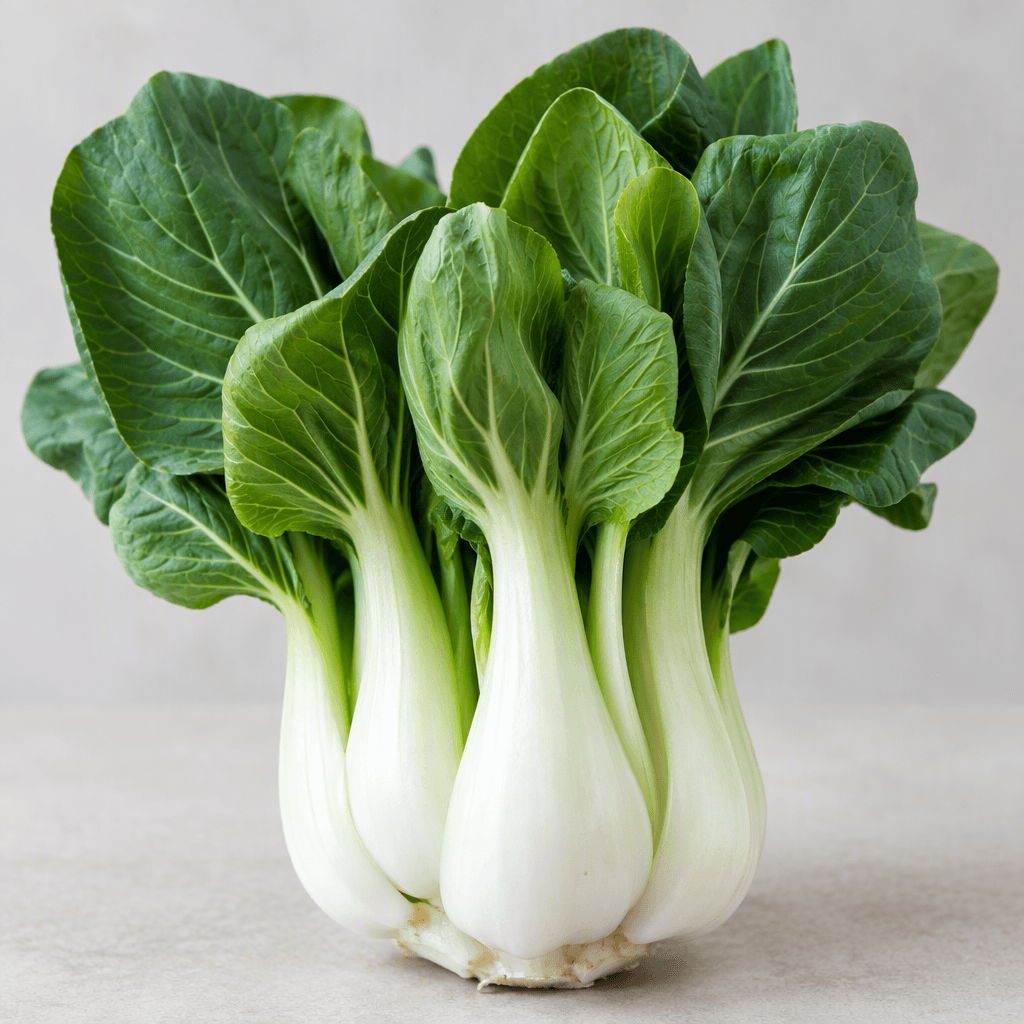
Bok Choy Calories
Low calorie, high vitamin C, fiber source
In season: Spring · Autumn · Winter
CALORIES
GI
POTASSIUM
FIBER
Quick answer
1 cup (chopped) of Bok Choy (70 g) has 9 calories. That works out to 13 calories per 100 g. It contains 1.5 g of carbs, 1 g of protein, 0.1 g of fat and 0.7 g of fiber. Its 31.5 mg of Vitamin C covers 35% of the Daily Value. Its glycemic index is 15 (low), so it raises blood sugar slowly.
What is Bok Choy?
Bok choy is a type of Chinese cabbage, with crisp, pale stalks and tender dark green leaves. It is widely used in Chinese cooking and other East Asian cuisines, often quickly stir-fried, added to soups, or cooked with noodles. The stalks stay pleasantly crunchy while the leaves soften quickly, and its mild flavour takes well to garlic, ginger and savoury sauces.
Serve it alongside rice, fish, tofu or meat, or add it to a simple broth. Bok choy is low in calories and provides fibre and vitamin C. Cook it briefly so the stems retain some crunch; using both leaves and stalks makes an easy, light addition to a meal.
Bok Choy Nutrition Facts
Selected: 100 g
13
KCAL / 100G
Carbs
2.2g
· 1% DV
Protein
1.5g
· 3% DV
Fat
0.2g
· 0% DV
Fiber
1g
· 4% DV
DV is the share of the daily value covered, on a 2,000 kcal reference diet.
Calories come from: Carbs 53% · Protein 36% · Fat 11%

Log this food in EatBetter
100,000+ people use it
- Get your daily calorie target
- Snap your meal, log it in seconds
- See every vitamin and mineral

📸 Scan the code to get the app free.

Bok Choy Vitamins & Minerals
Vitamins
Vitamin C
45mg · 50% DV
Vitamin K
45.5µg · 38% DV
Vitamin A
223µg · 25% DV
Folate
66µg · 17% DV
Minerals
Calcium
105mg · 11% DV
Potassium ⭐
252mg · 7% DV
Phosphorus
37mg · 5% DV
Manganese
0mg · 0% DV
How Nutritious Is Bok Choy?
Nutrient density
Very high
How many vitamins, minerals and how much fiber this food carries per calorie. A high score means a lot of nutrition for few calories.
Satiety score
Medium
An EatBetter score computed from fiber, protein and calorie density. A high score means staying full longer on the same calories.
Both scores are calculated per 100 g and do not change with the selected portion. The satiety score is EatBetter's own calculation, not a clinical measure.
Bok Choy Glycemic Index
GLYCEMIC INDEX
GLYCEMIC LOAD
Accounts for portion size — a more realistic measure than GI alone.
How to Burn Off Bok Choy
To burn the 13 calories in 100 g:
🚶
Walking (5 km/h)
🏃
Running (8 km/h)
🚴
Cycling
🏊
Swimming
Times are calculated with the MET equation for a 70 kg adult. Actual burn varies with your weight, age and pace.
Is Bok Choy Processed?
NOVA 1
Unprocessed
1. Unprocessed
2. Minimally Processed
3. Processed
4. Ultra-Processed
NOVA classifies foods into 4 groups by industrial processing. NOVA 1 (unprocessed) is the healthiest.
Does Bok Choy Contain Allergens?
No known major allergens
Which Diets Is Bok Choy Good For?
Vegan
✓ Suitable
Vegetarian
✓ Suitable
Gluten-Free
✓ Suitable
Dairy-Free
— Not suitable
Mediterranean
✓ Suitable
Paleo
✓ Suitable
Whole30
— Not suitable
DASH
— Not suitable
Keto
✓ Suitable
Low FODMAP
— Not suitable
Bok Choy Fat Profile
SATURATED
0.03g
MONOUNSATURATED
0.01g
POLYUNSATURATED
0.03g
Omega 6:3 ratio 0.7:1
Below the ideal 4:1 — a good omega balance.
Compare Bok Choy
Foods Similar to Bok Choy
Frequently Asked Questions About Bok Choy
How do you cook bok choy?
Bok choy cooks quickly in a hot pan or steamer. Add the sliced white stems first, then the leaves near the end so the stems soften while the greens stay tender.
Can you eat bok choy raw?
Yes, bok choy can be eaten raw. Wash it well, slice it thinly, and add it to salads or slaws; the stalks are crisp, while the leaves are more delicate.
What does bok choy taste like?
Bok choy has a mild, fresh flavor with a slight mustard-like note. Its white stalks are juicy and crunchy, while the dark leaves become tender and mellow when cooked.
How do you clean bok choy?
Separate the bok choy leaves and stalks, then rinse them under cool running water. Grit often collects where the stalks meet at the base, so rinse that area carefully before cooking.
How should you store bok choy?
Keep unwashed bok choy in the refrigerator, loosely wrapped in a paper towel and stored in a perforated bag. Washing it just before use helps prevent excess moisture from making the leaves spoil.
Can you freeze bok choy?
Yes, bok choy can be frozen, although it will be softer after thawing. Wash and chop it, blanch it briefly, cool it in cold water, drain thoroughly, and freeze it in an airtight container.
Which parts of bok choy can you eat?
You can eat both the leafy greens and the white stalks of bok choy. The stalks are firmer, so slice them thinly or cook them before adding the leaves.
Is bok choy the same as Chinese cabbage?
Bok choy is a type of Chinese cabbage, but it is not the same as napa cabbage, which is often sold as Chinese cabbage. Bok choy has separate white stalks and dark leaves rather than a tightly formed head.
What can you use instead of bok choy?
Napa cabbage is a useful substitute for bok choy in soups and stir-fries, though it lacks bok choy’s crisp white stalks. For a closer texture, combine napa cabbage with a few sliced celery stalks.
How do you choose fresh bok choy?
Choose bok choy with firm, crisp white stalks and fresh-looking green leaves. Avoid bunches with yellowing or wilted leaves, slimy patches, or soft, damaged stalks.
Have another question about Bok Choy?
Ask the AI nutrition coach — calories, portions, alternatives and more, answered in seconds in the app.

Scan calories with your camera
Instant AI nutrition analysis

Nutrition data compiled from USDA FoodData Central and scientific sources.