

Ready & Packaged Foods
All →Vegetables & Legumes
All →Desserts & Confectionery
All →Meat & Protein
All →Grains & Bakery
All →Beverages
All →Milk & Dairy
All →

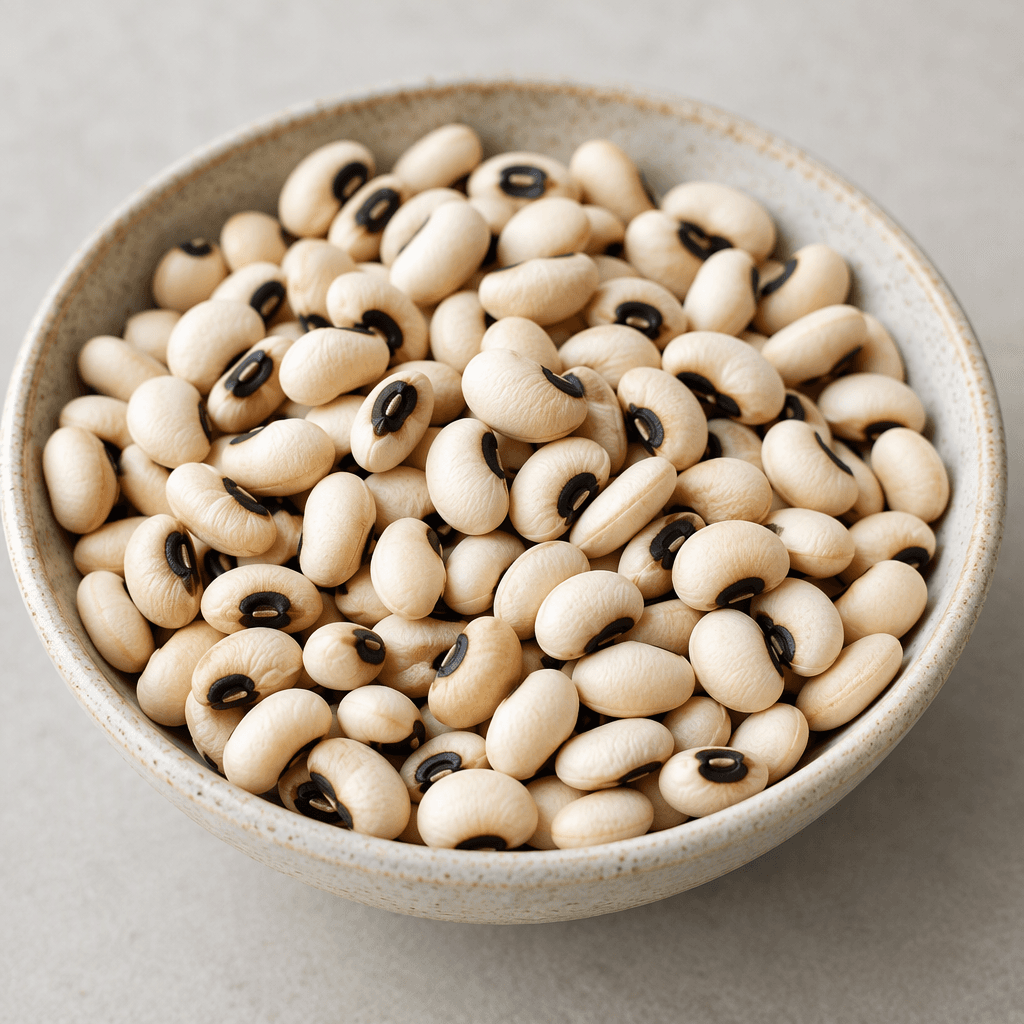
Black-eyed peas Calories
High in protein and fiber, low-fat legume
In season: Summer · Autumn
CALORIES
GI
POTASSIUM
FIBER
Quick answer
1 cup (medium) of Black-eyed peas (170 g) has 197 calories. That works out to 116 calories per 100 g. It contains 35.4 g of carbs, 13.1 g of protein, 0.9 g of fat and 11.2 g of fiber. Its 353.6 µg of Folate covers 88% of the Daily Value. Its glycemic index is 38 (low), so it raises blood sugar slowly.
What is Black-eyed peas?
Black-eyed peas are cream-coloured cowpeas marked with a dark spot, eaten both fresh in their pods and dried as beans. They have a long history in African cooking and are also familiar in South Asian and Southern US dishes. Dried peas are often simmered with rice, added to soups and stews, or tossed into salads; in the American South, they are a traditional partner for rice and greens.
Once cooked, they turn tender and creamy, with a mild, earthy flavour that takes well to spices, herbs and tangy dressings. They provide protein and fibre while remaining low in fat. Soak dried peas before cooking if you want them to soften more evenly, and pair them with vegetables or grains for a satisfying meal.
Black-eyed peas Nutrition Facts
Selected: 100 g
116
KCAL / 100G
Carbs
20.8g
· 8% DV
Protein
7.7g
· 15% DV
Fat
0.5g
· 1% DV
Fiber
6.6g
· 24% DV
DV is the share of the daily value covered, on a 2,000 kcal reference diet.
Calories come from: Carbs 70% · Protein 26% · Fat 4%
Black-eyed peas Vitamins & Minerals
Vitamins
Folate
208µg · 52% DV
B1
0.21mg · 18% DV
B2
0.1mg · 8% DV
B5
0.4mg · 8% DV
Minerals
Manganese
1mg · 43% DV
Phosphorus
120mg · 17% DV
Magnesium
53mg · 13% DV
Iron
2mg · 11% DV
How Nutritious Is Black-eyed peas?
Nutrient density
High
How many vitamins, minerals and how much fiber this food carries per calorie. A high score means a lot of nutrition for few calories.
Satiety score
High
An EatBetter score computed from fiber, protein and calorie density. A high score means staying full longer on the same calories.
Both scores are calculated per 100 g and do not change with the selected portion. The satiety score is EatBetter's own calculation, not a clinical measure.
Black-eyed peas Glycemic Index
GLYCEMIC INDEX
GLYCEMIC LOAD
Accounts for portion size — a more realistic measure than GI alone.
How to Burn Off Black-eyed peas
To burn the 116 calories in 100 g:
🚶
Walking (5 km/h)
🏃
Running (8 km/h)
🚴
Cycling
🏊
Swimming
Times are calculated with the MET equation for a 70 kg adult. Actual burn varies with your weight, age and pace.
Is Black-eyed peas Processed?
NOVA 1
Unprocessed
1. Unprocessed
2. Minimally Processed
3. Processed
4. Ultra-Processed
NOVA classifies foods into 4 groups by industrial processing. NOVA 1 (unprocessed) is the healthiest.
Does Black-eyed peas Contain Allergens?
No known major allergens
Which Diets Is Black-eyed peas Good For?
Vegan
✓ Suitable
Vegetarian
✓ Suitable
Gluten-Free
✓ Suitable
Dairy-Free
— Not suitable
Mediterranean
✓ Suitable
Paleo
✓ Suitable
Whole30
— Not suitable
DASH
— Not suitable
Keto
— Not suitable
Low FODMAP
— Not suitable
Black-eyed peas Fat Profile
SATURATED
0.13g
MONOUNSATURATED
0.04g
POLYUNSATURATED
0.13g
Omega 6:3 ratio 4.3:1
Above the ideal 4:1 (4.3:1).
Compare Black-eyed peas
Foods Similar to Black-eyed peas
Frequently Asked Questions About Black-eyed peas
How long do black-eyed peas take to cook?
Soaked dried black-eyed peas usually take about 30–45 minutes to simmer on the stovetop; unsoaked peas take longer. Start checking for tenderness near the end, since older peas and different varieties can need extra cooking time.
Do black-eyed peas need to be soaked before cooking?
No, black-eyed peas do not have to be soaked, but soaking them overnight can shorten cooking and help them cook more evenly. Drain and rinse the soaking water before cooking; if you skip soaking, simply allow more time on the stove.
Are black-eyed peas actually peas?
No, black-eyed peas are cowpeas, a type of legume—not garden peas. Their name can be confusing, but their creamy-colored seeds with a dark spot are commonly cooked like beans in soups, stews, and side dishes.
What do black-eyed peas taste like, and how are they used?
Black-eyed peas have a mild, earthy flavor and a soft but substantial texture when cooked. They work well in soups, curries, salads, and rice dishes, and take on seasoning from ingredients such as garlic, onion, herbs, and spices.
Why do black-eyed peas have a black spot?
The dark spot is the seed’s hilum, the point where it was attached inside the pod. It is a natural feature of black-eyed peas, not a sign of spoilage; the spot may be dark brown rather than completely black.
Can you eat black-eyed peas straight from a can?
Yes, canned black-eyed peas are already cooked and can be eaten after draining and rinsing. Add them directly to salads or heat them in soups and other dishes; rinsing also removes some of the salty canning liquid.
How should you store dried black-eyed peas?
Keep dried black-eyed peas in an airtight container in a cool, dry place away from sunlight. Protect them from moisture and pantry pests; very old peas may remain firm even after a long time on the stove.
Can you freeze cooked black-eyed peas?
Yes, cooked black-eyed peas freeze well. Let them cool, portion them into airtight freezer-safe containers, and thaw them in the refrigerator before reheating. Freeze them with a little cooking liquid to help prevent the peas from drying out.
Do black-eyed peas cause gas?
They can cause gas or bloating in some people because legumes contain carbohydrates that are not fully digested in the gut. Soaking dried peas, discarding the soaking water, cooking them thoroughly, and starting with a smaller serving may help.
What is Hoppin’ John made with black-eyed peas?
Hoppin’ John is a Southern U.S. dish traditionally made with black-eyed peas, rice, and often pork or another smoked meat. Recipes vary, but the peas and rice are typically cooked with savory seasonings and served together.
Have another question about Black-eyed peas?
Ask the AI nutrition coach — calories, portions, alternatives and more, answered in seconds in the app.

Scan calories with your camera
Instant AI nutrition analysis

Nutrition data compiled from USDA FoodData Central and scientific sources.