

Ready & Packaged Foods
All →Vegetables & Legumes
All →Desserts & Confectionery
All →Meat & Protein
All →Grains & Bakery
All →Beverages
All →Milk & Dairy
All →

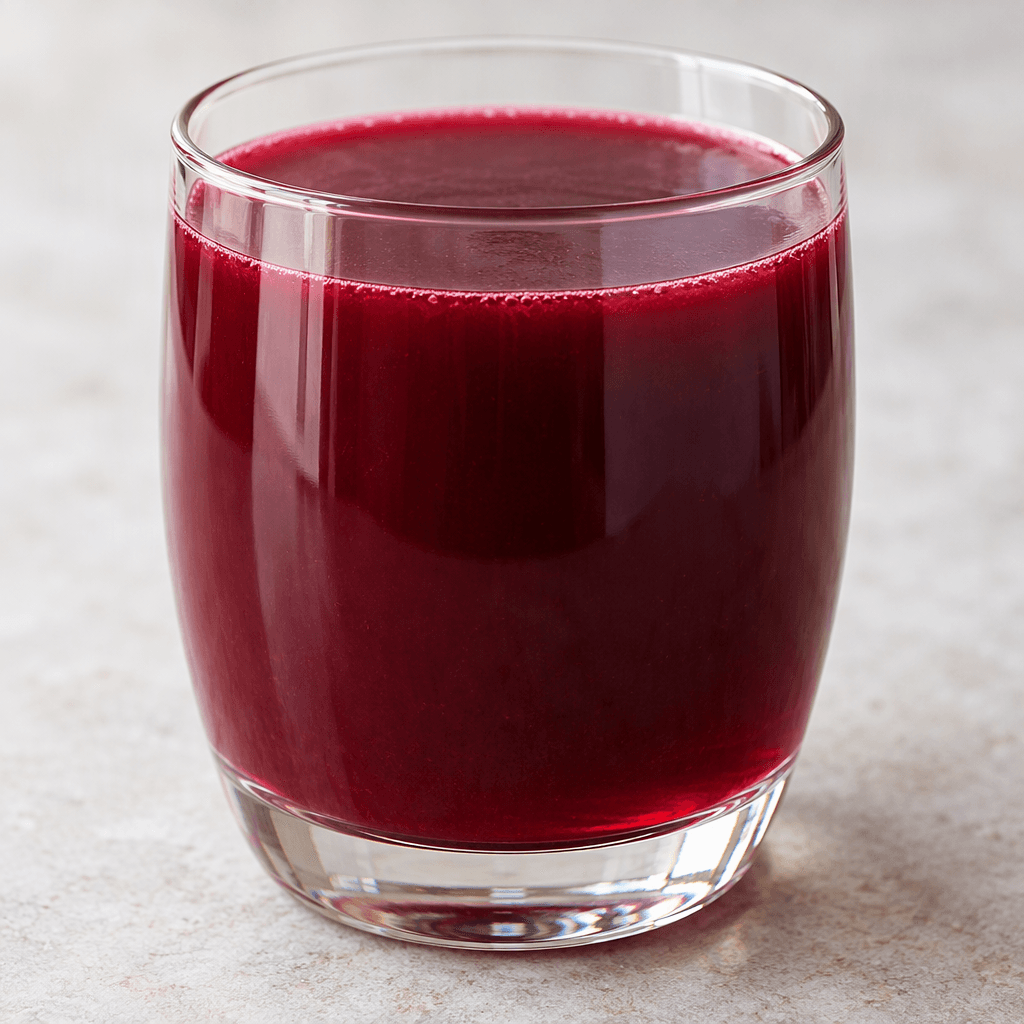
Black Carrot Juice Calories
Rich in antioxidants, source of vitamin C, low calorie
In season: Winter · Spring
CALORIES
GI
POTASSIUM
FIBER
Quick answer
1 cup (medium) of Black Carrot Juice (200 g) has 56 calories. That works out to 28 calories per 100 g. It contains 12.6 g of carbs, 1.2 g of protein, 0.2 g of fat and 2 g of fiber. Its 1900 µg of Vitamin A covers 211% of the Daily Value. Its glycemic index is 40 (low), so it raises blood sugar slowly.
What is Black Carrot Juice?
Black Carrot Juice is made by pressing dark purple carrots, whose deep colour comes from natural plant pigments. In Turkey, black carrots are especially familiar as the base for şalgam, a tangy fermented drink; freshly pressed juice is a different, generally sweeter option. It can be enjoyed on its own or used as a colourful addition to drinks and recipes.
The flavour is gently sweet, earthy and less sharp than fermented şalgam. Serve it chilled alongside a meal or as a light refreshment. At 28 calories per 100 g, it is a low-calorie drink and provides a little fibre. If you prefer a milder taste, dilute it with water or combine it with citrus; its vivid colour also works well in smoothies.
Black Carrot Juice Nutrition Facts
Selected: 100 g
28
KCAL / 100G
Carbs
6.3g
· 2% DV
Protein
0.6g
· 1% DV
Fat
0.1g
· 0% DV
Fiber
1g
· 4% DV
DV is the share of the daily value covered, on a 2,000 kcal reference diet.
Calories come from: Carbs 88% · Protein 8% · Fat 4%
Black Carrot Juice Vitamins & Minerals
Vitamins
Vitamin A
950µg · 106% DV
Vitamin K
13µg · 11% DV
Vitamin C
8mg · 9% DV
B5
0.3mg · 6% DV
Minerals
Iron
1mg · 6% DV
Potassium ⭐
210mg · 6% DV
Phosphorus
28mg · 4% DV
Calcium
27mg · 3% DV
How Nutritious Is Black Carrot Juice?
Nutrient density
High
How many vitamins, minerals and how much fiber this food carries per calorie. A high score means a lot of nutrition for few calories.
Satiety score
Medium
An EatBetter score computed from fiber, protein and calorie density. A high score means staying full longer on the same calories.
Both scores are calculated per 100 g and do not change with the selected portion. The satiety score is EatBetter's own calculation, not a clinical measure.
Black Carrot Juice Glycemic Index
GLYCEMIC INDEX
GLYCEMIC LOAD
Accounts for portion size — a more realistic measure than GI alone.
How to Burn Off Black Carrot Juice
To burn the 28 calories in 100 g:
🚶
Walking (5 km/h)
🏃
Running (8 km/h)
🚴
Cycling
🏊
Swimming
Times are calculated with the MET equation for a 70 kg adult. Actual burn varies with your weight, age and pace.
Is Black Carrot Juice Processed?
NOVA 2
Minimally Processed
1. Unprocessed
2. Minimally Processed
3. Processed
4. Ultra-Processed
NOVA classifies foods into 4 groups by industrial processing. NOVA 1 (unprocessed) is the healthiest.
Does Black Carrot Juice Contain Allergens?
No known major allergens
Which Diets Is Black Carrot Juice Good For?
Vegan
✓ Suitable
Vegetarian
✓ Suitable
Gluten-Free
✓ Suitable
Dairy-Free
— Not suitable
Mediterranean
✓ Suitable
Paleo
✓ Suitable
Whole30
— Not suitable
DASH
— Not suitable
Keto
— Not suitable
Low FODMAP
— Not suitable
Black Carrot Juice Fat Profile
SATURATED
0.02g
MONOUNSATURATED
0.01g
POLYUNSATURATED
0.03g
Omega 6:3 ratio 2:1
Below the ideal 4:1 — a good omega balance.
Compare Black Carrot Juice
Foods Similar to Black Carrot Juice
Frequently Asked Questions About Black Carrot Juice
What are the benefits of black carrot juice?
Black carrot juice contains anthocyanins, the pigments that give it its deep color, and it provides vitamin C. It can be part of a varied diet, but it is not a treatment or cure for disease.
What does black carrot juice taste like?
Black carrot juice usually tastes mildly sweet, earthy, and more robust than ordinary orange carrot juice. A distinctly sour taste may mean the drink has been fermented or blended with other ingredients, so check how it is described.
How do you make black carrot juice at home?
Wash and trim black carrots, then run them through a juicer. Without a juicer, blend grated carrots with a little water and strain the mixture. Drink it fresh, since homemade juice is best not left sitting for long.
How is black carrot juice different from regular carrot juice?
Black carrot juice gets much of its dark color from anthocyanins, while orange carrot juice is known for its beta-carotene. The black variety is darker and often has a more earthy flavor.
Is black carrot juice the same as şalgam?
No. Black carrot juice is juice made from black carrots, while şalgam is a traditional Turkish fermented drink made with ingredients including black carrot and turnip. Şalgam is typically tangier and saltier, and its fermentation gives it a different character.
Why is black carrot juice purple?
Black carrot juice is purple or deep red because black carrots contain anthocyanin pigments. The color is naturally present in the carrots, and its intensity can vary with the variety and the amount used.
Does black carrot juice stain clothes?
Yes, black carrot juice can stain clothes because its dark pigments cling to fabric. Rinse a spill promptly with cool water; letting it sit or using hot water straight away can make the stain harder to remove.
How should you store black carrot juice after opening?
Keep opened black carrot juice sealed in the refrigerator and follow the package’s instructions for how soon to use it. Drink freshly made juice promptly, and discard it if its smell, taste, or appearance changes noticeably.
Can you drink black carrot juice every day?
Yes, you can drink black carrot juice daily as one beverage in a varied diet. Keep portions moderate and avoid making sweetened versions a regular substitute for water.
Can drinking too much black carrot juice cause side effects?
Yes, large amounts may cause digestive discomfort, and frequent servings can add more natural sugars to your diet than you intend. Its strong pigments can also temporarily affect the color of urine or stool.
Have another question about Black Carrot Juice?
Ask the AI nutrition coach — calories, portions, alternatives and more, answered in seconds in the app.

Scan calories with your camera
Instant AI nutrition analysis

Nutrition data compiled from USDA FoodData Central and scientific sources.