

Ready & Packaged Foods
All →Vegetables & Legumes
All →Desserts & Confectionery
All →Meat & Protein
All →Grains & Bakery
All →Beverages
All →Milk & Dairy
All →

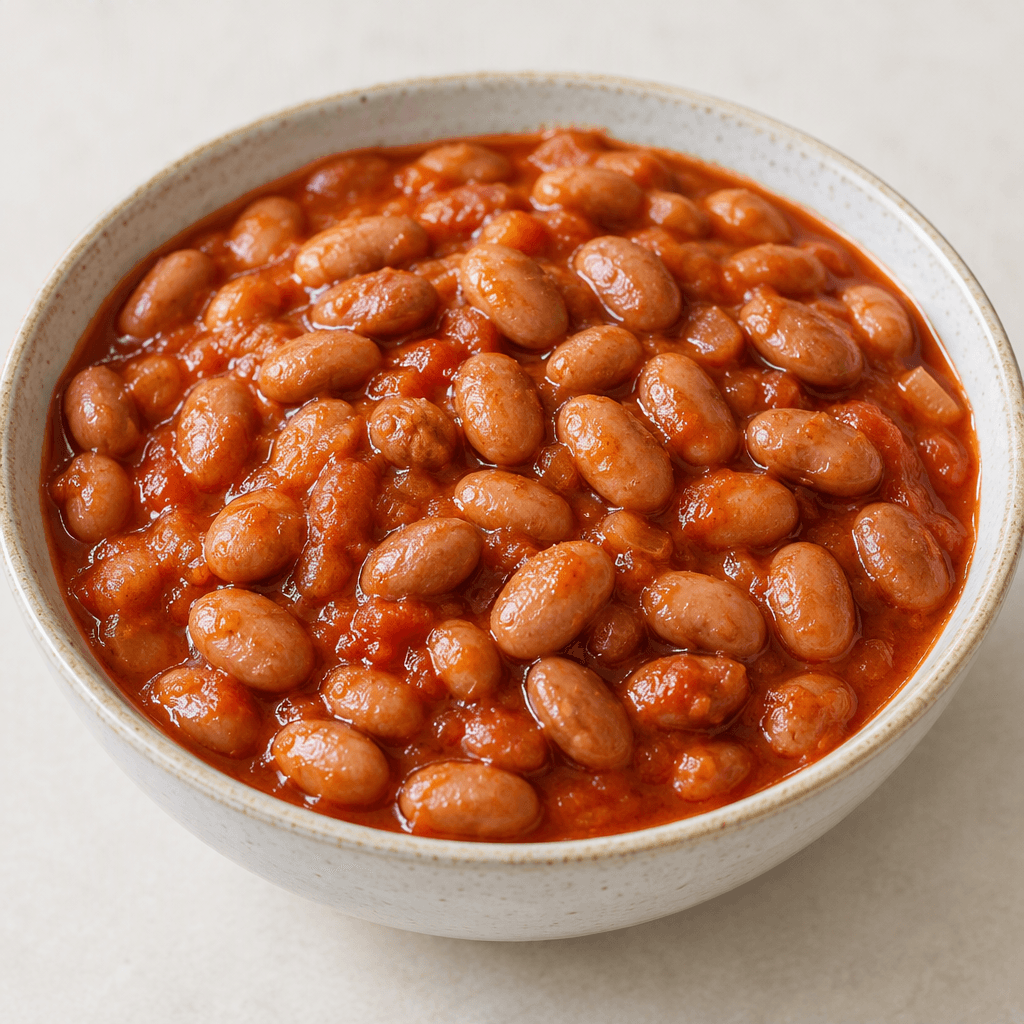
Baked Beans Calories
Source of protein and fiber, low fat, contains iron and folate
In season: Spring · Summer · Autumn · Winter
CALORIES
GI
POTASSIUM
FIBER
Quick answer
½ cup (medium) of Baked Beans (130 g) has 124 calories. That works out to 95 calories per 100 g. It contains 22.8 g of carbs, 6.8 g of protein, 0.7 g of fat and 6.2 g of fiber. Its 0.2 mg of Copper covers 17% of the Daily Value. Its glycemic index is 40 (low), so it raises blood sugar slowly.
What is Baked Beans?
Baked Beans are cooked beans served in a thick tomato-based sauce. The name covers several styles; the familiar tomato-sauce version is especially associated with Britain, where it is often bought ready-made as well as prepared at home. The beans turn tender while the sauce becomes glossy, gently sweet and savoury.
In the UK, they’re a classic breakfast side, spooned over toast, and also go well with a baked potato or a simple supper. They offer plant protein and fibre, with just 0.5 g of fat per 100 g. For an easy, balanced meal, serve them with wholegrain toast or vegetables; if the sauce tastes rich, a crisp salad makes a fresh contrast.
Baked Beans Nutrition Facts
Selected: 100 g
95
KCAL / 100G
Carbs
17.5g
· 6% DV
Protein
5.2g
· 10% DV
Fat
0.5g
· 1% DV
Fiber
4.8g
· 17% DV
DV is the share of the daily value covered, on a 2,000 kcal reference diet.
Calories come from: Carbs 73% · Protein 22% · Fat 5%
Baked Beans Vitamins & Minerals
Vitamins
Biotin
2.5µg · 8% DV
Folate
33µg · 8% DV
B1
0.08mg · 7% DV
B6
0.07mg · 4% DV
Minerals
Iron
2mg · 11% DV
Sodium
240mg · 10% DV
Zinc
1mg · 9% DV
Phosphorus
60mg · 9% DV
How Nutritious Is Baked Beans?
Nutrient density
High
How many vitamins, minerals and how much fiber this food carries per calorie. A high score means a lot of nutrition for few calories.
Satiety score
High
An EatBetter score computed from fiber, protein and calorie density. A high score means staying full longer on the same calories.
Both scores are calculated per 100 g and do not change with the selected portion. The satiety score is EatBetter's own calculation, not a clinical measure.
Baked Beans Glycemic Index
GLYCEMIC INDEX
GLYCEMIC LOAD
Accounts for portion size — a more realistic measure than GI alone.
How to Burn Off Baked Beans
To burn the 95 calories in 100 g:
🚶
Walking (5 km/h)
🏃
Running (8 km/h)
🚴
Cycling
🏊
Swimming
Times are calculated with the MET equation for a 70 kg adult. Actual burn varies with your weight, age and pace.
Is Baked Beans Processed?
NOVA 3
Processed
1. Unprocessed
2. Minimally Processed
3. Processed
4. Ultra-Processed
NOVA classifies foods into 4 groups by industrial processing. NOVA 1 (unprocessed) is the healthiest.
Does Baked Beans Contain Allergens?
No known major allergens
Which Diets Is Baked Beans Good For?
Vegan
✓ Suitable
Vegetarian
✓ Suitable
Gluten-Free
✓ Suitable
Dairy-Free
— Not suitable
Mediterranean
✓ Suitable
Paleo
— Not suitable
Whole30
— Not suitable
DASH
— Not suitable
Keto
— Not suitable
Low FODMAP
— Not suitable
Baked Beans Fat Profile
SATURATED
0.1g
MONOUNSATURATED
0.1g
POLYUNSATURATED
0.2g
Omega 6:3 ratio 2.7:1
Below the ideal 4:1 — a good omega balance.
Compare Baked Beans
Foods Similar to Baked Beans
Frequently Asked Questions About Baked Beans
How are Baked Beans made?
Baked Beans are made by cooking small beans in a tomato-based sauce until tender and thick. For a home-cooked version, soften dried beans first, then bake them with tomato, onion, and seasonings; canned versions are already cooked and need less time.
What kind of beans are used in Baked Beans?
Baked Beans are traditionally made with small white navy beans. Their mild flavor works well with tomato sauce, and they hold their shape during cooking; other small white beans can also be used.
Are Baked Beans actually baked in the oven?
Not always. Traditional Baked Beans are cooked slowly in the oven, but many canned versions are cooked commercially in sauce rather than baked in a home-style casserole. The name remains the same even when the cooking method differs.
Can you eat Baked Beans cold?
Yes, Baked Beans can be eaten cold if they have been cooked and stored safely. Stir them before serving, since the sauce can thicken as it chills; many people prefer them warmed on toast or alongside a hot meal.
Why are Baked Beans served on toast?
Baked Beans are served on toast because the sturdy bread soaks up the tomato sauce and makes a quick, filling meal. This pairing is especially familiar in the UK, where beans on toast is a common simple breakfast or lunch.
Can you freeze Baked Beans?
Yes, Baked Beans freeze well. Cool them, portion them into airtight freezer-safe containers, and leave a little room for expansion. Thaw in the refrigerator and reheat thoroughly, stirring to bring the sauce back together.
How long do Baked Beans last after opening?
Opened Baked Beans generally keep for 3–4 days in the refrigerator when transferred to a covered container. Refrigerate them promptly rather than leaving them in the opened can, and reheat only the portion you plan to eat.
Why do Baked Beans stay hard after cooking?
Baked Beans can stay hard if dried beans were not softened before the tomato sauce was added. The acidity in tomatoes slows softening, and very old beans may take longer to cook; simmer the beans until tender before baking them in sauce.
What goes well with Baked Beans besides toast?
Baked Beans go well with eggs, grilled vegetables, sausages, or a baked potato. Their rich tomato sauce also pairs with simple sides such as green salad or crusty bread, so the beans can be served as either a side or a main.
Are Baked Beans healthy to eat regularly?
Baked Beans can be a nourishing part of meals, but canned varieties may contain substantial added salt or sugar. Homemade beans let you control the sauce, and pairing them with vegetables or whole-grain bread makes a more balanced meal.
Have another question about Baked Beans?
Ask the AI nutrition coach — calories, portions, alternatives and more, answered in seconds in the app.

Scan calories with your camera
Instant AI nutrition analysis

Nutrition data compiled from USDA FoodData Central and scientific sources.